
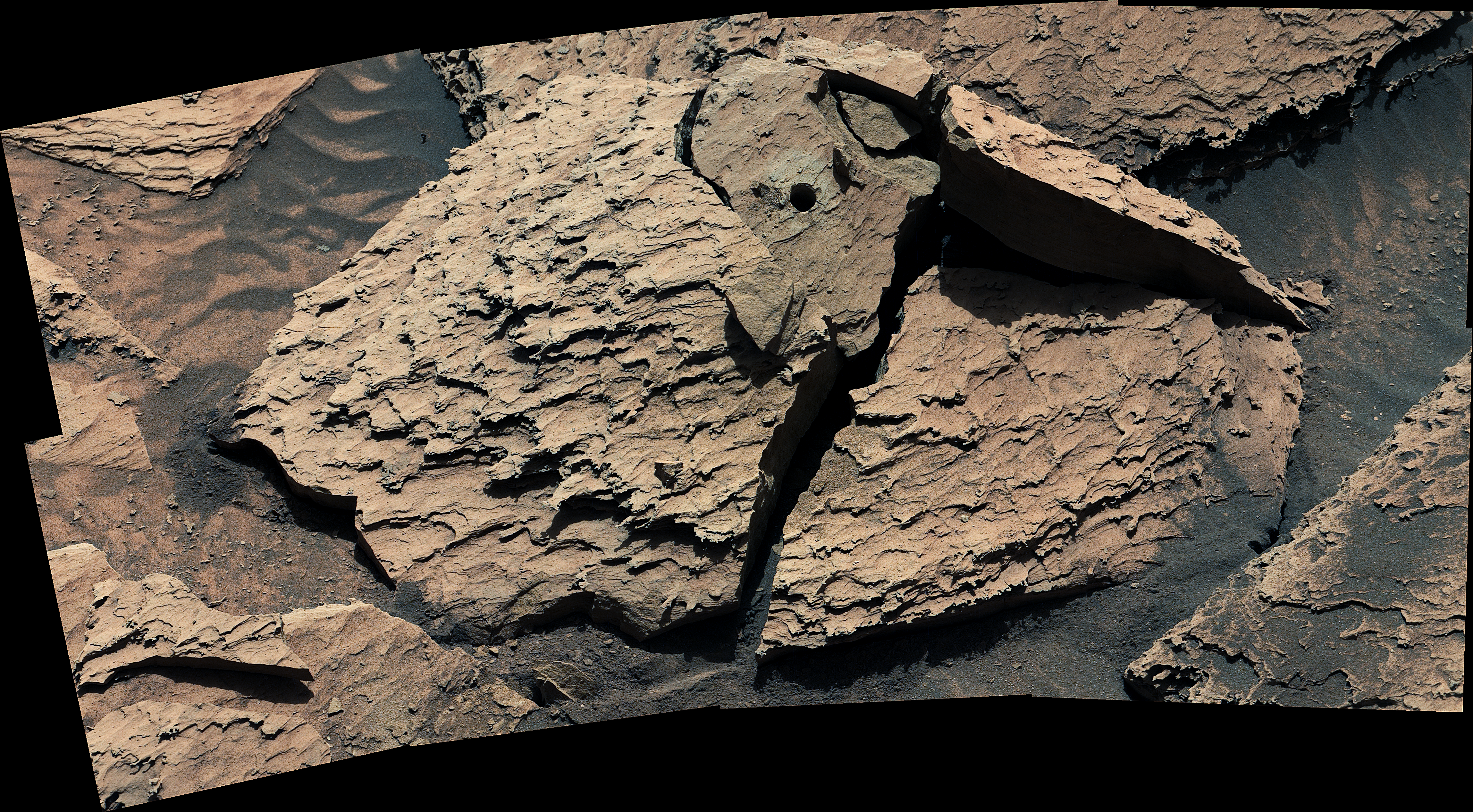
After NASA’s Curiosity Mars rover drilled a sample from this rock on April 25, 2026, it withdrew its robotic arm and pulled the entire rock off the surface with it. Engineers spent several days repositioning the arm and vibrating the drill to try and get the rock loose. When it finally detached on May 1,
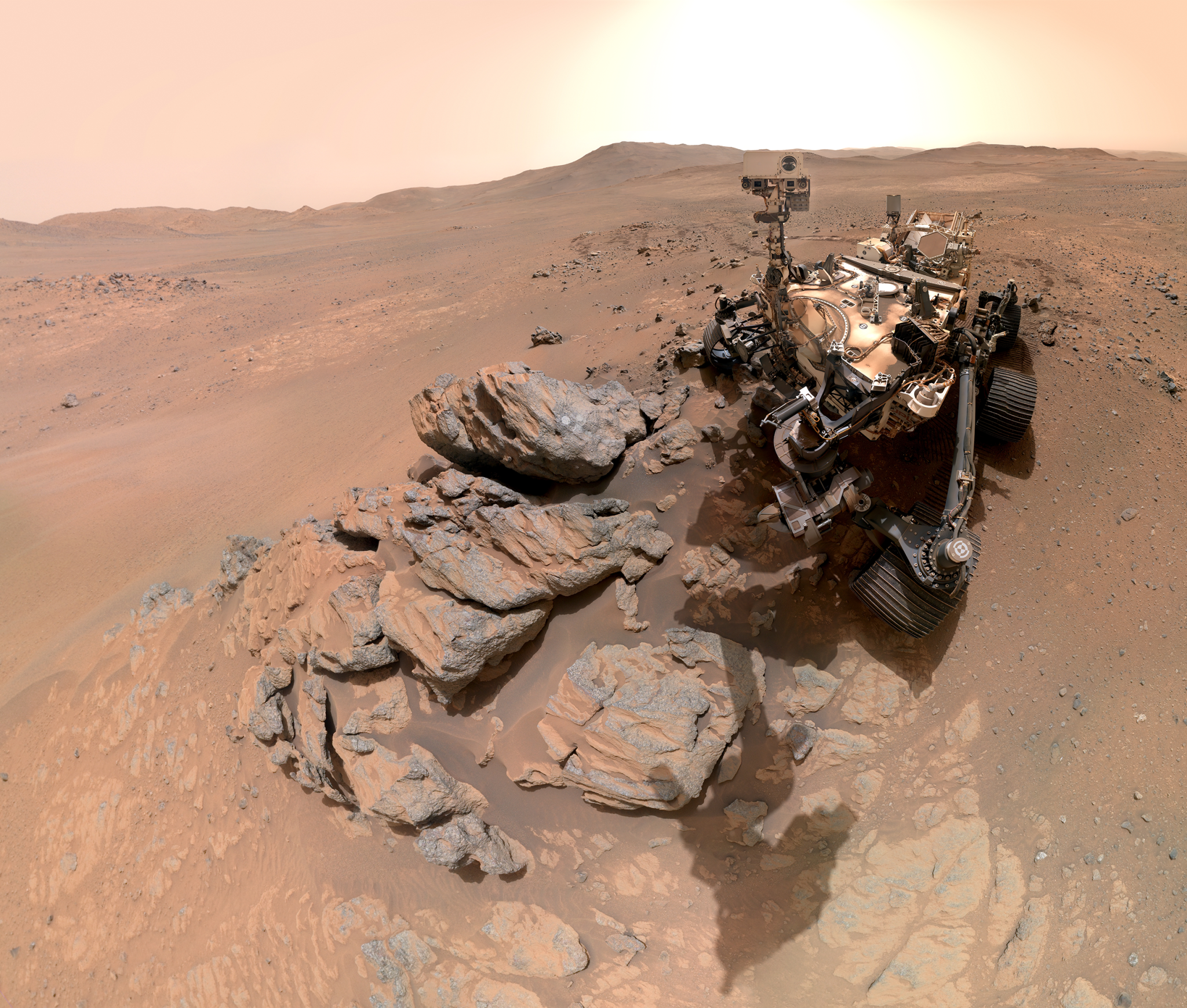
NASA’s Perseverance rover recently took a self-portrait against a sweeping backdrop of ancient Martian terrain at a location the science team calls “Lac de Charmes.” Assembled from 61 individual images, the selfie shows Perseverance training its mast on a rocky outcrop in the foreground after creating a circular abrasion patch, with the western rim of
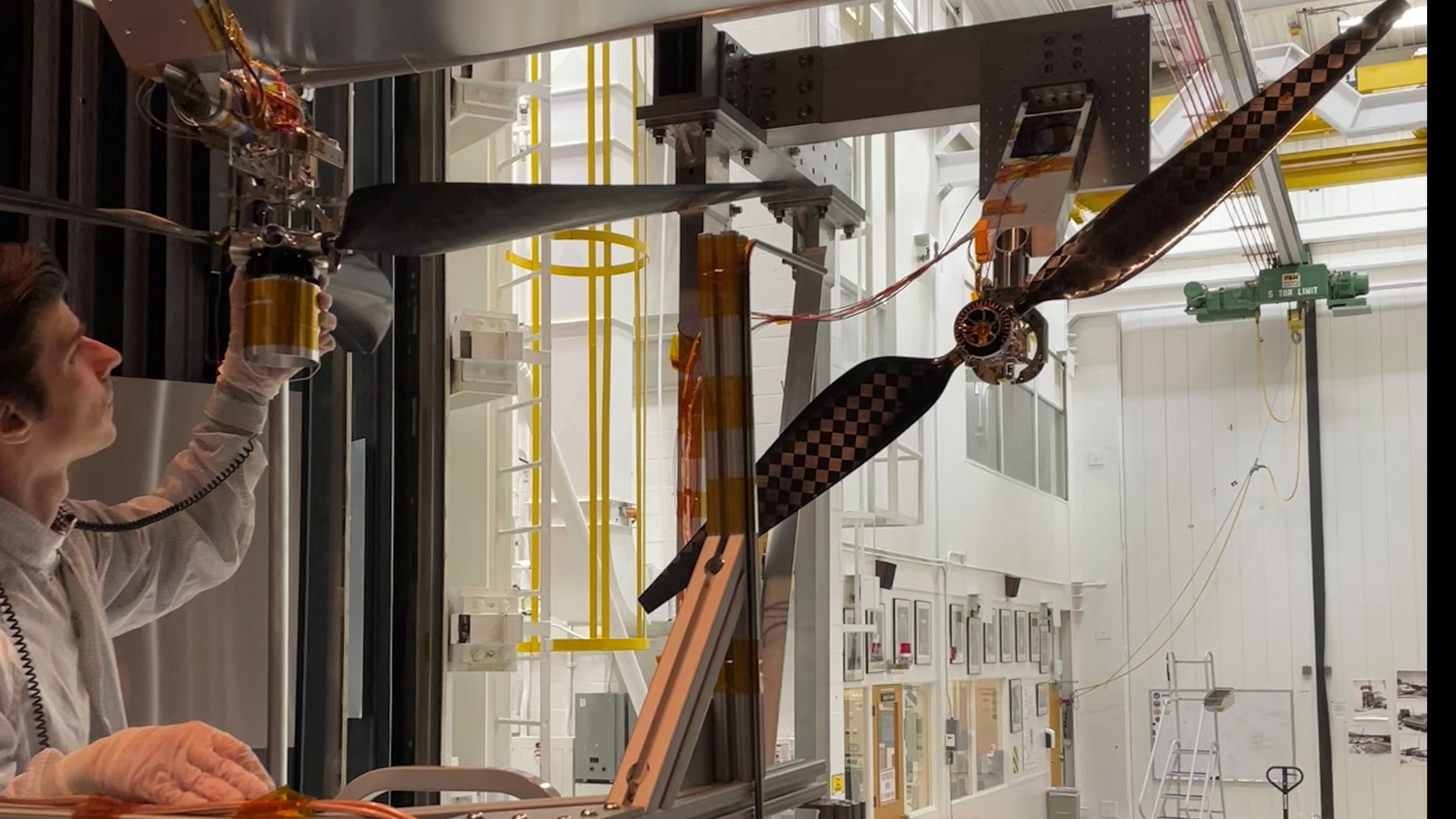
The rotor blades that will carry NASA’s next-generation helicopters to new Martian heights broke the sound barrier during March tests at NASA’s Jet Propulsion Laboratory in Southern California. Data from the tests, which took place in a special chamber that can simulate environmental conditions on the Red Planet, indicate that the fastest traveling part of
NASA’s Curiosity and Perseverance rovers have captured two 360-degree landscapes that highlight how the missions are revealing details of the Red Planet’s formation, watery past, and potential for life. Located 2,345 miles (3,775 kilometers) apart from each other on Mars — about the distance from Los Angeles to Washington, D.C. — both rovers are exploring