
Active filters Type: Photo
Clear all
14 Apr 2026, 15:52 GMT

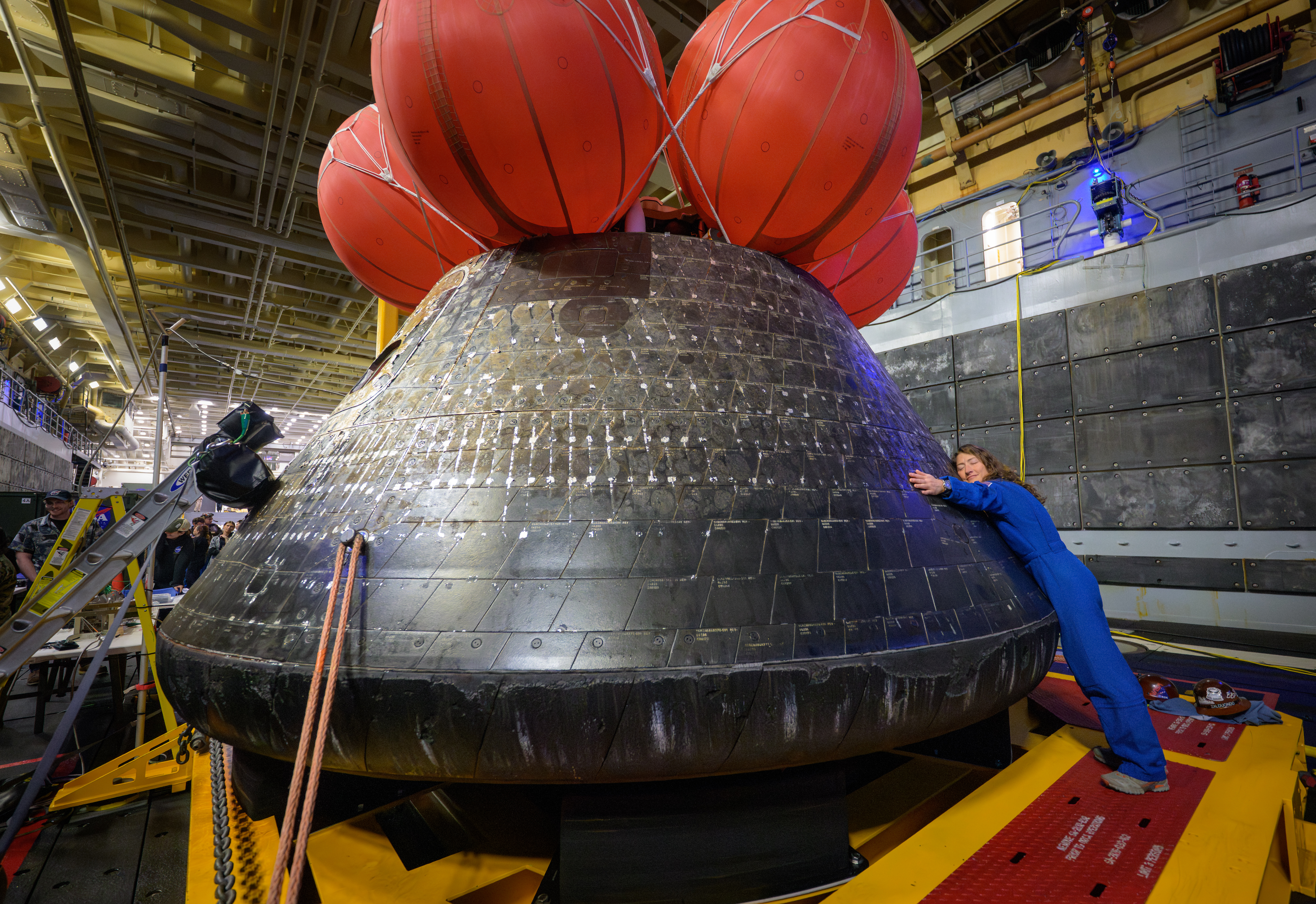
NASA astronaut Christina Koch, Artemis II mission specialist hugs the Orion spacecraft in the well deck of USS John P. Murtha, Saturday, April 11, 2026.

Download item bundle
A Hug for Home Away from Home
14 Apr 2026, 00:00 GMT By Haythem Hamdi

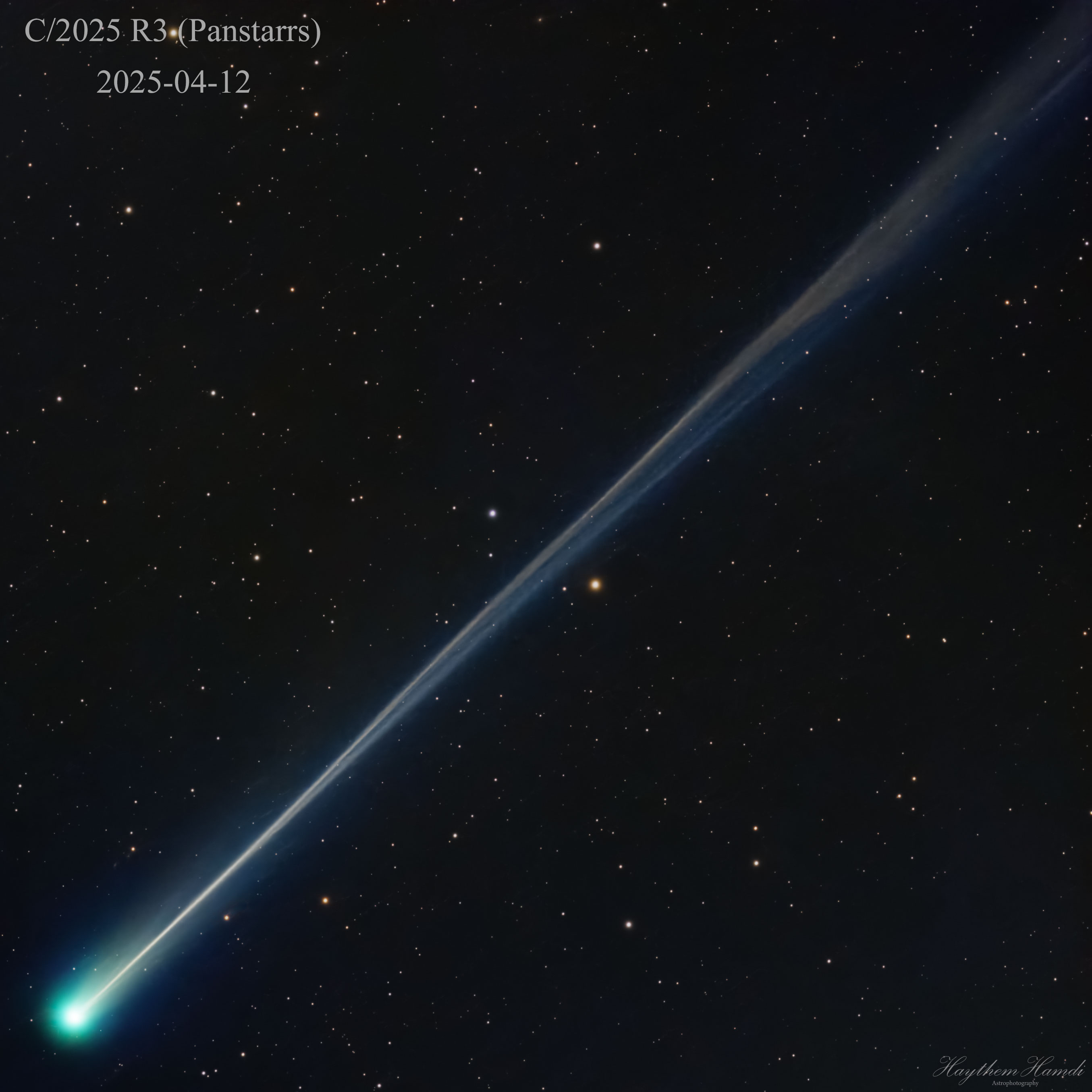
Why does Comet R3 (PanSTARRS) have a wispy tail? The newest bright member of the inner Solar System, Comet C/2025 R3 (PanSTARRS) is already extending an impressive stream of glowing gas. This tail starts from an unseen central nucleus of dirty ice that is likely a few kilometers across. The nucleus is warmed by the Sun and emits a cloud of neutral gas into a coma that glows light green. Nuclear gas ionized by energetic sunlight is pushed away from the Sun by the solar wind into an ion tail that glows light blue. The wispy nature of the ion tail is caused by the constantly changing structure of the solar wind. Pictured from Rhode Island, USA two days ago, Comet R3 (PanSTARRS) shows off a many-degree ion tail. Comet R3 (PanSTARRS) is best seen before dawn from northern skies for another 10 days, after which it will be best visible from southern skies. Growing Gallery: Comet R3 in 2026

Download item bundle
The Long Wispy Tail of Comet R3 (PanSTARRS)
Credit: Haythem Hamdi
13 Apr 2026, 17:32 GMT

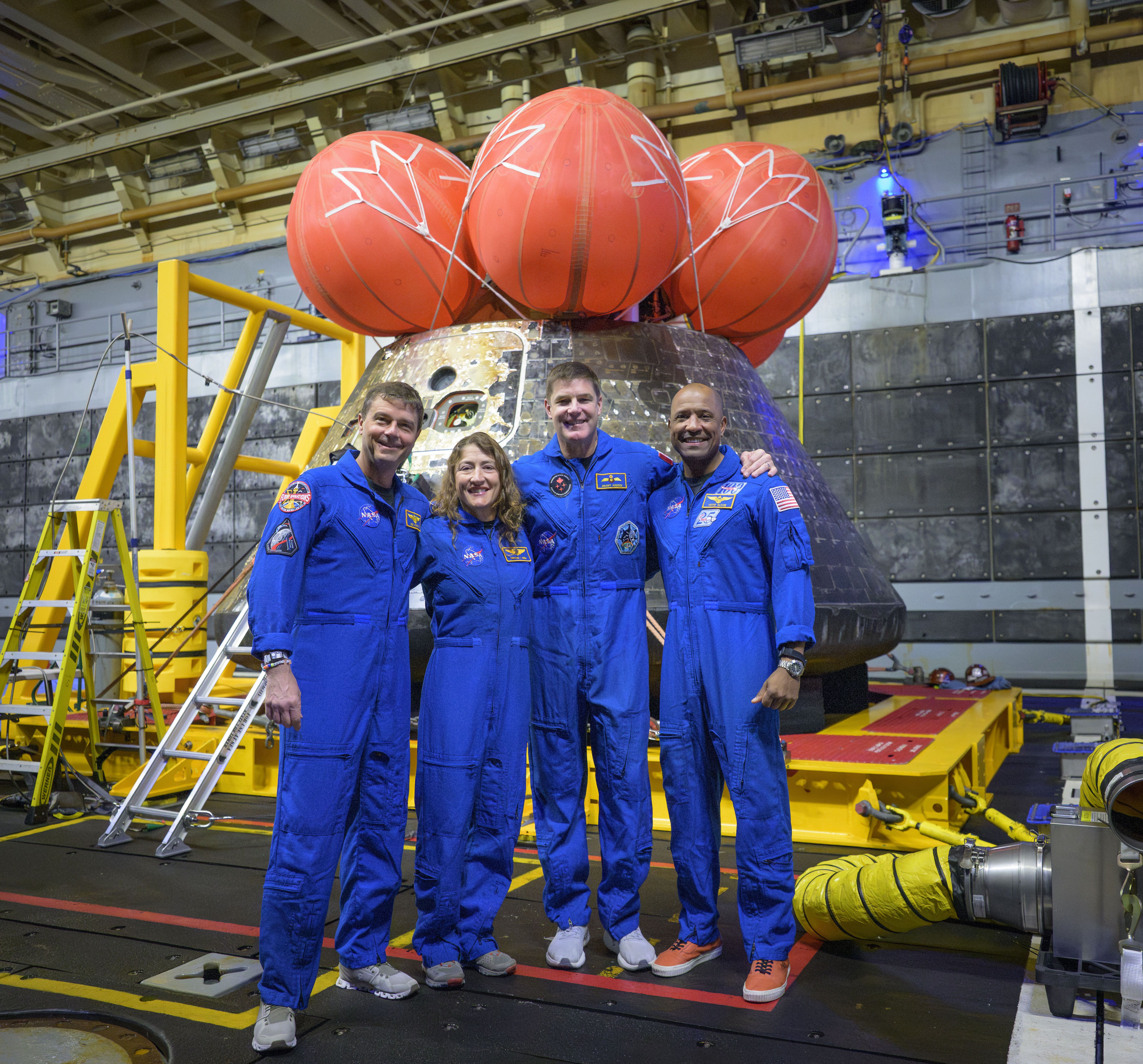
NASA astronauts Reid Wiseman, commander; left, Christina Koch, mission specialist; CSA (Canadian Space Agency) astronaut Jeremy Hansen, mission specialist; and NASA astronaut Victor Glover, Artemis II pilot, right, pose for a group photo after viewing the Orion spacecraft in the well deck of USS John P. Murtha, Saturday, April 11, 2026, in the Pacific Ocean off the coast of California. The quartet splashed down Friday, April 10 at 5:07 p.m. PDT (8:07p.m. EDT).

Download item bundle
Artemis II Astronauts Aboard USS John P. Murtha
13 Apr 2026, 00:00 GMT

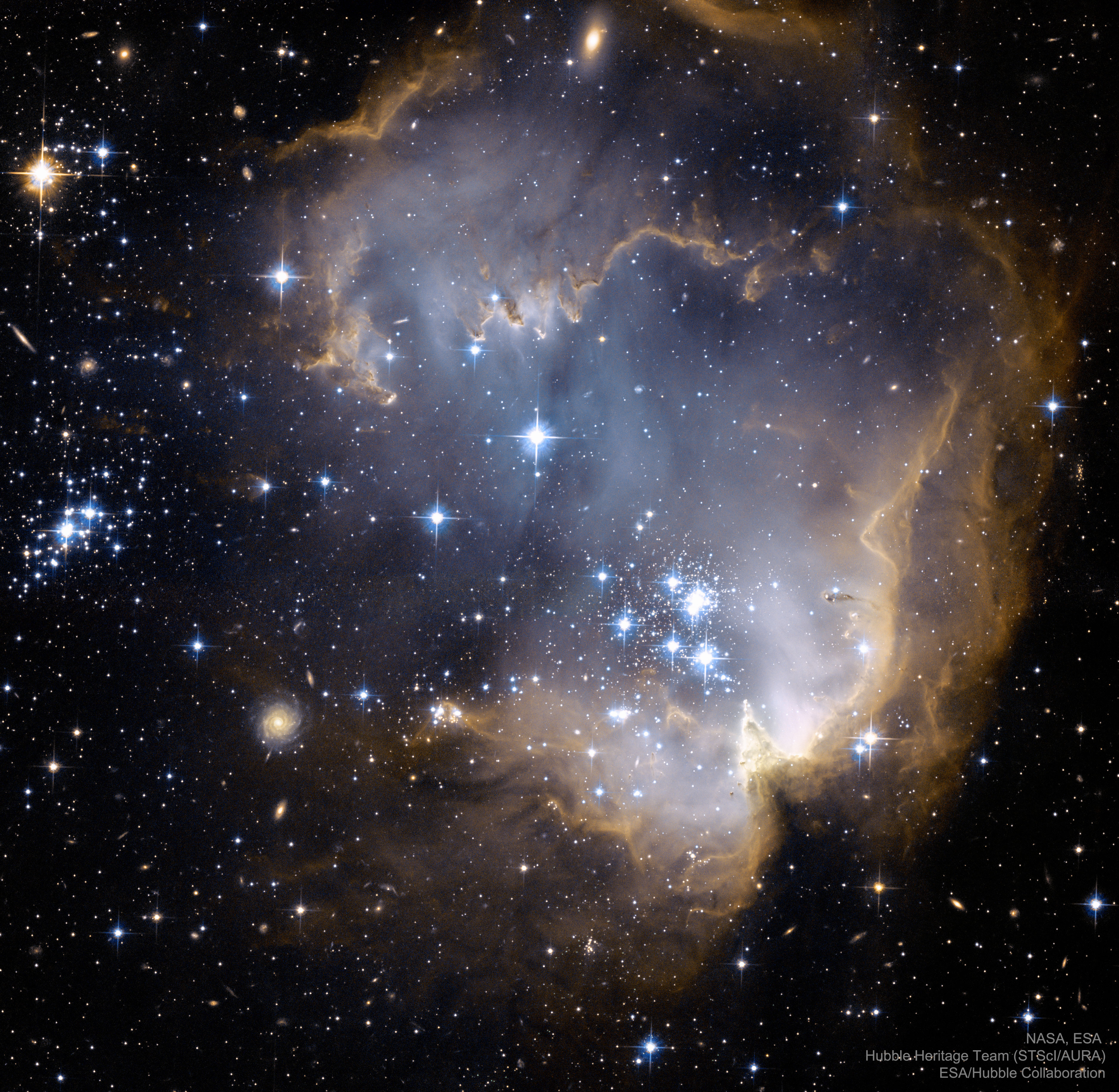
The clouds may look like an oyster, and the stars like pearls, but look beyond. Near the outskirts of the Small Magellanic Cloud, a satellite galaxy some 200 thousand light-years distant, lies 5 million year young star cluster NGC 602. Surrounded by natal gas and dust, NGC 602 is featured in this stunning Hubble image of the region. Fantastic ridges and swept back shapes strongly suggest that energetic radiation and shock waves from NGC 602's massive young stars have eroded the dusty material and triggered a progression of star formation moving away from the cluster's center. At the estimated distance of the Small Magellanic Cloud, the featured picture spans about 200 light-years, but a tantalizing assortment of background galaxies are also visible in this sharp multi-colored view. The background galaxies are hundreds of millions of light-years or more beyond NGC 602. Sky Surprise: What picture did APOD feature on your birthday? (after 1995)

Download item bundle
NGC 602 and Beyond
12 Apr 2026, 00:00 GMT By José Rodrigues

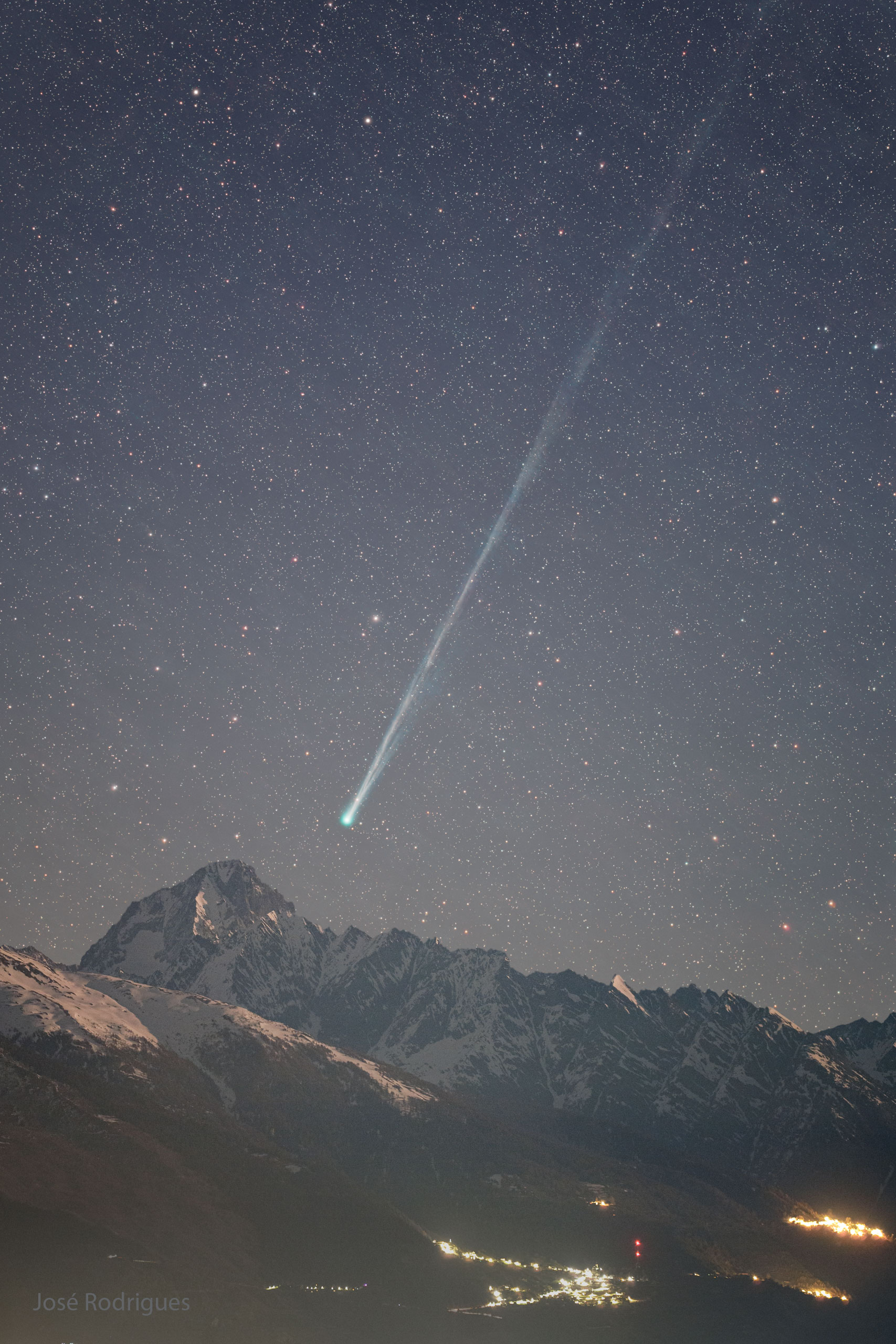
Comet R3 is brightening rapidly -- will it survive? C/2025 R3 (PanSTARRS) has been slowly brightening and extending an ion tail since its discovery last year. This shedding mountain of dirty ice puts on its best sky show this month, though, because it passes its closest to both the Sun (April 19) and the Earth (April 25). The featured image, showing R3 already sporting a tail extending over 10 degrees, was taken two nights ago from Sion, Switzerland with the big mountain Bietschhorn on the left. Comet R3 will be visible during mid-April before sunrise. Although the future brightness of any comet is hard to predict, the brightness of R3 makes it already a good camera comet and it may become visible to the unaided eye in the next week. Comet R3's physical future is also unknown because, like Comet A1 (MAPS) earlier this month, it may disintegrate when it passes its closest to the Sun. Or it may live to leave the Solar System. Growing Gallery: Comet R3 in 2026

Download item bundle
Comet R3 (PanSTARRS) Brightens
Credit: José Rodrigues
11 Apr 2026, 11:07 GMT

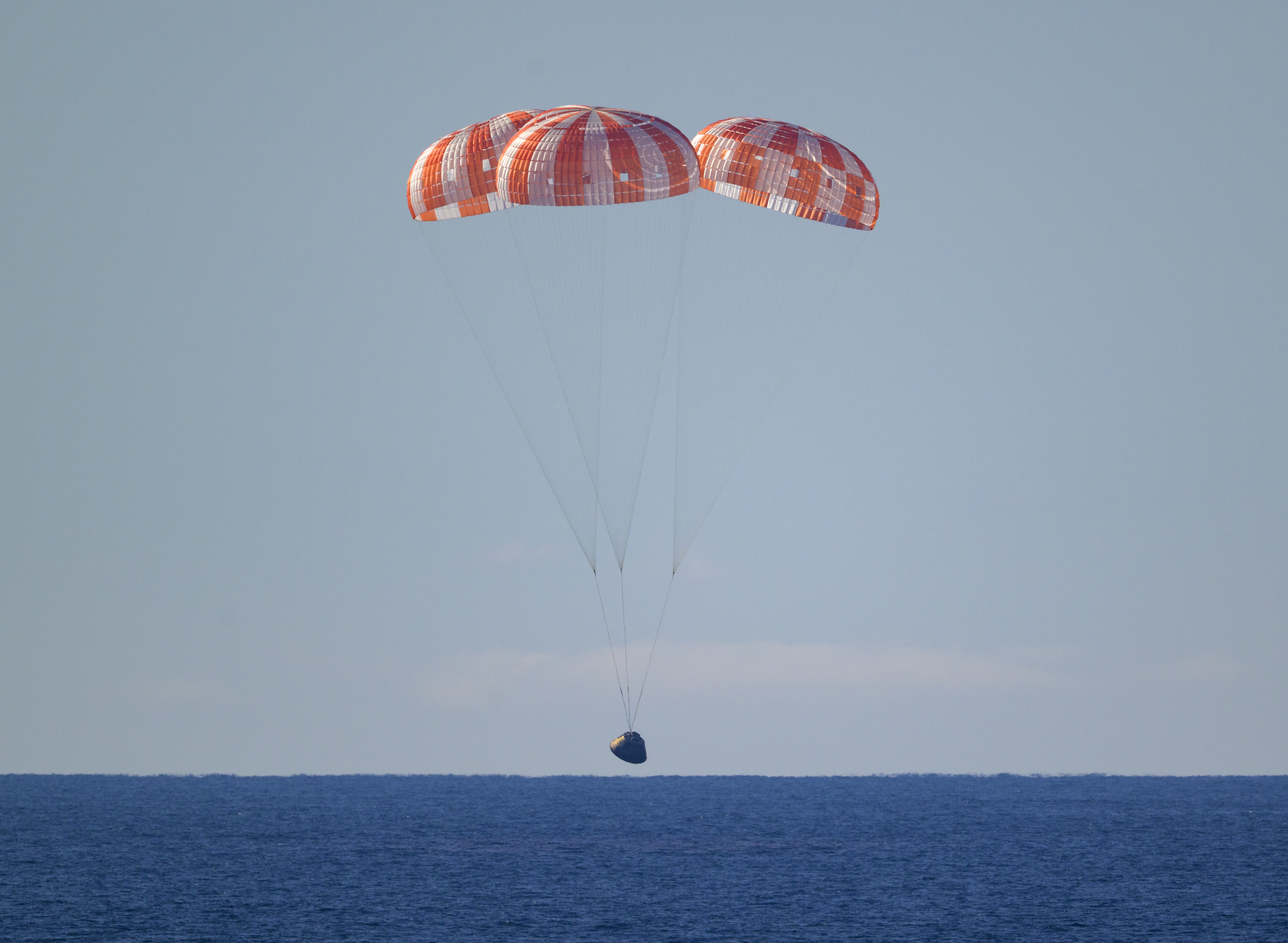
NASA’s Orion spacecraft with Artemis II crewmembers NASA astronauts Reid Wiseman, commander; Victor Glover, pilot; Christina Koch, mission specialist; and CSA (Canadian Space Agency) astronaut Jeremy Hansen, mission specialist aboard is seen under parachutes as it lands in the Pacific Ocean off the coast of California, Friday, April 10, 2026. NASA’s Artemis II mission took Wiseman, Glover, Koch, and Hansen on a 10-day journey around the Moon and back to Earth. Following a splashdown at 8:07 p.m. EDT, NASA, U.S. Navy, and U.S. Air Force teams are working to bring the crewmembers and Orion spacecraft aboard USS John P. Murtha.

Download item bundle
Artemis II Recovery
11 Apr 2026, 00:00 GMT

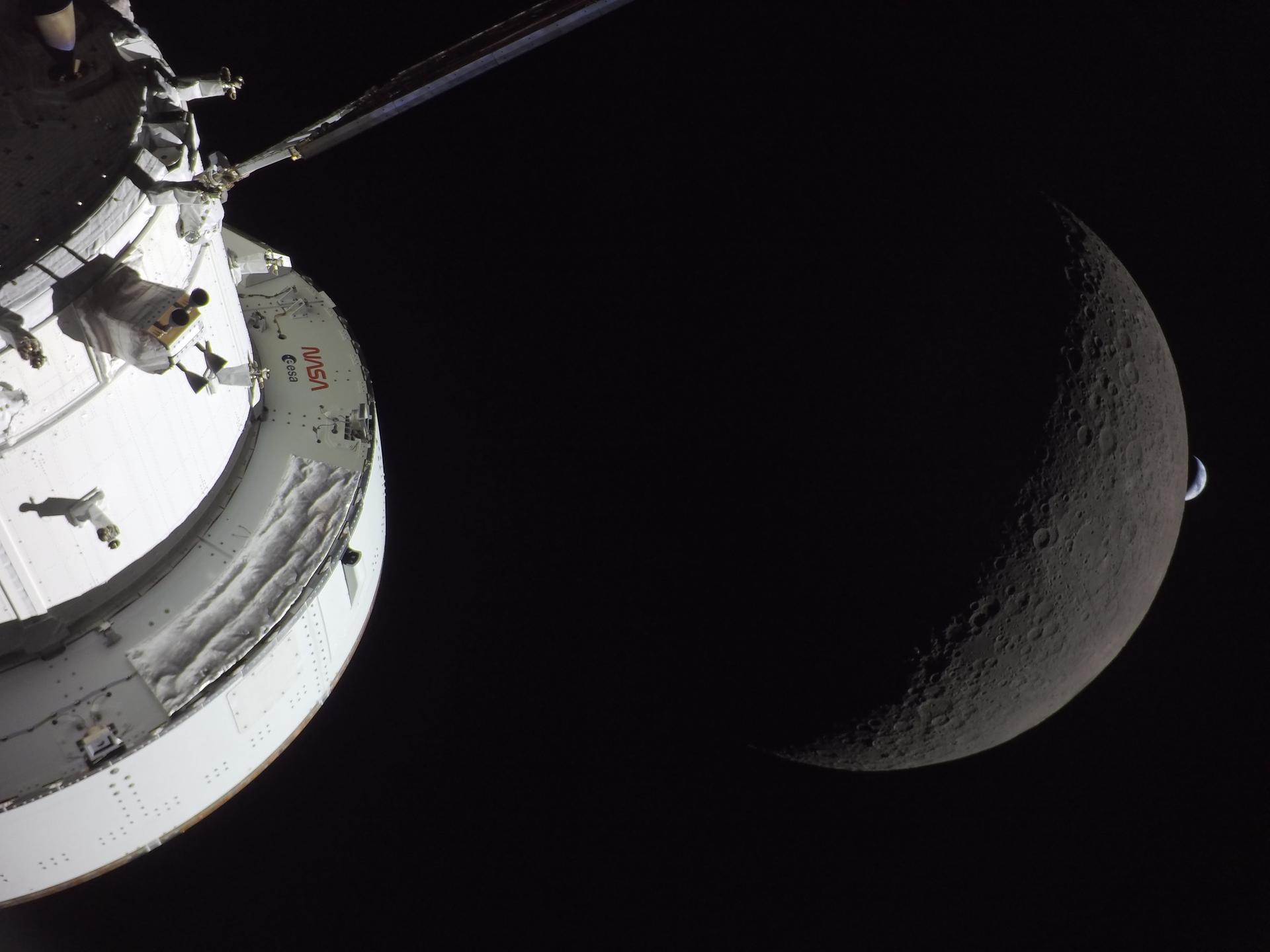
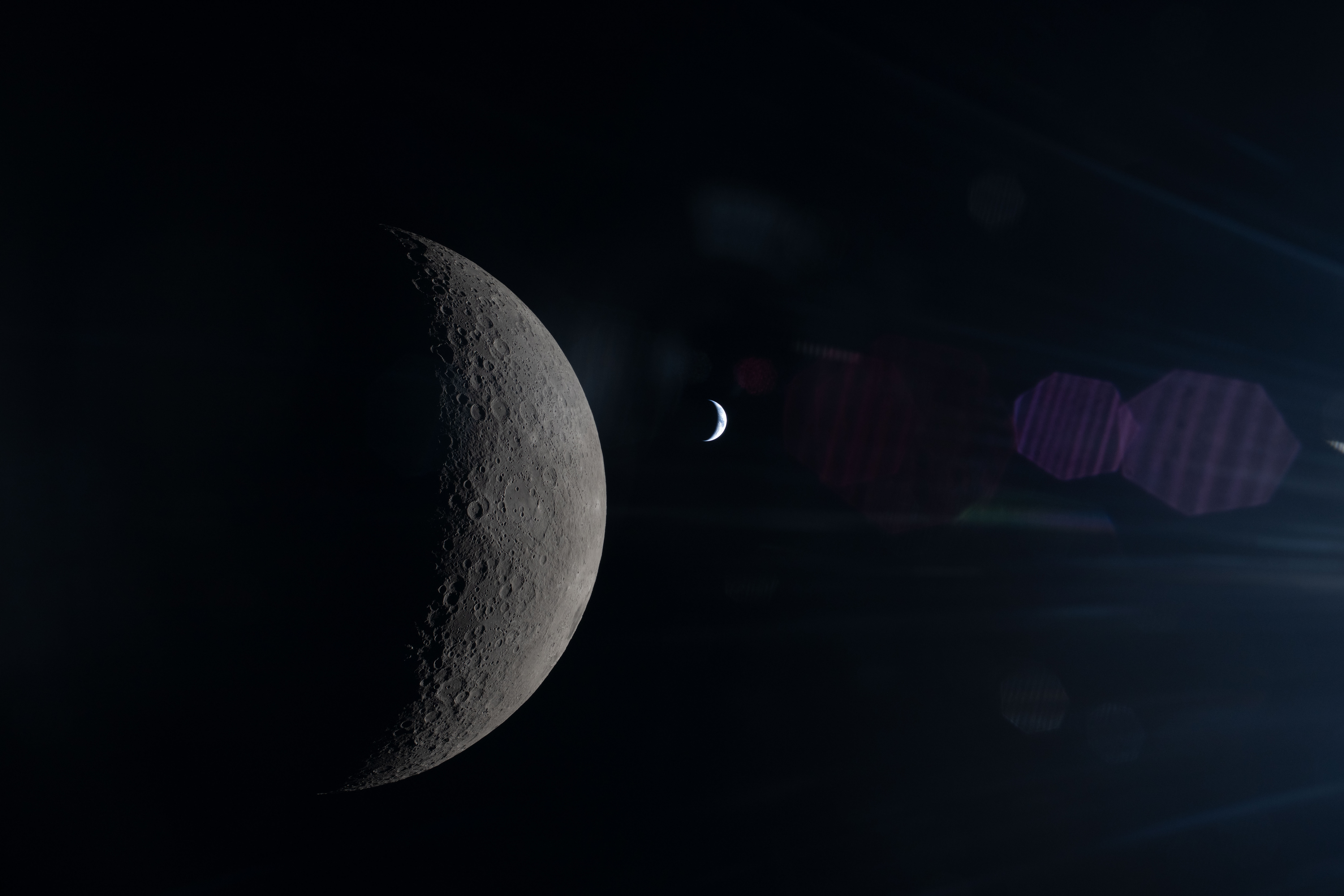
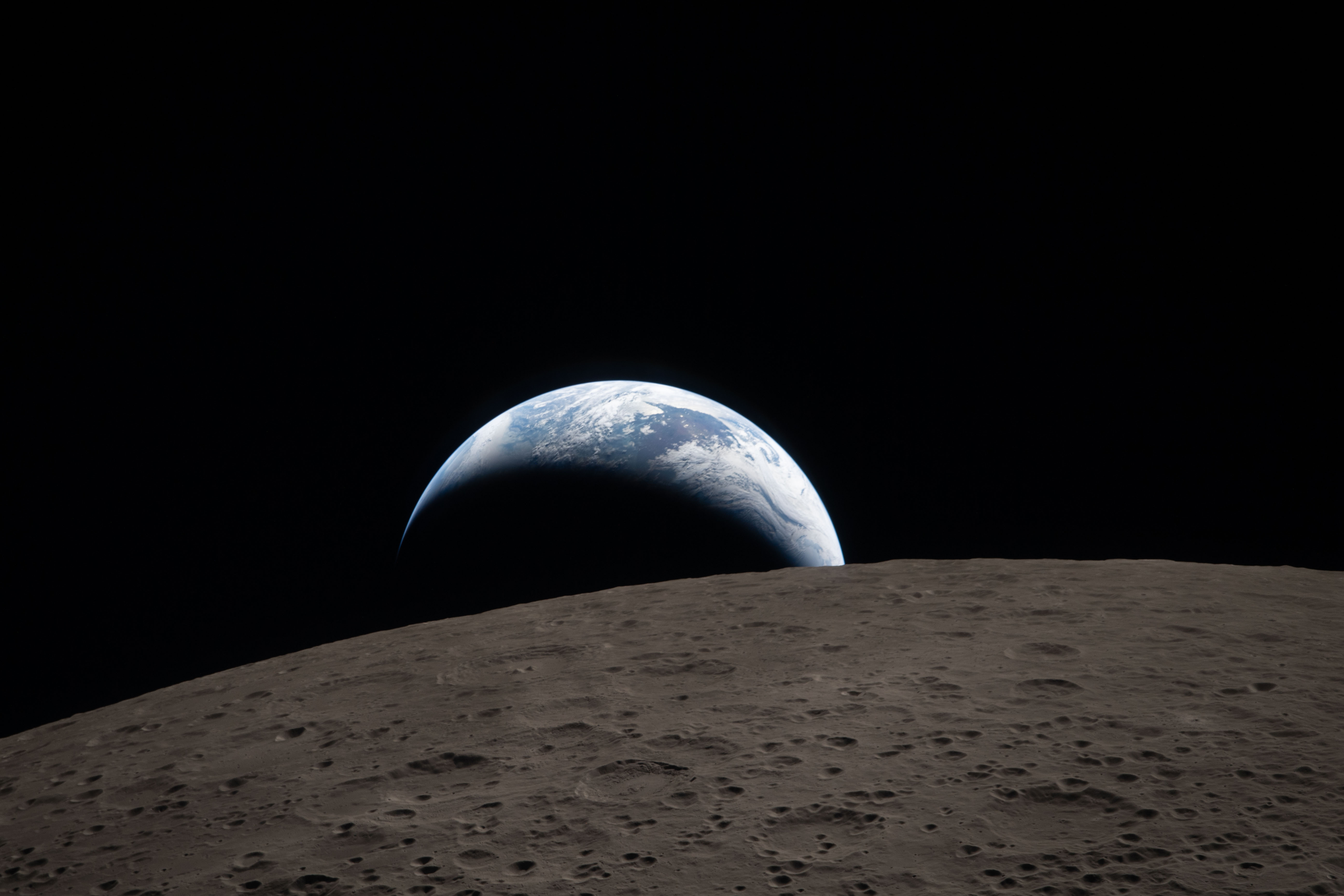
On flight day 6 (April 6) the Artemis II mission achieved a historic lunar flyby. Rounding the lunar far side, the deep space maneuver marked humanity's first venture to the Moon since Apollo 17 in 1972. The Orion spacecraft Integrity reached a maximum distance of nearly 407,000 kilometers, and the Artemis II crew, Reid Wiseman, Victor Glover, and Christina Koch, and Jeremy Hansen, set the record for the farthest distance from Earth traveled by any human since the Apollo 13 crew in 1970. From behind the Moon on flight day 6, a solar array wing camera recorded this space age selfie, framing the spacecraft and lunar far side. Planet Earth, home to the Artemis II crew, is the small, bright crescent beyond the lunar limb. The crew safely returned home on Artemis II mission flight day 10. Artemis II: Splashdown

Download item bundle
Artemis II: Flight Day 6
10 Apr 2026, 16:35 GMT

Seen during the Artemis II mission, the Moon and Earth align in the same frame, each partially illuminated by the Sun.

Download item bundle
New Perspective of Home
10 Apr 2026, 00:00 GMT By Mike Selby

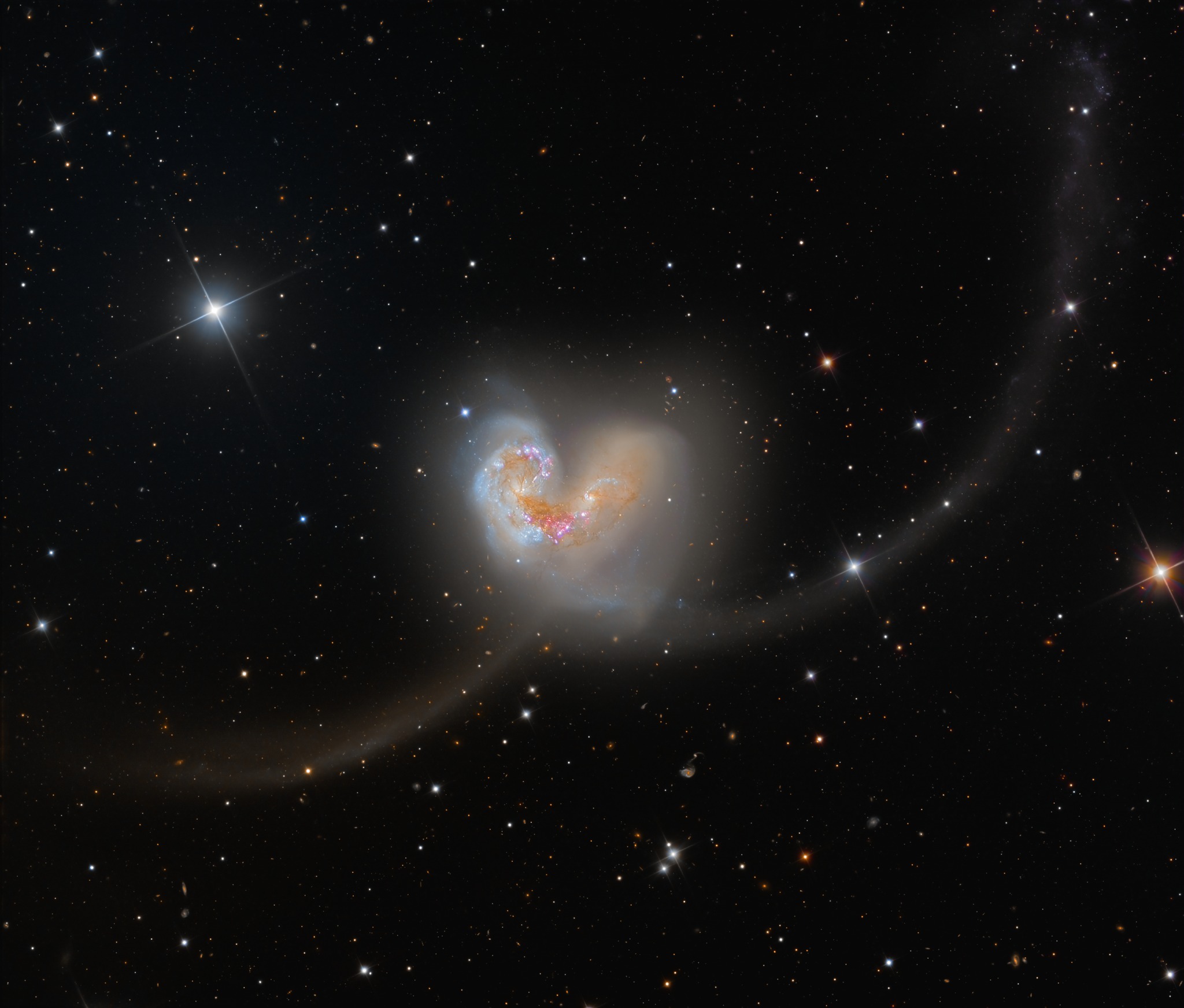
Some 60 million light-years away in the southerly constellation Corvus, two large galaxies are colliding. Stars in the two galaxies, cataloged as NGC 4038 and NGC 4039, very rarely collide in the course of the ponderous cataclysm that lasts for hundreds of millions of years. But the galaxies' large clouds of molecular gas and dust often do, triggering furious episodes of star formation near the center of the cosmic wreckage. Spanning over 50 thousand light-years, this stunning telescopic frame also reveals new star clusters and matter flung far from the scene of the accident by gravitational tidal forces. The remarkably sharp ground-based image follows the faint tidal tails and distant background galaxies in the field of view. The suggestive overall visual appearance of the extended arcing structures gives the galaxy pair, also known as Arp 244, its popular name - The Antennae. Artemis II: Splashdown

Download item bundle
Exploring the Antennae
Credit: Mike Selby
9 Apr 2026, 20:32 GMT

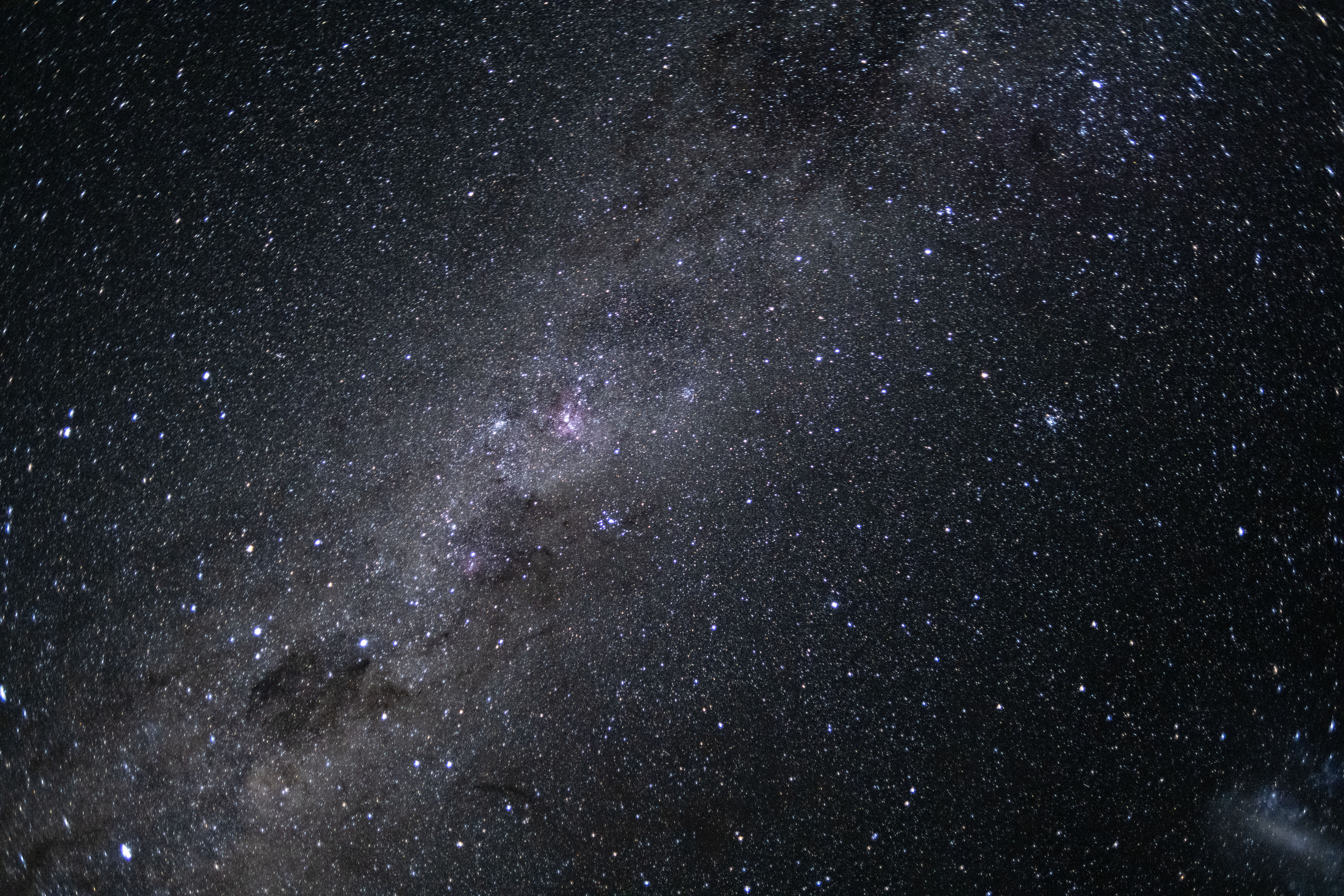
A stunning snapshot in time. The Artemis II crew captured this breathtaking photo of our galaxy, the Milky Way.

Download item bundle
Starstruck
8 Apr 2026, 17:15 GMT

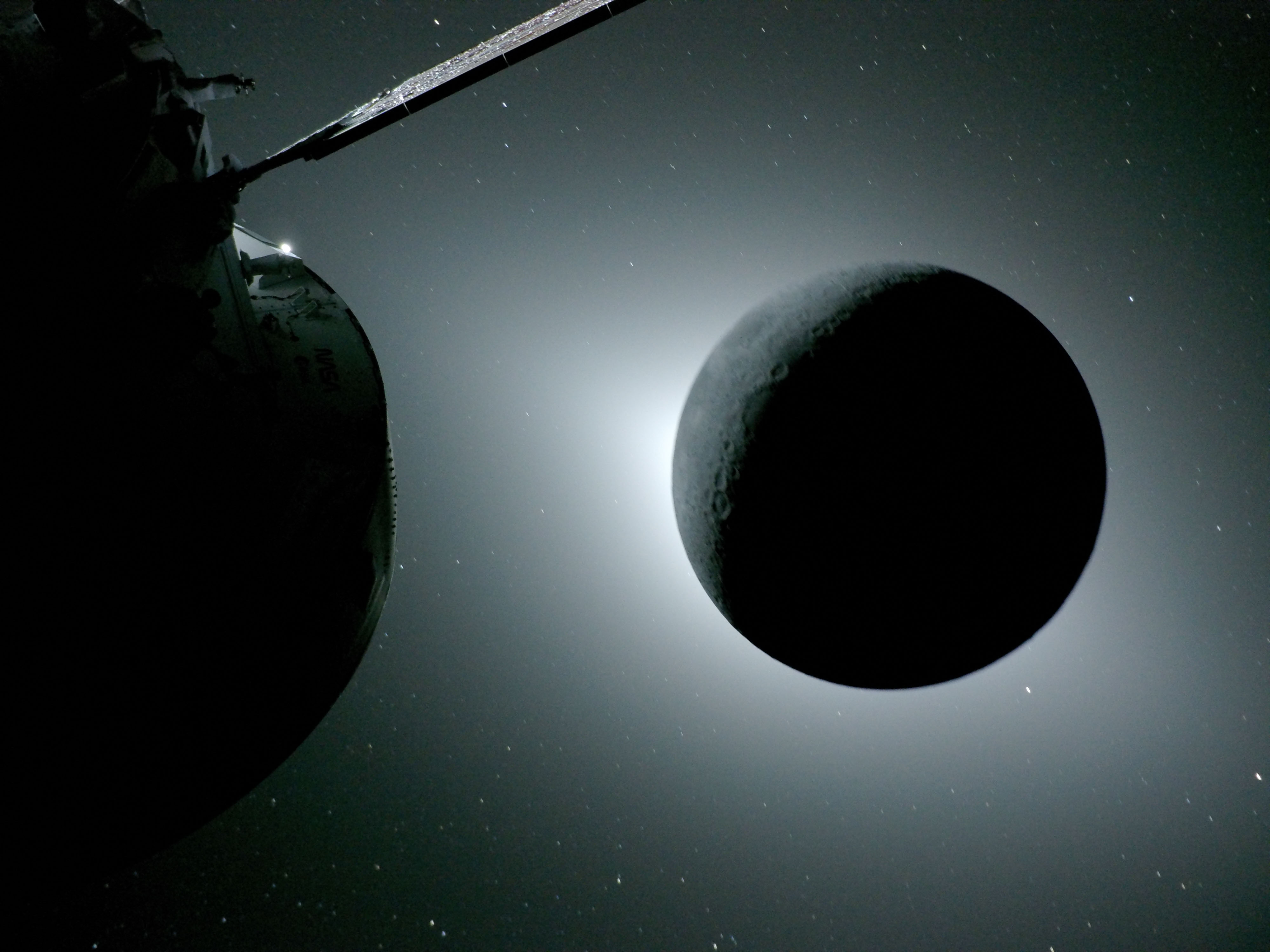
The Moon, seen here backlit by the Sun during a solar eclipse on April 6, 2026, is photographed by one of the cameras on the Orion spacecraft’s solar array wings. Orion is visible in the foreground on the left.

Download item bundle
Solar Eclipse of the Heart
8 Apr 2026, 00:00 GMT 2 variants

And to all of you down there on Earth and around Earth, we love you, from the Moon. We will see you on the other side, said Artemis II pilot Victor Glover on April 6th at 6:44pm ET as 8.3 billion minus four people and one Earth set below the Moon's horizon. The Orion spacecraft, Integrity, then traveled behind the Moon as part of its seven-hour lunar flyby. The crew characterized never-before-seen regions of the far side of the Moon, which is puzzlingly less volcanically active than the near side. New observations of crater peaks, floors, terraces, and rings preserved on the lunar surface will help piece together the impact history of the Solar System. Among many other surface characterizations, the crew observed one of the Moon's best-preserved basins, the Orientale basin, and identified two new craters. As Earth rose above the Moon’s horizon and Integrity began its return home, Artemis II mission specialist Christina Koch powerfully summarized humanity’s grander mission: ...we will always choose Earth. We will always choose each other.

Download item bundle
Earthset
7 Apr 2026, 00:00 GMT By Rabeea Alkuwari

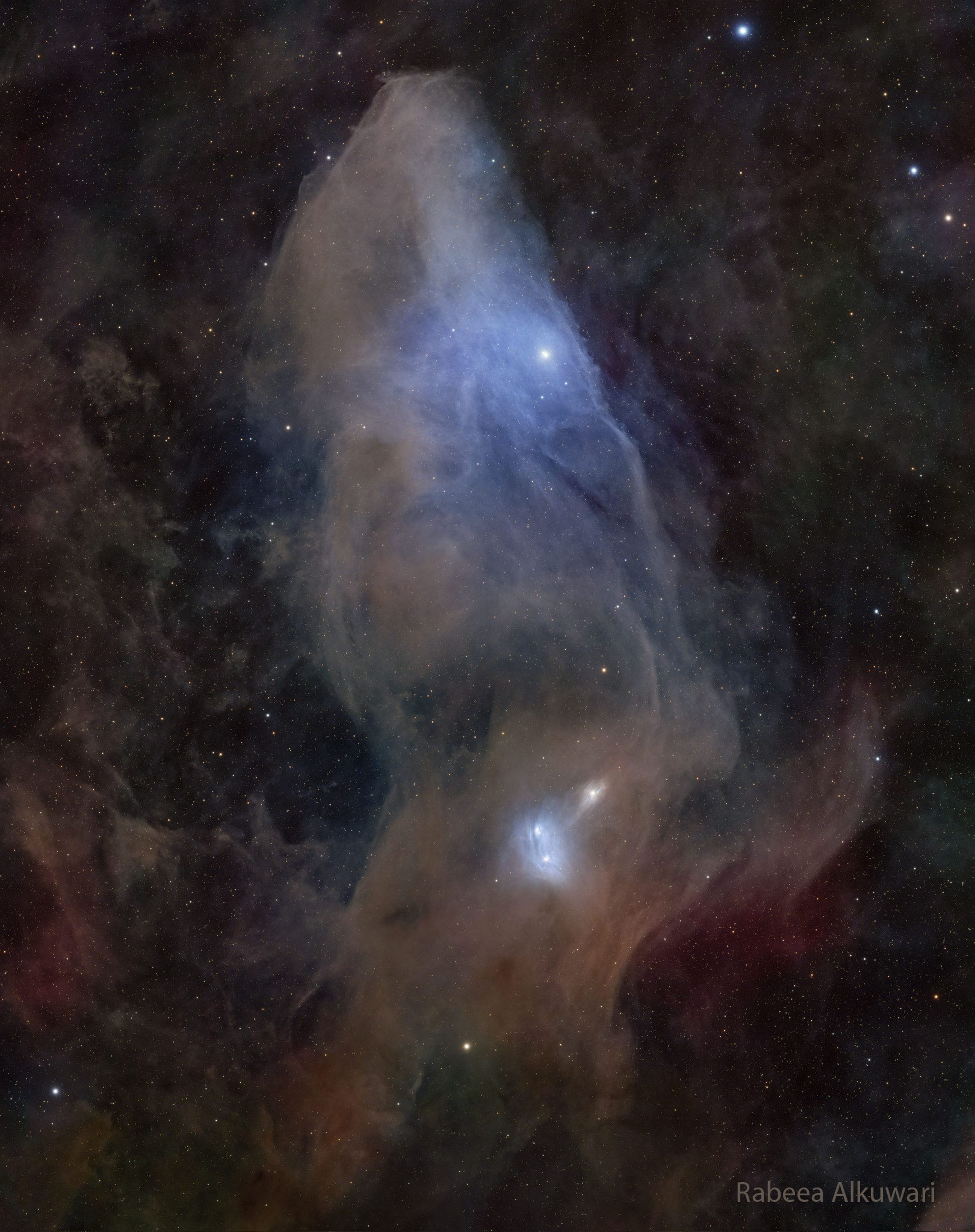
Do you see the horse's head? What you are seeing is not the famous Horsehead nebula toward Orion, but rather a fainter nebula that only takes on a familiar form with deeper imaging. The main part of the here-imaged molecular cloud complex is reflection nebula IC 4592. Reflection nebulas are made up of very fine dust that normally appears dark but can look quite blue when reflecting the visible light of energetic nearby stars. In this case, the source of much of the reflected light is a star at the eye of the horse. That star is part of Nu Scorpii, one of the brighter star systems toward the constellation of the Scorpion (Scorpius). A second reflection nebula dubbed IC 4601 is visible surrounding two stars just below the image center. The featured picture was taken from Sawda Natheel in Qatar. Jigsaw Nebula: Astronomy Puzzle of the Day

Download item bundle
IC 4592: The Blue Horsehead Reflection Nebula
Credit: Rabeea Alkuwari
6 Apr 2026, 15:00 GMT

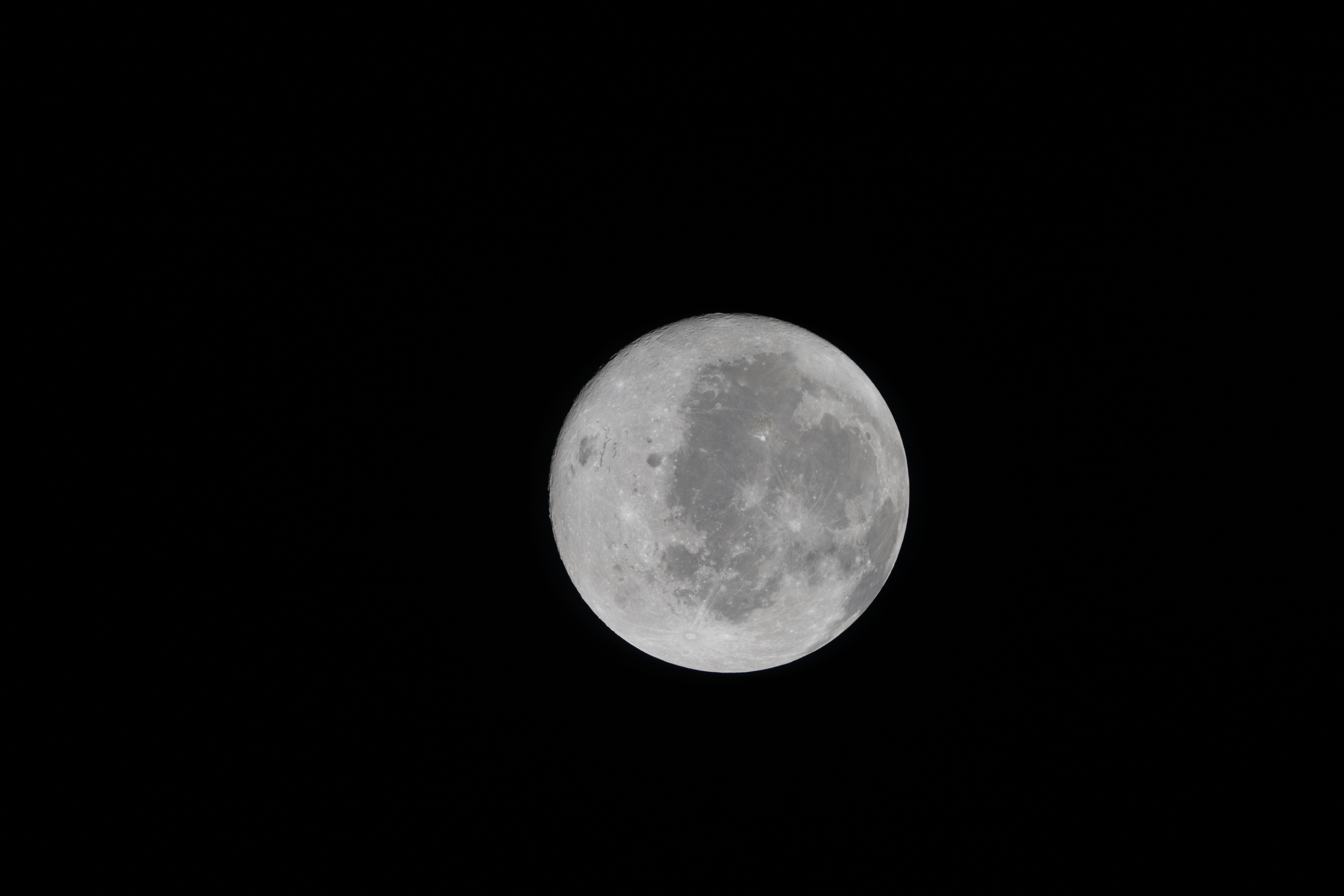
A view of the near side of the Moon, the side we always see from Earth, as seen from the Orion spacecraft.

Download item bundle
The Near Side of the Moon
5 Apr 2026, 14:05 GMT

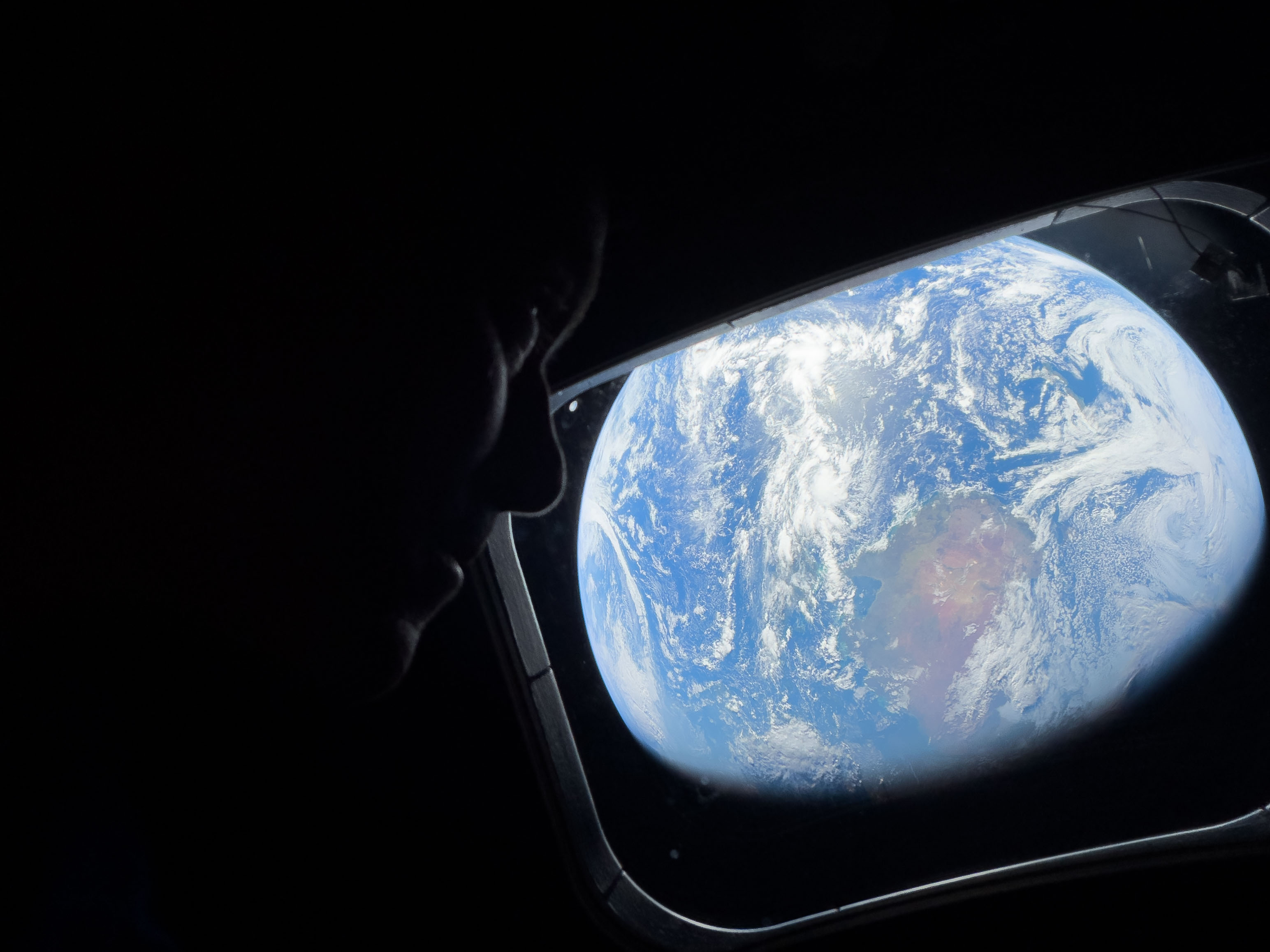
NASA astronaut and Artemis II Commander Reid Wiseman peers out of one of the Orion spacecraft's main cabin windows on April 4, 2026, looking back at Earth, as the crew travels towards the Moon.

Download item bundle
Thinking of You, Earth
5 Apr 2026, 00:00 GMT By AAO ITSO Office, Gemini Obs./AURA & T. A. Rector (U. Alaska Anchorage)

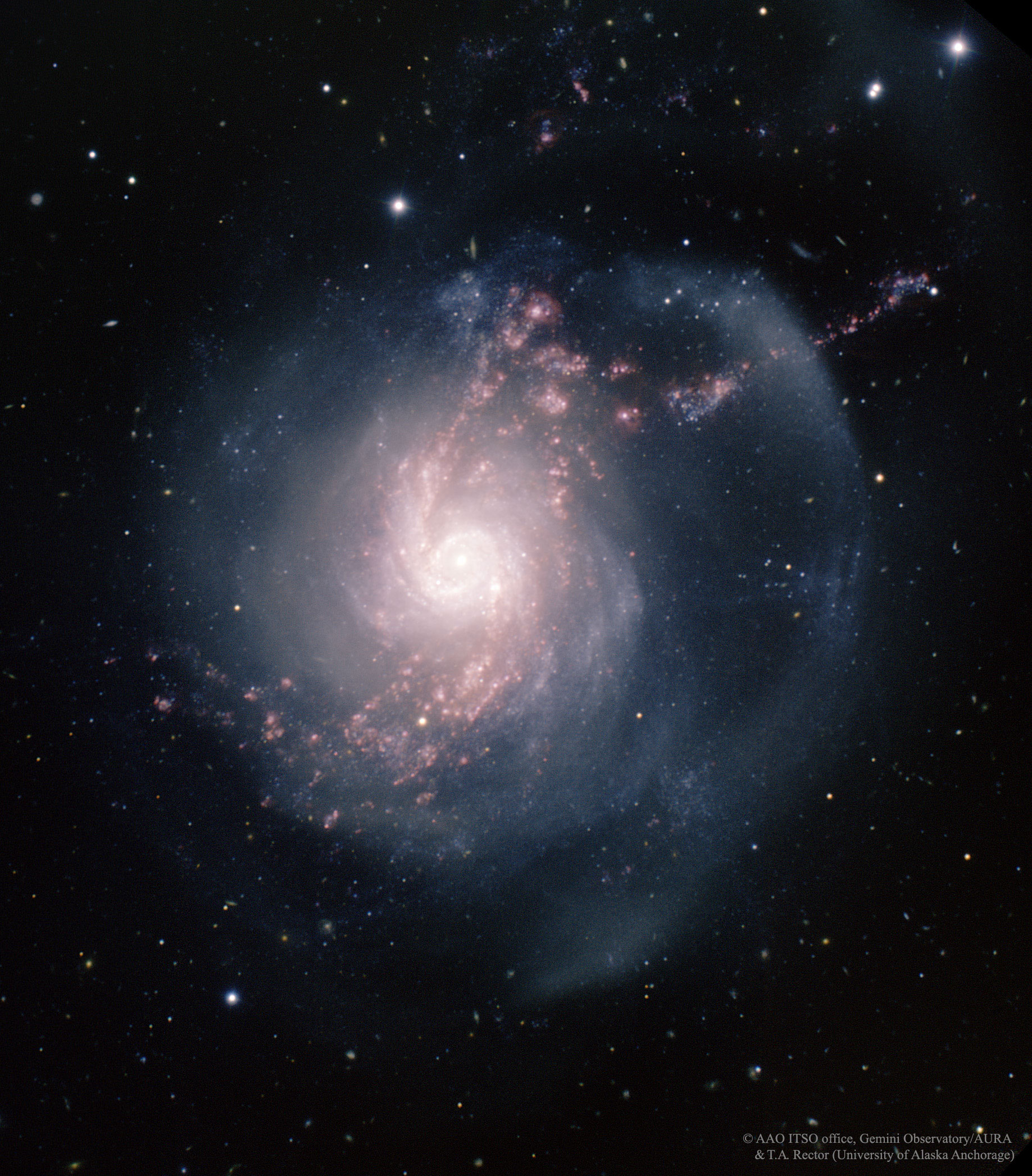
The party is still going on in spiral galaxy NGC 3310. Roughly 100 million years ago, NGC 3310 likely collided with a smaller galaxy causing the large spiral galaxy to light up with a tremendous burst of star formation. The changing gravity during the collision created density waves that compressed existing clouds of gas and triggered the star-forming party. The featured image from the Gemini North Telescope shows the galaxy in great detail, color-coded so that pink highlights gas while white and blue highlight stars. Some of the star clusters in the galaxy are quite young, indicating that starburst galaxies may remain in star-burst mode for quite some time. NGC 3310 spans about 50,000 light years, lies about 50 million light years away, and is visible with a small telescope towards the constellation of Great Bear Ursa Major.

Download item bundle
NGC 3310: A Starburst Spiral Galaxy
Credit: AAO ITSO Office, Gemini Obs./AURA & T. A. Rector (U. Alaska Anchorage)
4 Apr 2026, 15:08 GMT

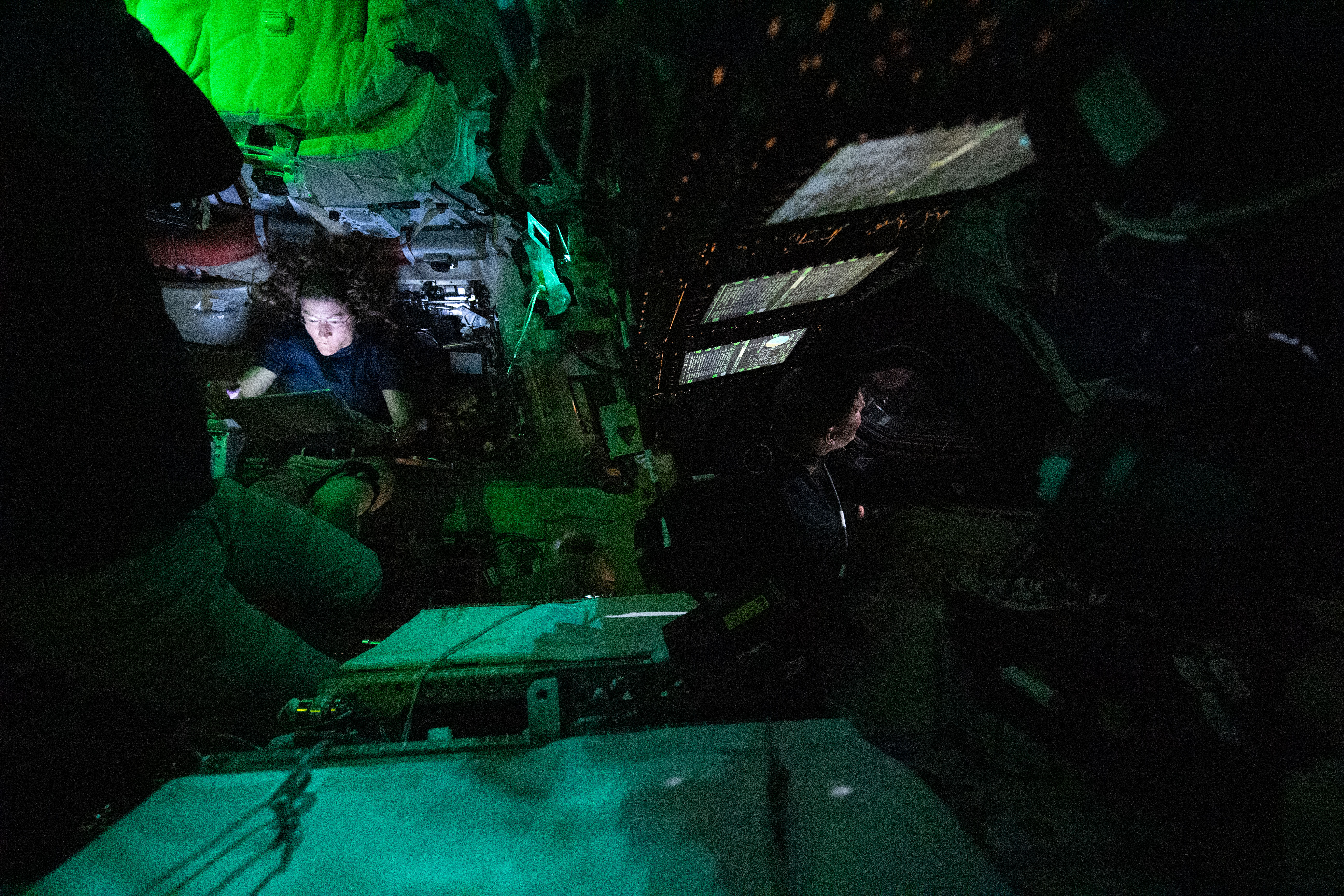
NASA astronaut Christina Koch is illuminated by a screen inside the darkened Orion spacecraft on the third day of the agency's Artemis II mission. To the right of the image's center, CSA (Canadian Space Agency) astronaut Jeremy Hansen is seen in profile peering out of one of Orion's windows. Lights are turned off to avoid glare on the windows.

Download item bundle
Illuminated in Orion
3 Apr 2026, 13:34 GMT

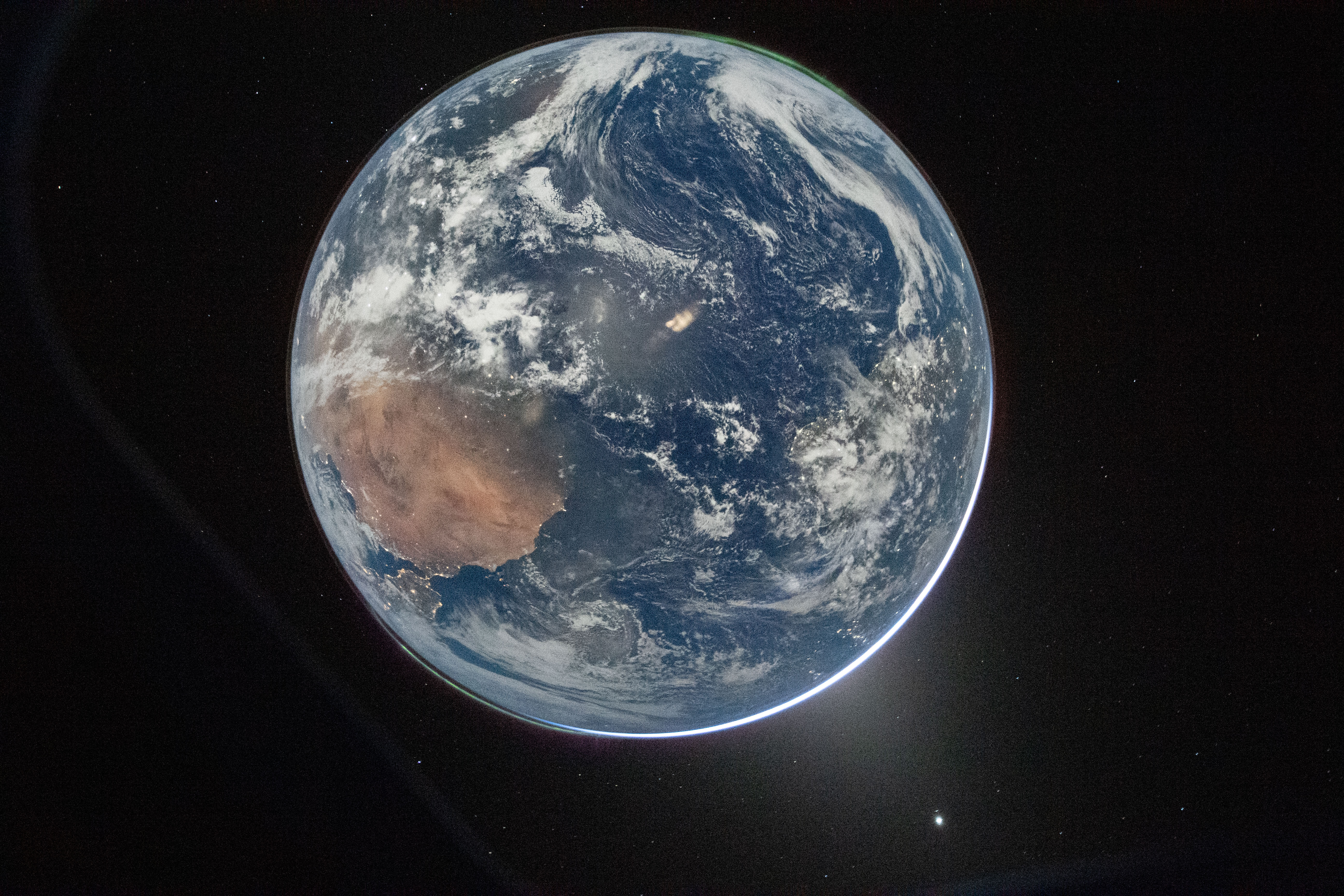
This nighttime picture of Earth was taken on April 2, 2026, by an Artemis II crew member aiming a camera through a window of the Orion spacecraft. The image was captured after Orion completed its translunar injection burn, the critical maneuver that sent the spacecraft on its path toward the Moon and back.

Download item bundle
Hello, World
2 Apr 2026, 16:50 GMT

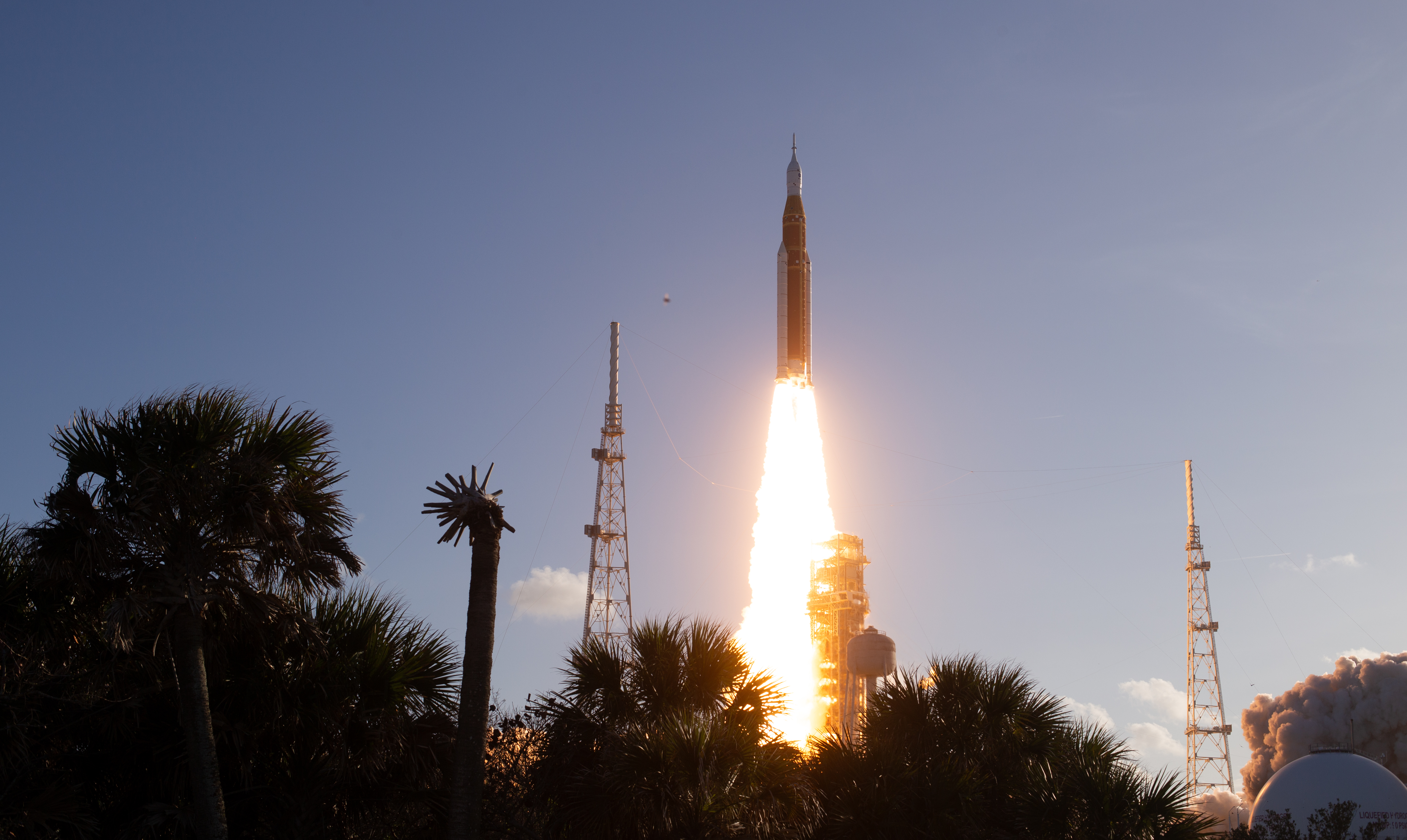
NASA’s Space Launch System rocket carrying the Orion spacecraft with NASA astronauts Reid Wiseman, commander; Victor Glover, pilot; Christina Koch, mission specialist; and CSA (Canadian Space Agency) astronaut Jeremy Hansen, mission specialist onboard launches on the Artemis II mission, Wednesday, April 1, 2026, from Launch Complex 39B at NASA’s Kennedy Space Center in Florida.

Download item bundle
Artemis II Astronauts Launch to Moon