
Active filters Type: Media
Clear all
25 Apr 2026, 22:31 GMT By NASA

Live now • 7,910 watching • We're launching three tons of food, fuel, and supplies to the International Space Station. Watch live with us. The unpiloted Progress 95 resupply spacecraft is scheduled to lift off at 6:21...

Download item bundle
Live now
25 Apr 2026, 00:00 GMT By Lorenzo Busilacchi

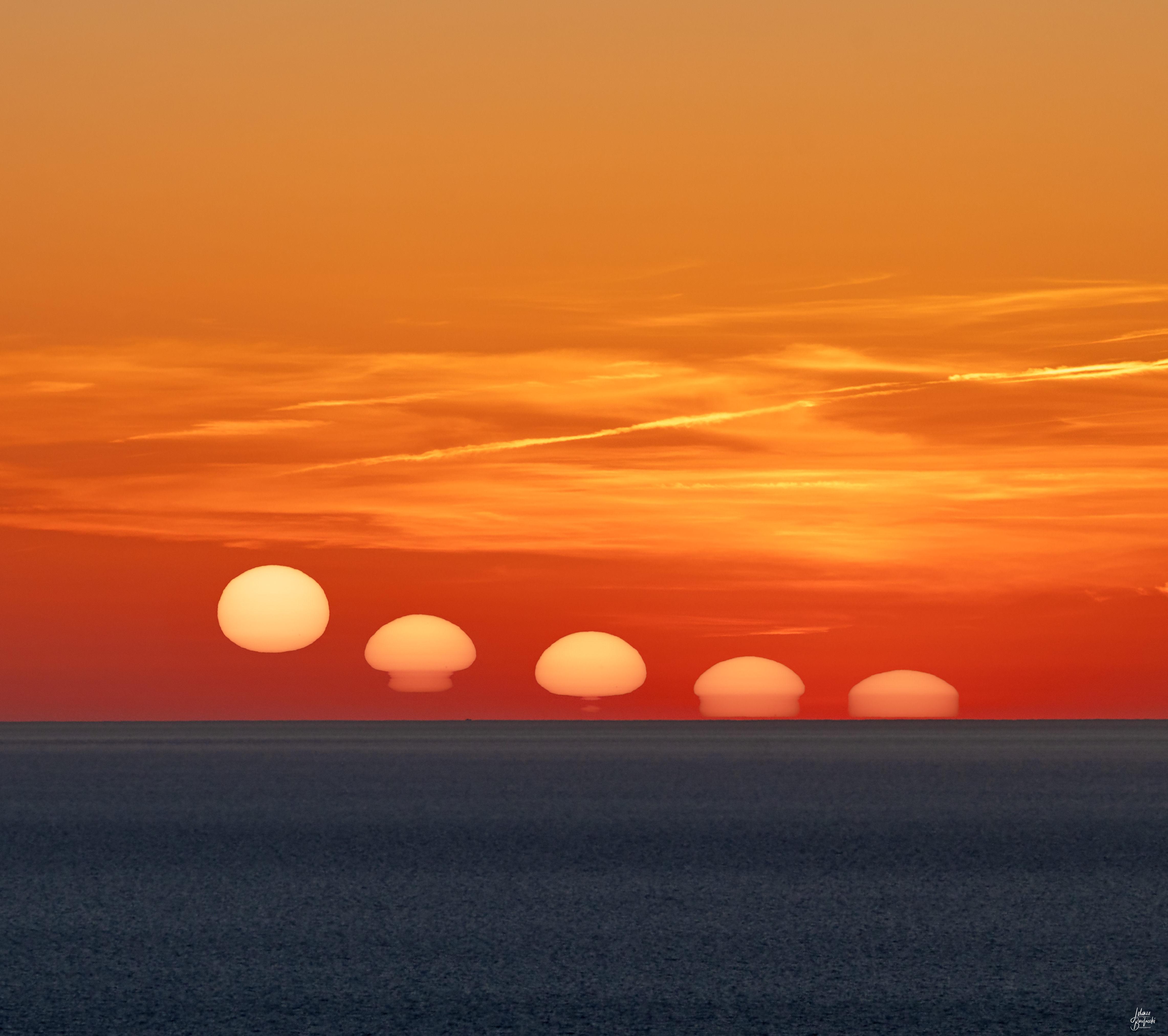
This seaside sunset offered a surreal experience, captured in a sea and skyscape from the west coast of Sardinia, Italy, planet Earth. The Daliesque scene is a composition of sequential exposures made with a camera and long telephoto lens. The Sun is not melting, though. Its shifting and fluid appearance as it nears the horizon is caused as refraction along the line of sight changes and creates distorted images or mirages of the reddened solar disk. The changes in atmospheric refraction correspond to atmospheric layers with sharply different temperatures and densities. Another famous but fleeting effect of atmospheric refraction produced by a long sight-line to the setting (or rising) Sun is often called the green flash.

Download item bundle
The Persistence of Sunlight
Credit: Lorenzo Busilacchi
24 Apr 2026, 14:59 GMT

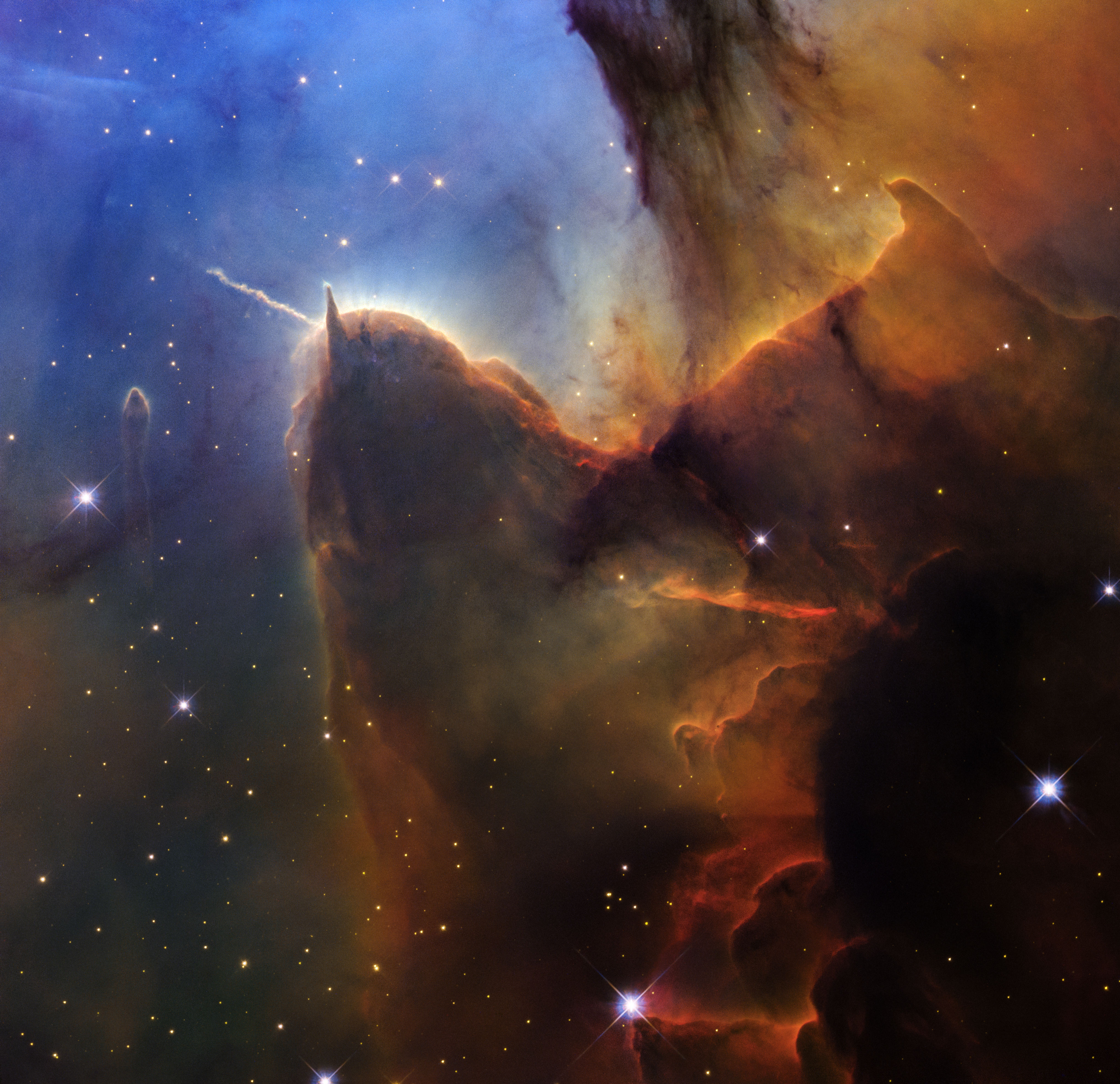
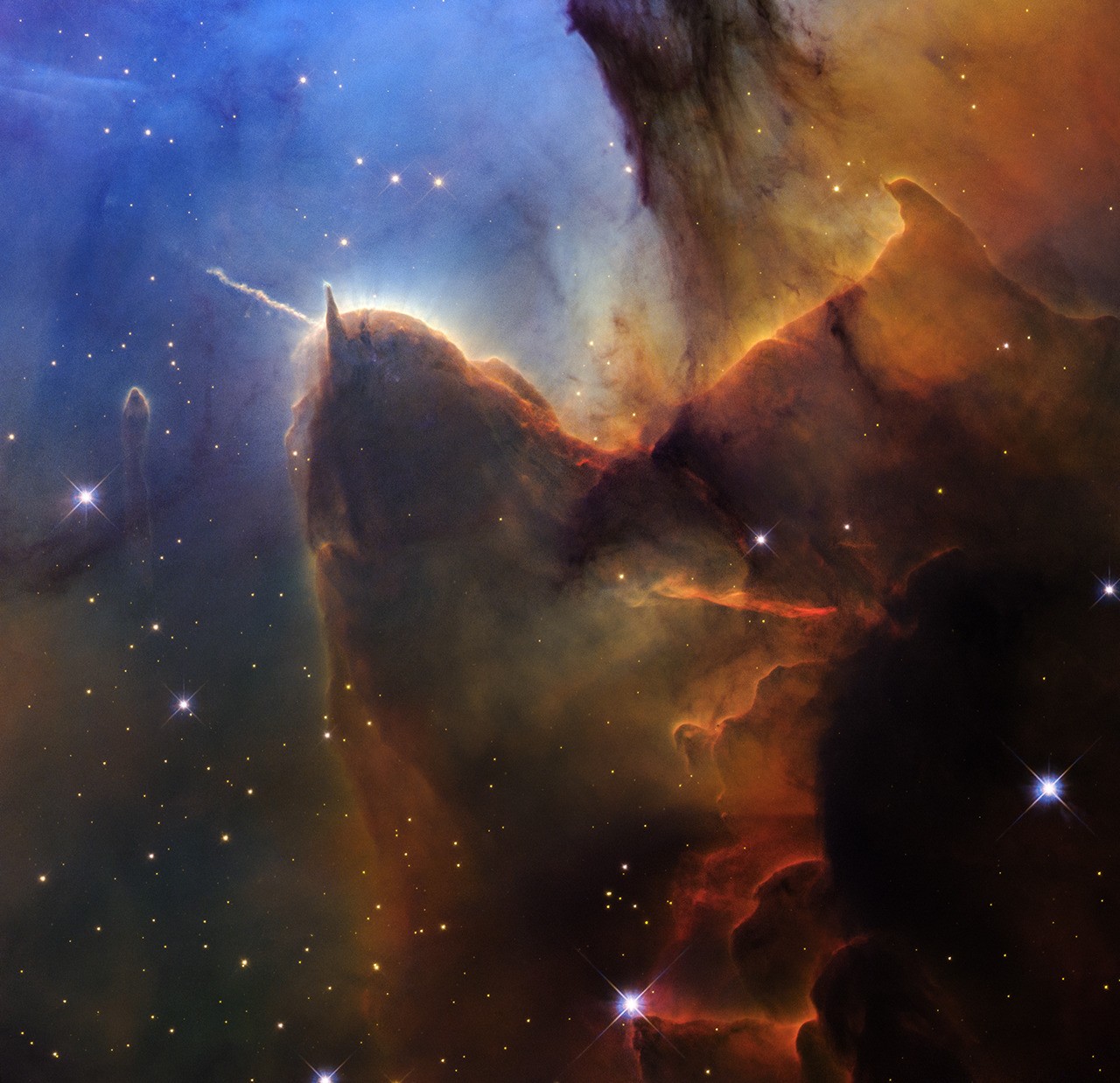
NASA celebrates Hubble’s 36th anniversary with a new image of the Trifid Nebula, a star-forming region it first captured in 1997. The telescope leveraged almost its full operational lifetime to show us changes in the nebula on human time scales with an improved camera.

Download item bundle
The Day of the Trifid Nebula
24 Apr 2026, 00:00 GMT By Giorgia Hofer

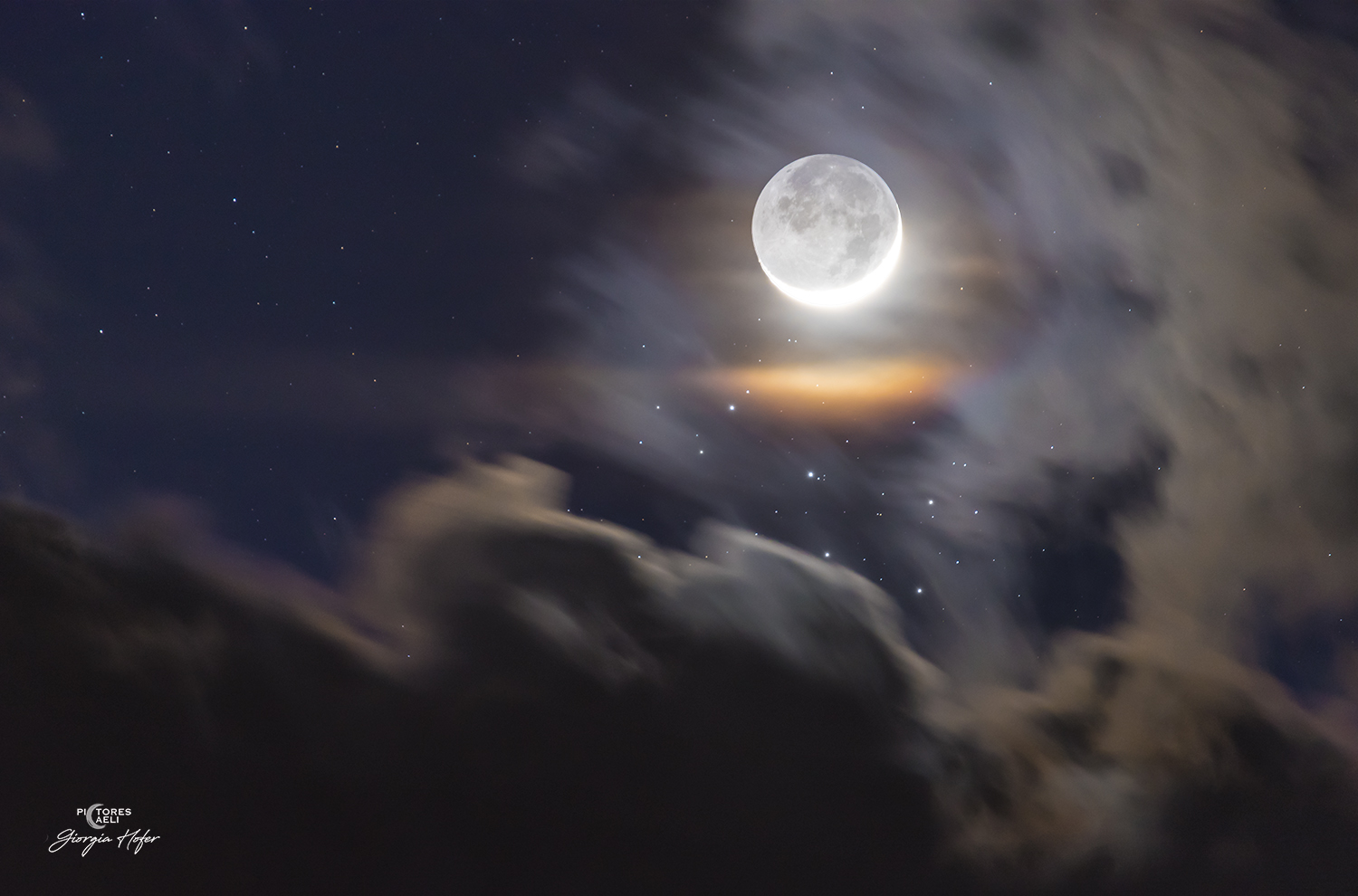
Sunlit arms of a crescent moon seem to embrace the faint lunar night side in this dramatic celestial view from planet Earth. The single telephoto exposure tracking the sky was captured on the night of April 19, when a two day old Moon was near perigee in its elliptical orbit. On that date, the young Moon was also close on the sky to the lovely Pleiades Star Cluster. With the moonlight dimmed by clouds the Pleiades sister stars gather below the Moon's bright crescent, seen through a faint but colorful lunar corona. The lunar night side is illuminated by earthshine, sunlight reflected from the Earth itself. The Moon's ashen glow, also known as the "old moon in the young moon's arms," tends to be bright in the northern hemisphere spring. And for now, the Moon's orbit takes it near the Pleiades stars each month in planet Earth's sky, though their close conjunctions are easiest to see when the Moon is near a crescent phase.

Download item bundle
Young Moon and Sister Stars
Credit: Giorgia Hofer
23 Apr 2026, 16:07 GMT By Tara Friesen 5 variants

For years, NASA engineers have turned to a tool called the Launch, Ascent, and Vehicle Aerodynamics (LAVA) framework to solve airflow challenges that could mean the difference between mission success or failure. When engineers need to know how a spacecraft will navigate re-entry or whether a new aircraft wing design will create enough lift, they

Download item bundle
23 Apr 2026, 15:05 GMT

Scientists have found that young stellar cousins of our Sun are calming down and dimming more quickly in their X-ray output than previously thought, according to a study using NASA’s Chandra X-ray Observatory.

Download item bundle
NASA's Chandra Finds Young Stars Dim Quickly
23 Apr 2026, 00:00 GMT

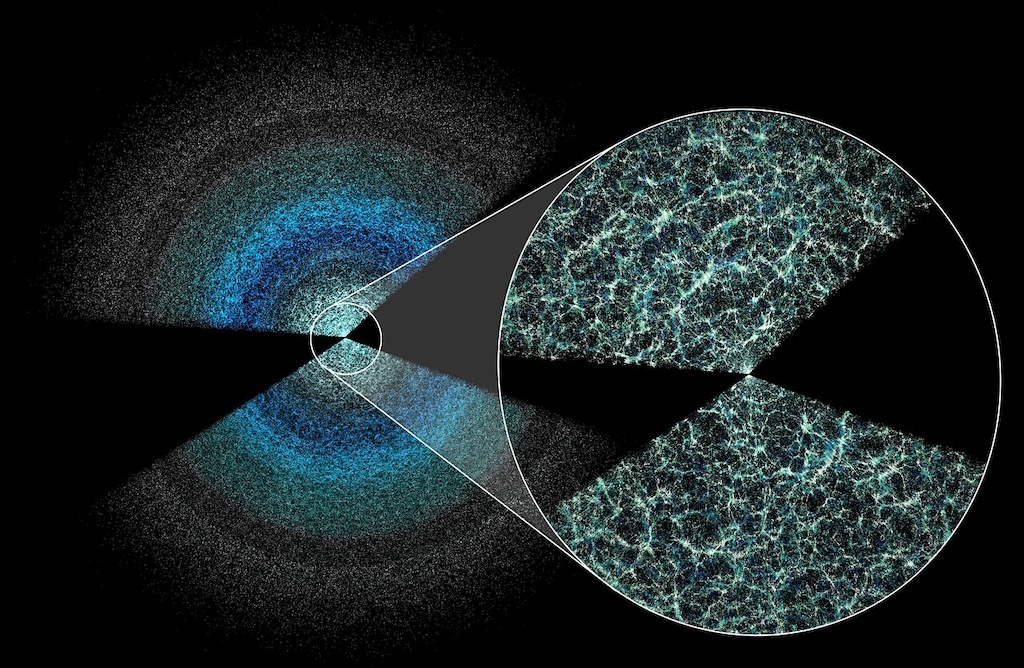
This is a map of the universe. The Dark Energy Spectroscopic Instrument (DESI) at Kitt Peak National Observatory, Arizona, has finished its five-year survey. It observed more than 47 million galaxies and quasars and created a 3D map centered on the Earth. Today's featured image shows a thin slice of these data: the black gaps indicate where our Galaxy obscures distant objects. The feathery web in the inset shows the large scale structure of the universe. Light of the most distant galaxies shown here travelled for 11 billion years to reach the Earth. Galaxies cluster throughout cosmic history under the competing influences of gravity and dark energy, responsible for the accelerated expansion of the universe. Analysis of early DESI results hinted at the possibility that dark energy, described as a cosmological constant by Albert Einstein, may not be constant after all. But we still have to wait for the analysis of the now complete dataset. The nature of dark energy is the biggest mystery of cosmology.

Download item bundle
Large Scale Structure of the Universe
22 Apr 2026, 15:16 GMT

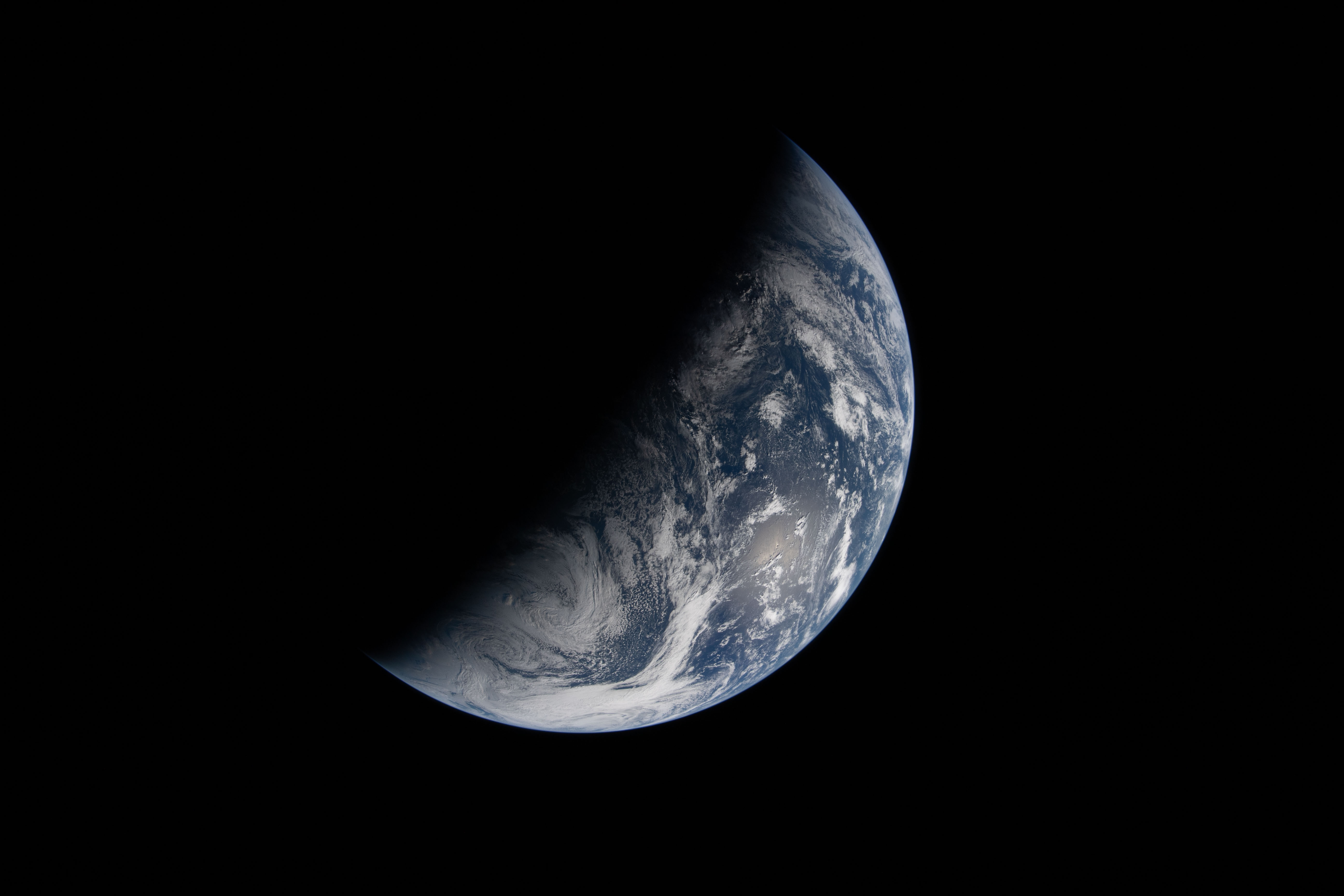
This image, released in celebration of Earth Day, shows the terminator – the line between night and day – on Earth. The Artemis II astronauts captured this view on April 2, 2026, during their journey to the Moon.

Download item bundle
Night and (Earth) Day
22 Apr 2026, 01:55 GMT By Sumer Loggins 6 variants

On April 1, 2026, Artemis II launched on a nearly 10-day voyage around the Moon, marking the first crewed flight of NASA’s Orion spacecraft. NASA astronauts Reid Wiseman, Victor Glover, and Christina Koch, along with CSA (Canadian Space Agency) astronaut Jeremy Hansen, splashed down on April 10 in the Pacific Ocean off the coast of San Diego. At their farthest

Download item bundle
21 Apr 2026, 21:01 GMT By NASA

Live now • 2,632 watching • Our new flagship telescope is fully assembled. Come find out what it will discover. We're hosting a news conference at NASA’s Goddard Space Flight Center in Greenbelt, Maryland, to talk...

Download item bundle
Live now
21 Apr 2026, 20:54 GMT 3 variants

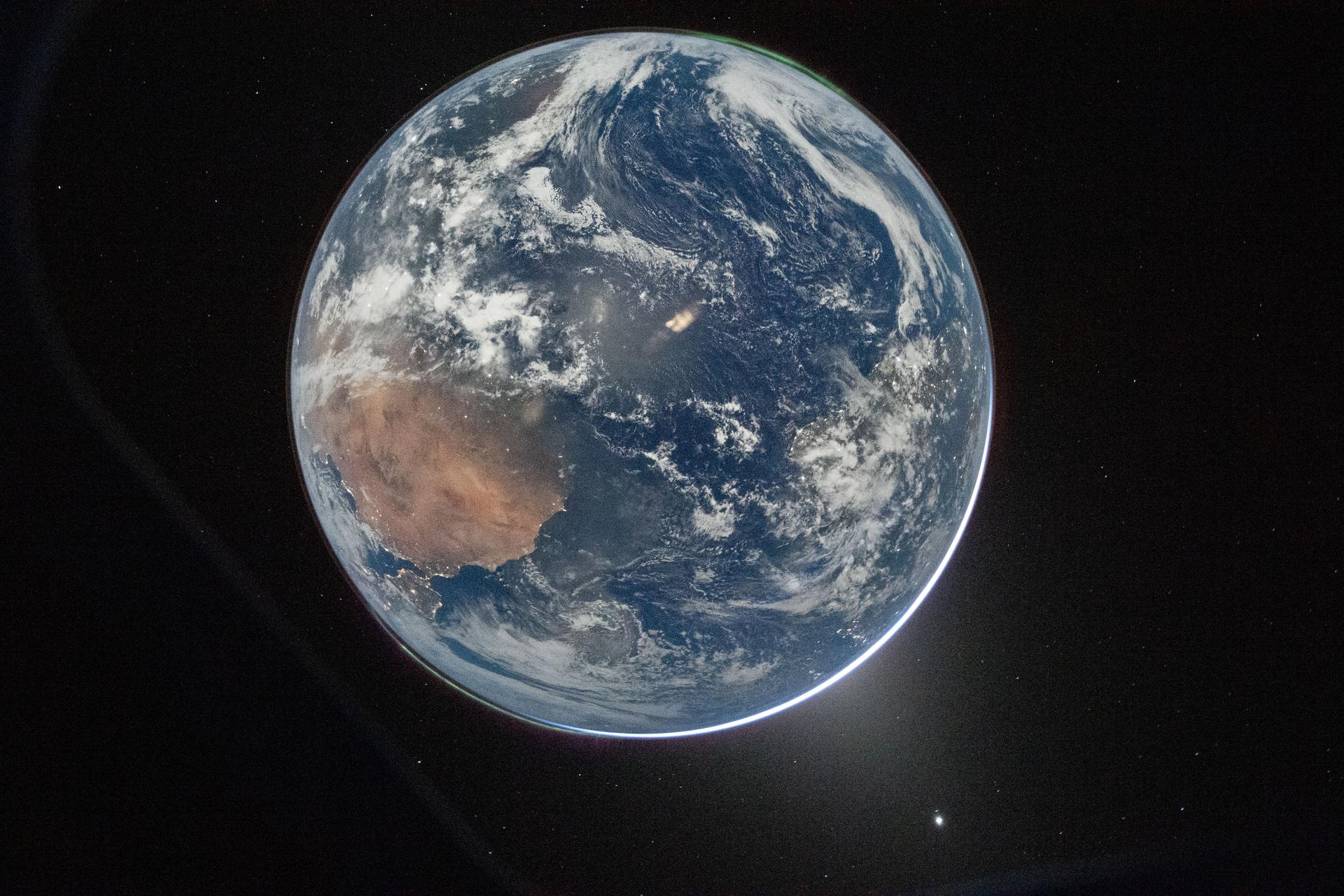
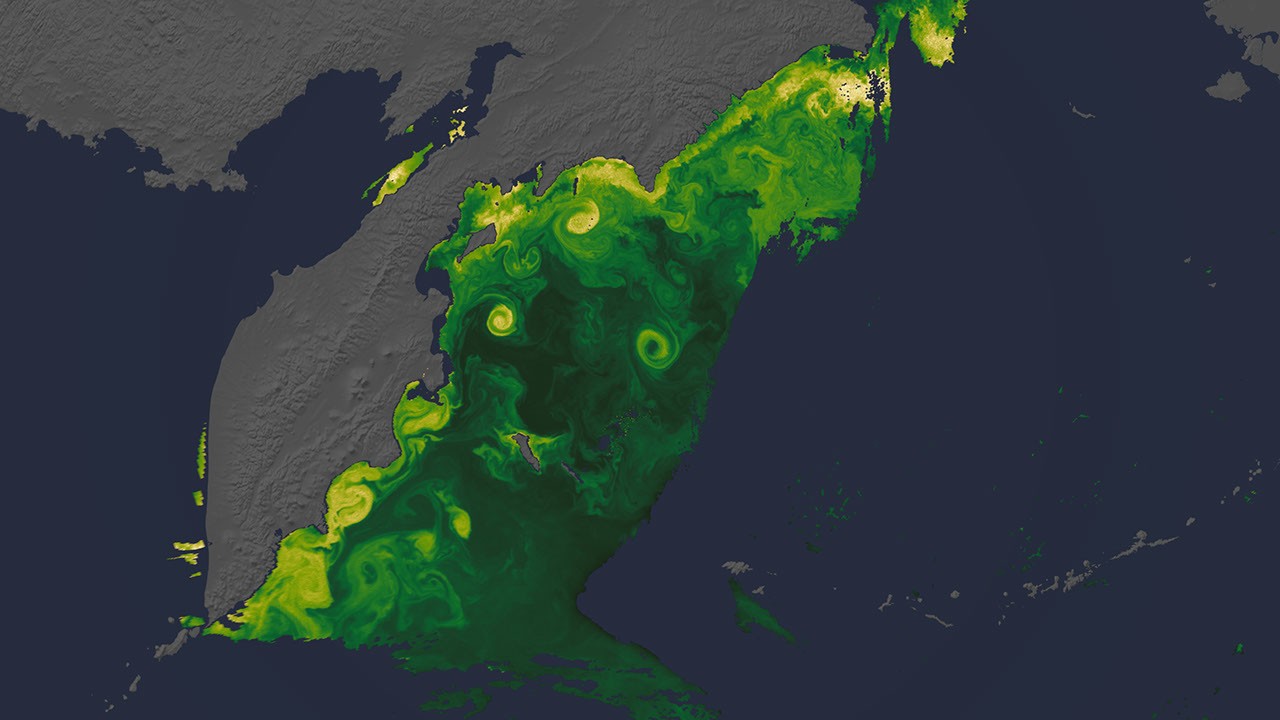
NASA has a fleet of satellites in orbit, gathering data around the clock, to explore unique views of our home planet’s ocean, atmosphere, and land surfaces.

Download item bundle
21 Apr 2026, 15:33 GMT

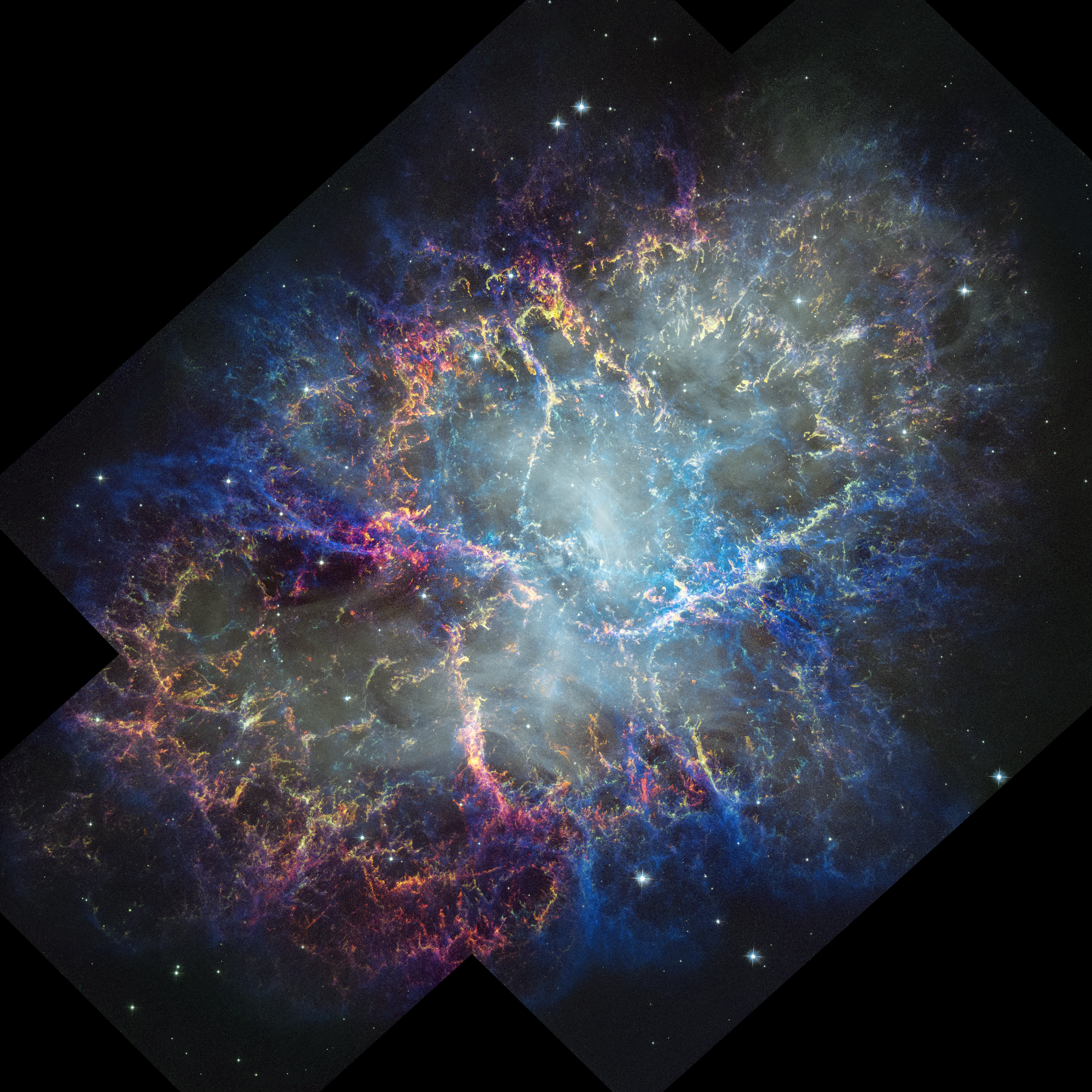
This image that NASA’s Hubble Space Telescope captured of the Crab Nebula, paired with its past observations and those of other telescopes, allows astronomers to study how the supernova remnant is expanding and evolving over time.

Download item bundle
A Fresh Look at the Crab Nebula
21 Apr 2026, 00:00 GMT By Angel Fux

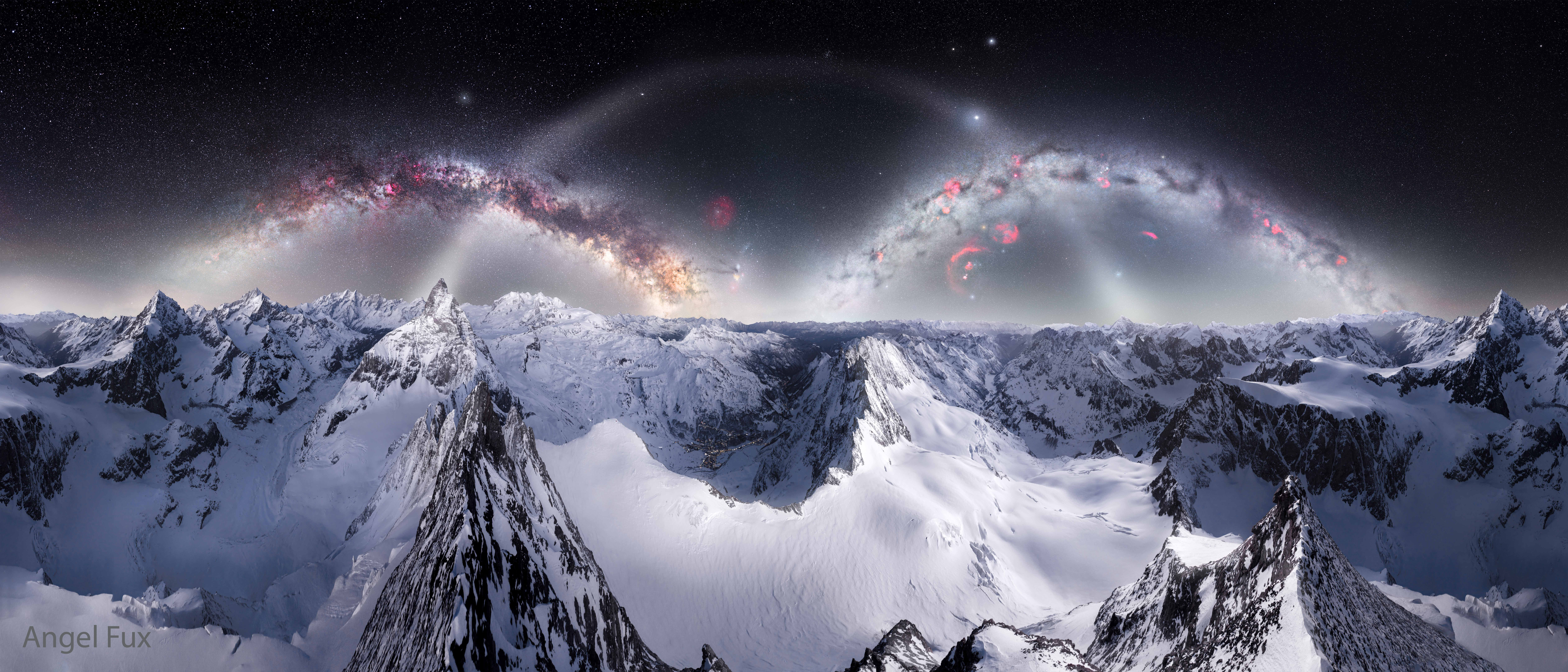
Why are there three arches across the sky instead of two? Last month, after being dropped off by a helicopter at a high mountain peak in the Alps near the Swiss Italian border, an adventurous astrophotographer expected two arches of our Milky Way galaxy to be visible during the night. These were the inner arch looking in toward the center of our galaxy on the left, visible just before sunrise, and the outer arch on the right visible just after sunset. But there were three arches. The surprised astrophotographer soon realized that the sky was so dark that an entire arc of faint zodiacal light was also noticeable -- sunlight scattered by inner Solar System dust. And it artfully connected the two Milky Way arches! The next morning a helicopter picked the astrophotographer back up, and after 40 hours of processing and combining that night's images, the featured triple-arch 360-degree panorama resulted. Jigsaw Vistas: Astronomy Puzzle of the Day

Download item bundle
Three Sky Arches over Snowy Alps
Credit: Angel Fux
20 Apr 2026, 15:59 GMT

NASA’s X-59 quiet supersonic research aircraft flies over the Mojave Desert in California on April 14, 2026.

Download item bundle
Wheels Up for X-59
20 Apr 2026, 14:01 GMT 3 variants

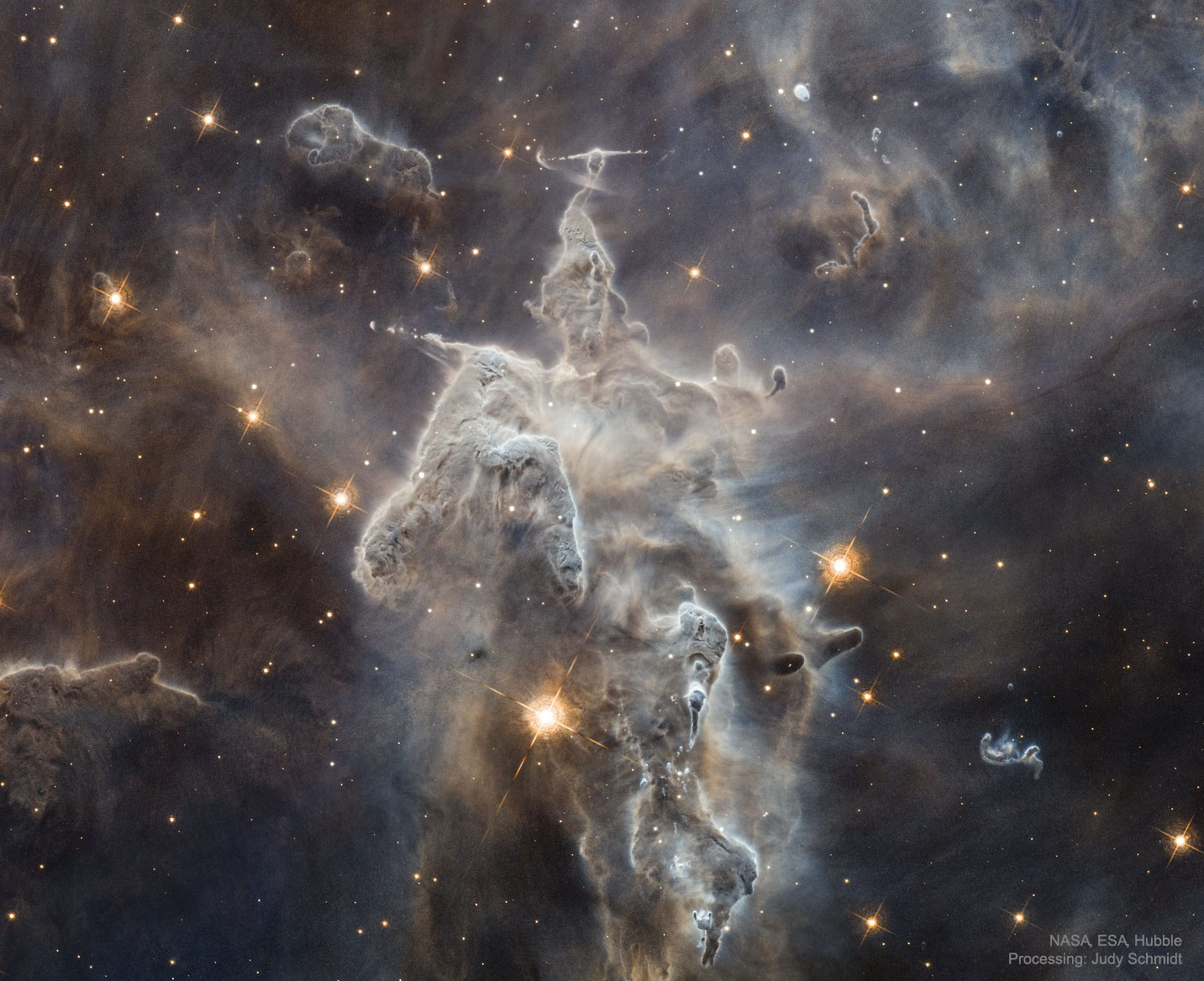
This shimmering region of star-formation, a close-up of the Trifid Nebula about 5,000 light-years from Earth, was captured in intricate detail by NASA’s Hubble Space Telescope. The colors in Hubble’s visible light image, which marks the 36th anniversary of the mission’s launch on April 24, are reminiscent of an underwater scene filled with fine-grained sediments fluttering through the ocean’s depths.

Download item bundle
20 Apr 2026, 00:00 GMT By Basudeb Chakrabarti & Samit Saha

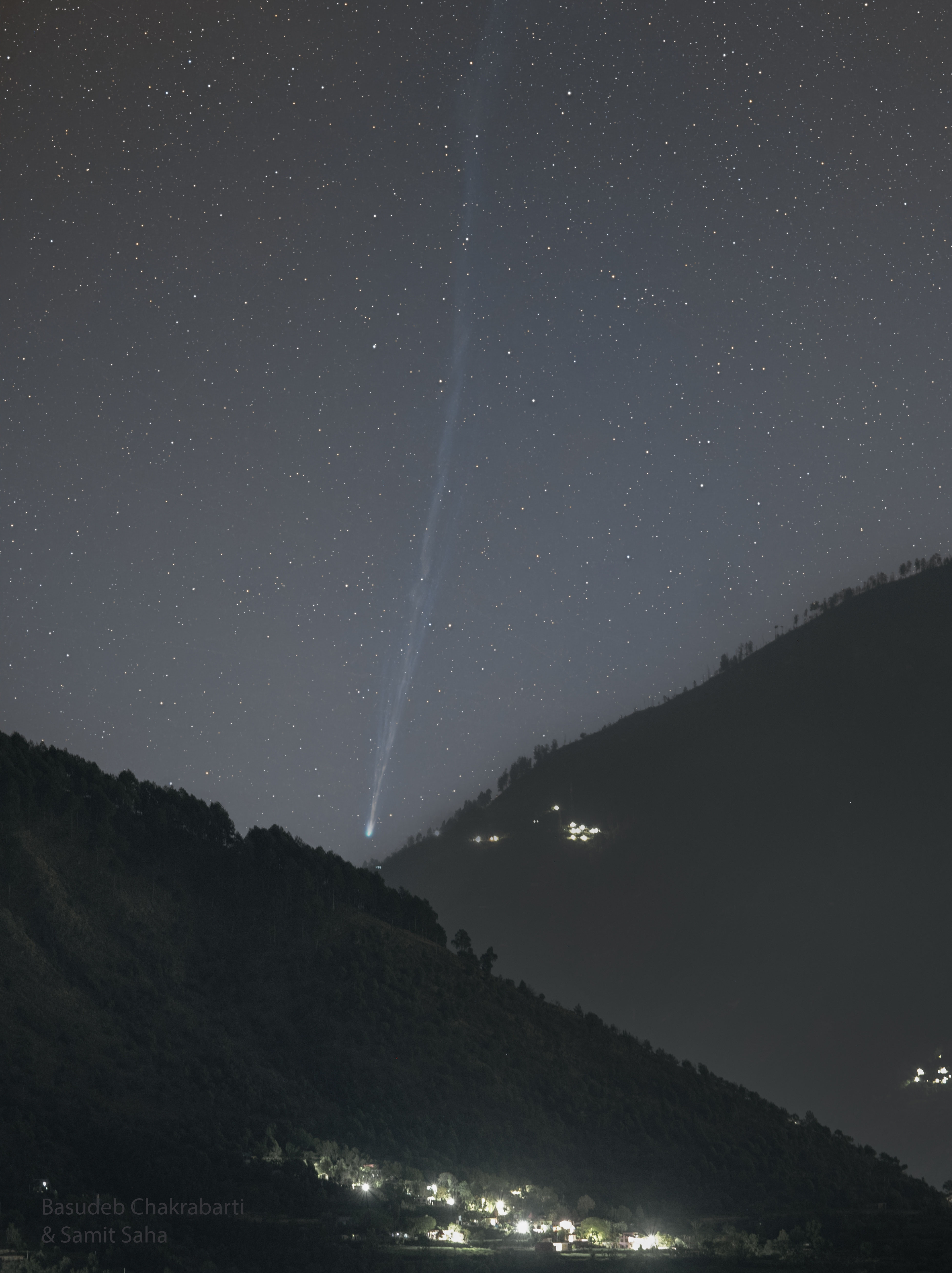
The best way to see comet R3 PanSTARRS’s long tail is with a camera. This week, the recently brightened comet appears in northern skies to the east just before dawn, but is only barely visible to the unaided eye. The many-degree ion tail captured on long duration camera exposures is not unusual for a comet - it is primarily due to the Earth's nearly sideways view of the tail as it points away from the Sun. In the featured image taken last week, Comet C/2025 R3 (PanSTARRS) showed off its flowing tail through a valley between two peaks in the Himalayan mountains of India. The comet passed its closest to the Sun yesterday. As it nears its closest approach to Earth next week, a bushy dust tail may become visible. The comet is slowly moving out of northern skies and by the end of the month will be visible after sunset in southern skies as it fades and leaves our Solar System. Growing Gallery: Comet R3 PanSTARRS in 2026

Download item bundle
Comet R3 PanSTARRS over a Himalayan Valley
Credit: Basudeb Chakrabarti & Samit Saha
19 Apr 2026, 00:00 GMT By Miguel Claro (TWAN, Dark Sky Alqueva)

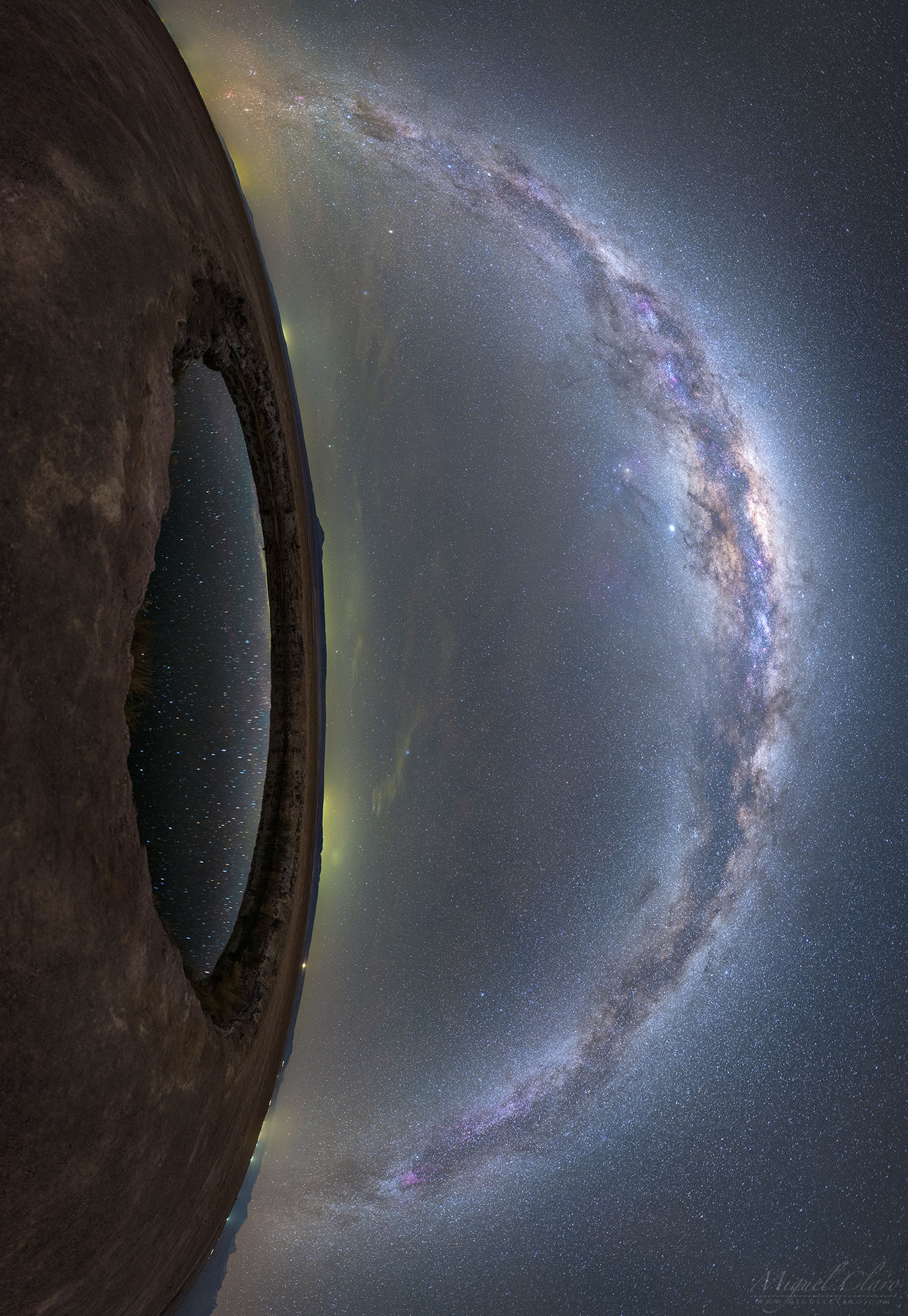
Have you ever had stars in your eyes? It appears that the eye on the left does, and moreover, it appears to be gazing at even more stars. The featured 27-frame mosaic was taken in 2019 from Ojas de Salar in the Atacama Desert of Chile. The eye is actually a small lagoon captured reflecting the dark night sky as the Milky Way Galaxy arched overhead. The seemingly smooth band of the Milky Way is really composed of billions of stars, but decorated with filaments of light-absorbing dust and red-glowing nebulas. Additionally, both Jupiter (slightly left the galactic arch) and Saturn (slightly to the right) are visible. The lights of small towns dot the unusual vertical horizon. The rocky terrain around the lagoon appears to some more like the surface of Mars than our Earth. Sky Surprise: What picture did APOD feature on your birthday? (after 1995)

Download item bundle
Eye on the Milky Way
Credit: Miguel Claro (TWAN, Dark Sky Alqueva)
18 Apr 2026, 00:00 GMT By Luc Perrot

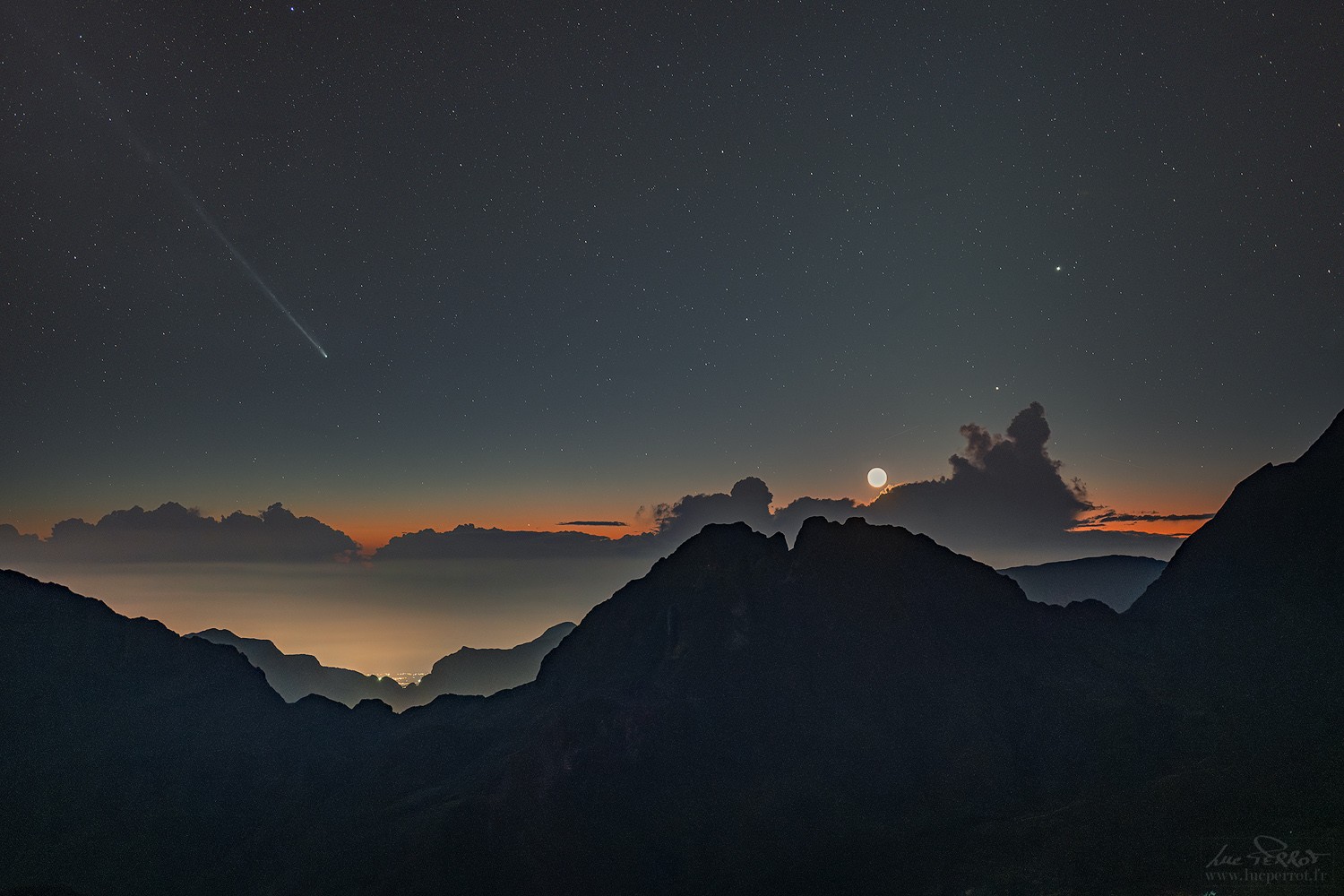
Near the eastern horizon before sunrise, Comet C/2025 R3 PanSTARRS is getting brighter. Readily visible in binoculars and small telescopes, the comet may be just on the verge of naked-eye visibility from dark sky sites. Though it was not quite apparent to the eye, PanSTARRS is still easy to spot in this camera image taken on April 16. In the view from a volcanic peak overlooking France's Reunion Island, planet Earth, the comet shares eastern predawn skies with naked-eye planets Mars and Mercury and fainter Neptune. Saturn is hiding behind the low cloudbank that doesn't quite hide an old crescent Moon. This is a good weekend for northern hemisphere comet watchers to try to catch PanSTARRS an hour or so before sunrise, as the comet grows brighter approaching its perihelion on April 19. On April 26 the comet makes its closest approach to our fair planet but by then will be difficult to see in the solar glare. Good views of this comet PanSTARRS in late April and early May will be from the southern hemisphere.

Download item bundle
PanSTARRS and Planets
Credit: Luc Perrot
17 Apr 2026, 15:31 GMT By NASA

Live now • 393 watching • NASA’s mobile launcher is on the move as teams prepare for the upcoming Artemis III mission. The massive structure will begin to roll back atop the crawler transporter to the Vehicle Assembly...

Download item bundle
Live now