
NASA engineers turn dreams into reality, solving complex challenges to push exploration forward. From landing rovers on Mars to advancing deep space missions, their ingenuity makes it all possible. This episode with Chief Engineer Joe Pellicciotti and Deputy Chief Engineer Katherine Van Hooser celebrates the innovation, dedication, and impact of NASA’s engineering community.
Ever wondered what it takes to capture NASA’s most breathtaking moments? From rocket launches to behind-the-scenes astronaut training, Bill Ingalls, senior contract photographer for NASA Headquarters has spent decades framing history through his lens. In this episode, we dive into his journey, how he and his team prepare for assignments, and the importance of visual storytelling.
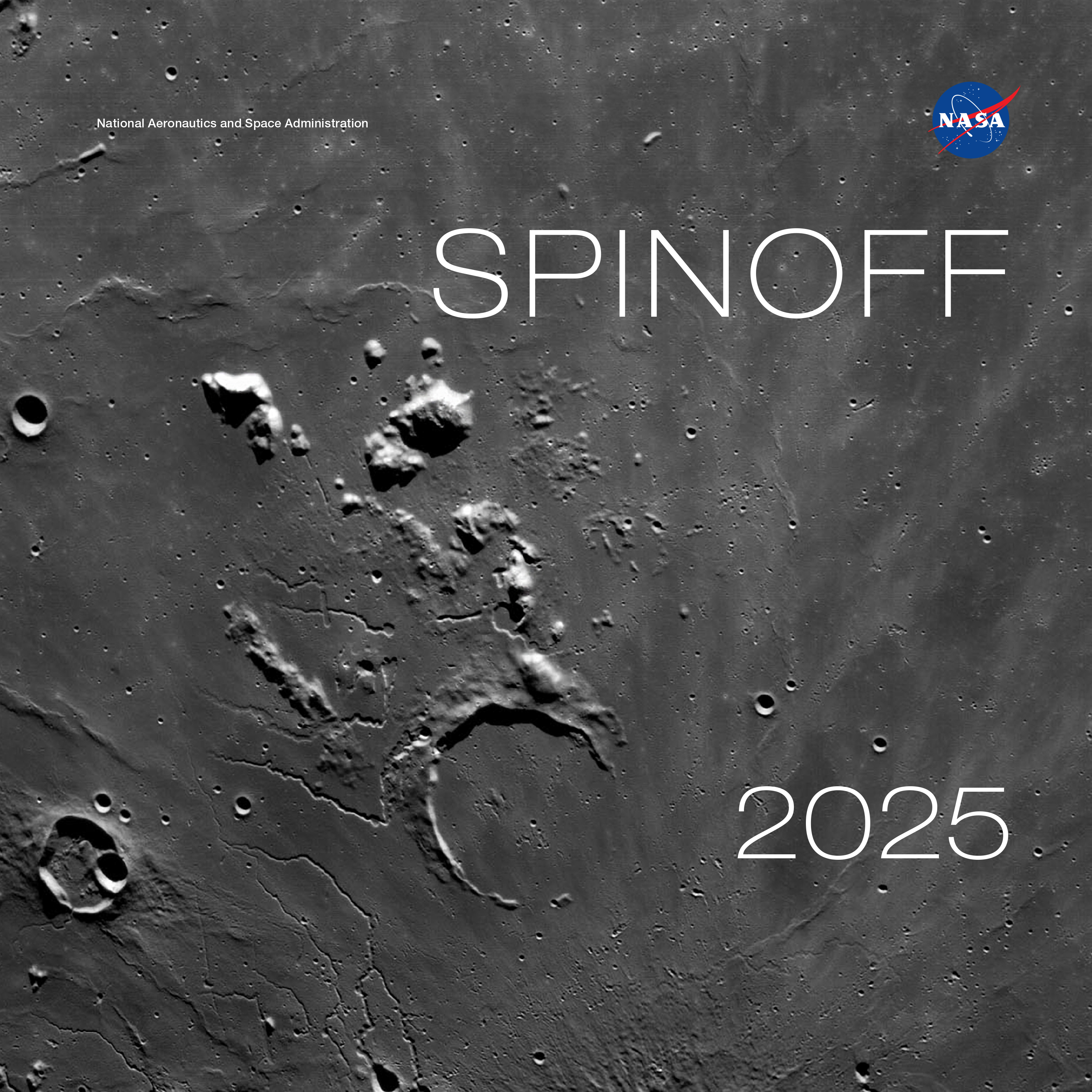
The latest edition of NASA’s Spinoff publication, which highlights the successful transfer of agency technology to the commercial sector, is now available online. For nearly 25 years, NASA has supported crew working in low Earth orbit to learn about the space environment and perform research to advance deep space exploration. Astronauts aboard the International Space
What if we could get rid of lengthy waitlists for organ transplants? Well, imagine 3-D printing a kidney from your own stem cells. That would reduce the chances your body rejects it. That’s the sort of groundbreaking medical research astronauts are conducting aboard the International Space Station. Other research includes understanding the stress spaceflight places on not just the body, but also the mind. There’s a plethora of human factors to consider as humanity prepares to embark on deep space missions. What we learn from spaceflight medicine could also transform lives here on Earth. Dr. J.D. Polk, NASA’s chief health and medical officer, tells us what’s on the horizon in space medicine.
How did life begin? It’s one of science’s biggest questions, but it’s impossible to answer on Earth, where ancient clues have been buried by the planet’s shifting surface. Instead, scientists are looking beyond our own planet, to asteroids like Bennu, a distant fragment of a lost world. In 2023, NASA’s OSIRIS-REx spacecraft collected a sample of Bennu’s surface and brought it back to Earth. Ever since, scientists have been hard at work studying the fragments of asteroid Bennu. Now, they’re ready to reveal the results—our best look yet at a time capsule from the early solar system that once fostered the ingredients for life.
Media are invited to visit NASA’s Michoud Assembly Facility in New Orleans between Tuesday, Feb. 4, and Thursday, Feb. 6, ahead of Super Bowl LIX for an inside look at America’s rocket factory, as well as interview agency experts. During this behind-the-scenes visit, media will tour NASA’s location for the manufacturing and production of large-scale
The Moon’s South Pole is a bizarre landscape. Mountain ridges glow in perpetual sunlight while deep craters freeze in billion-year-old shade. Yet hidden in the depths of those shadowed craters, under temperatures almost three times colder than the frostiest day in Antarctica, lurks something familiar–water ice. In the future, that ice could sustain human explorers or be broken apart into hydrogen and oxygen to refuel rockets. Join Brett Denevi, Artemis III geology team lead, to learn why NASA plans to land astronauts on the Moon’s South Pole later this decade. Then with Michelle Munk, NASA space technology chief architect, meet the robot Moon landers scouting ahead of Artemis which will drill beneath the regolith and test technologies designed to help future human explorers survive the Pole’s extreme conditions.
We’re kicking off 2025 with NASA’s deputy administrator Pam Melroy, who wraps up her tenure at NASA this month. As a former astronaut with three space shuttle flights under her belt – including one flight as commander – Pam has made lasting contributions to human spaceflight. She’s also a veteran of the U.S. Air Force as a retired colonel. In her most recent role, Pam helped shape the NASA’s focus on long-term strategies, including Moon to Mars exploration, space sustainability, and a long-term vision for NASA’s future as an organization. Now, as she prepares to pass the torch, Pam joins us to reflect on her NASA career and share insights from her time as a pilot, astronaut, and public servant.
Lee esta nota de prensa en español aquí. Earth’s average surface temperature in 2024 was the warmest on record, according to an analysis led by NASA scientists. Global temperatures in 2024 were 2.30 degrees Fahrenheit (1.28 degrees Celsius) above the agency’s 20th-century baseline (1951-1980), which tops the record set in 2023. The new record comes after
The SBIR/STTR programs provide an opportunity for small, high technology companies and research institutions (RI) to participate in Government sponsored research and development (R&D) efforts in key technology areas. NASA SBIR Phase I contracts have a period of performance for 6 months with a maximum funding of $150,000, and Phase II contracts have a period
The NSSC provides travel reimbursement services for all authorized Agency travel including: domestic, foreign, local, ETDY, and Change of Station (COS). References Federal Travel Regulations (FTR) Traveler Extended TDY and Taxes Domestic Per Diem Rates Foreign Per Diem Rates Change of Station NSSC Travel now has another way that a transferee Traveler may submit his
Climate researchers from NASA and NOAA (National Oceanic and Atmospheric Administration) will release their annual assessments of global temperatures and discuss the major climate trends of 2024 during a media briefing at 12 p.m. EST Friday, Jan. 10. NASA will share the briefing on the agency’s website at: https://www.nasa.gov/live. Participants will include: Media interested in
NASA has taken a big step forward in how engineers will assemble and stack future SLS (Space Launch System) rockets for Artemis Moon missions inside the Vehicle Assembly Building (VAB) at the agency’s Kennedy Space Center in Florida. The VAB’s High Bay 2 has been outfitted with new tooling to facilitate the vertical integration of
This post was written prior to a reorganization of ESC’s projects and networks in support of the agency’s commercialization efforts. Though accurate at the time of publication, it is no longer being updated and may contain outdated information. For more information about the current projects, click here. Employee Spotlight: Jacob Silva Flashback to 2009 in
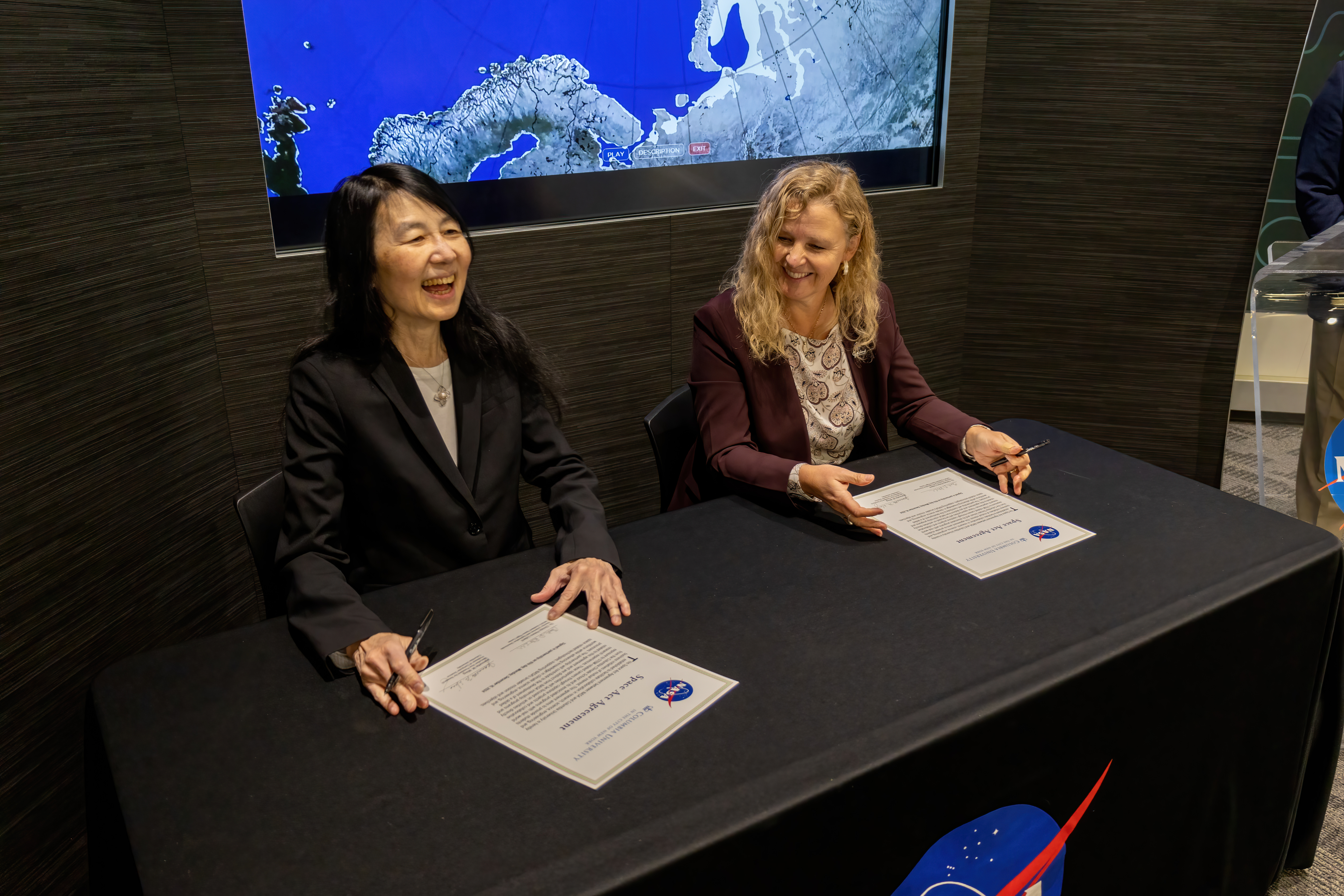
NASA’s Goddard Space Flight Center in Greenbelt, Maryland, and Columbia University in New York, New York, enacted a collaborative Space Act Agreement to advance research and education opportunities during a signing ceremony Monday, Dec. 16, at Goddard. Presiding over the ceremony were Dr. Christa Peters-Lidard, director of Goddard’s Sciences and Exploration directorate, and Dr Jeannette
Black holes are mysterious, far away, and can bend the fabric of reality itself—but we're learning more about them all the time. Ronald Gamble, a NASA theoretical astrophysicist, uses math, computer coding, and a dash of creativity to peer inside some of the universe's most extreme objects. We'll explore what it would feel like to get pulled into a black hole and what people get wrong about black holes. And we'll answer questions from curious listeners, including, "What would happen if a black hole ate nothing but magnetized material?"
NASA's InSight Mars lander acquires the same reddish-brown hue as the rest of the planet in a set of images from 2018 to 2024 that were captured by the agency's MRO HiRISE camera.
13 Dec 2024, 21:24 GMTBy Tiernan P. Doyle2 variants
NASA has selected FedSync-BFS, LLC of Alexandria, Virginia, to provide administrative services for multiple NASA centers. The Multi-Center Administrative Support Services Contract is a firm-fixed-price and indefinite-delivery/indefinite-quantity contract with a value not to exceed $200 million during a five-year ordering period. The performance period begins April 1, 2025. Contracted work will take place in six