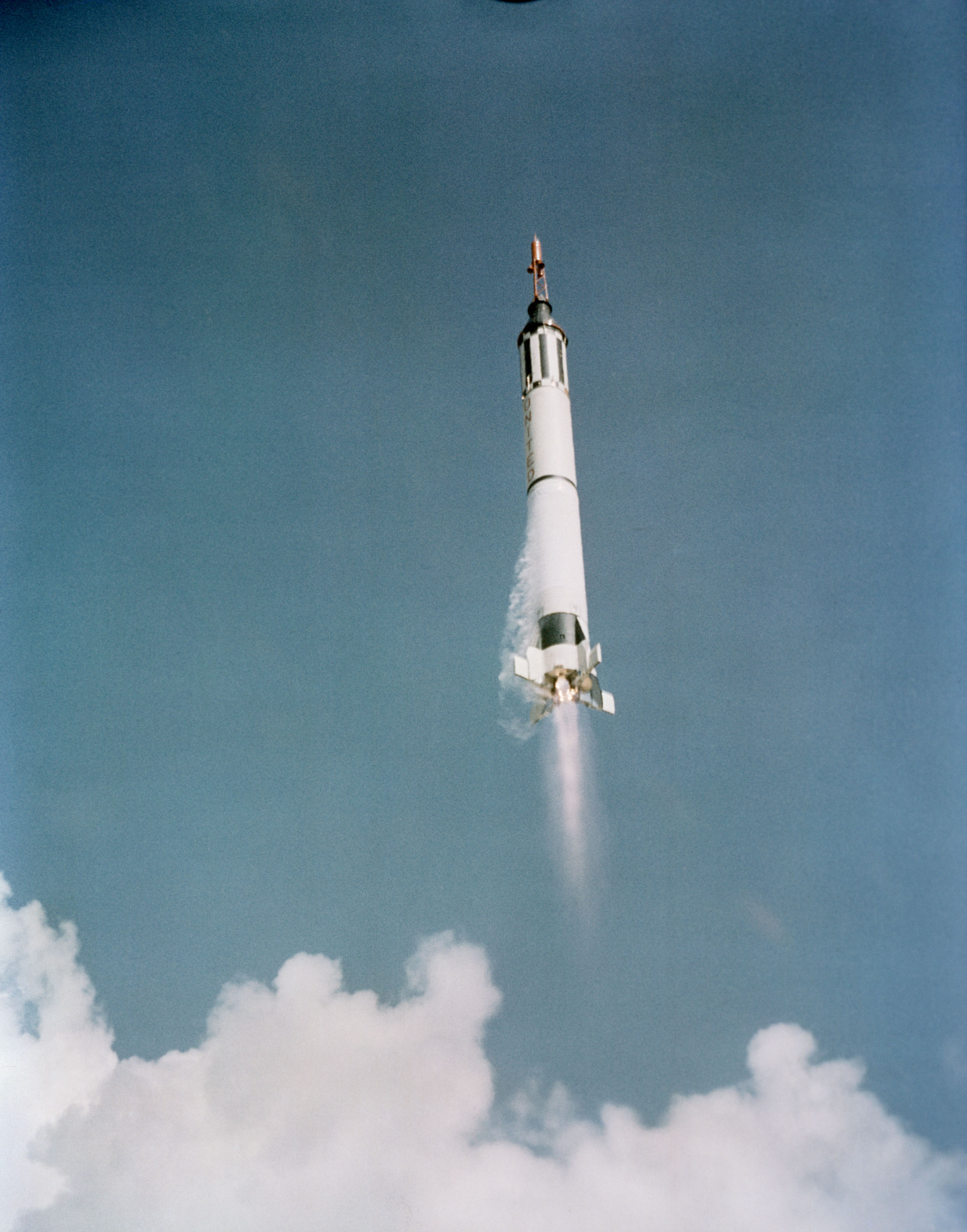
America’s first human spaceflight begins as the Mercury-Redstone 3 (MR-3) space vehicle, with astronaut Alan B. Shepard Jr. aboard, launches from Cape Canaveral, Florida on May 5, 1961.
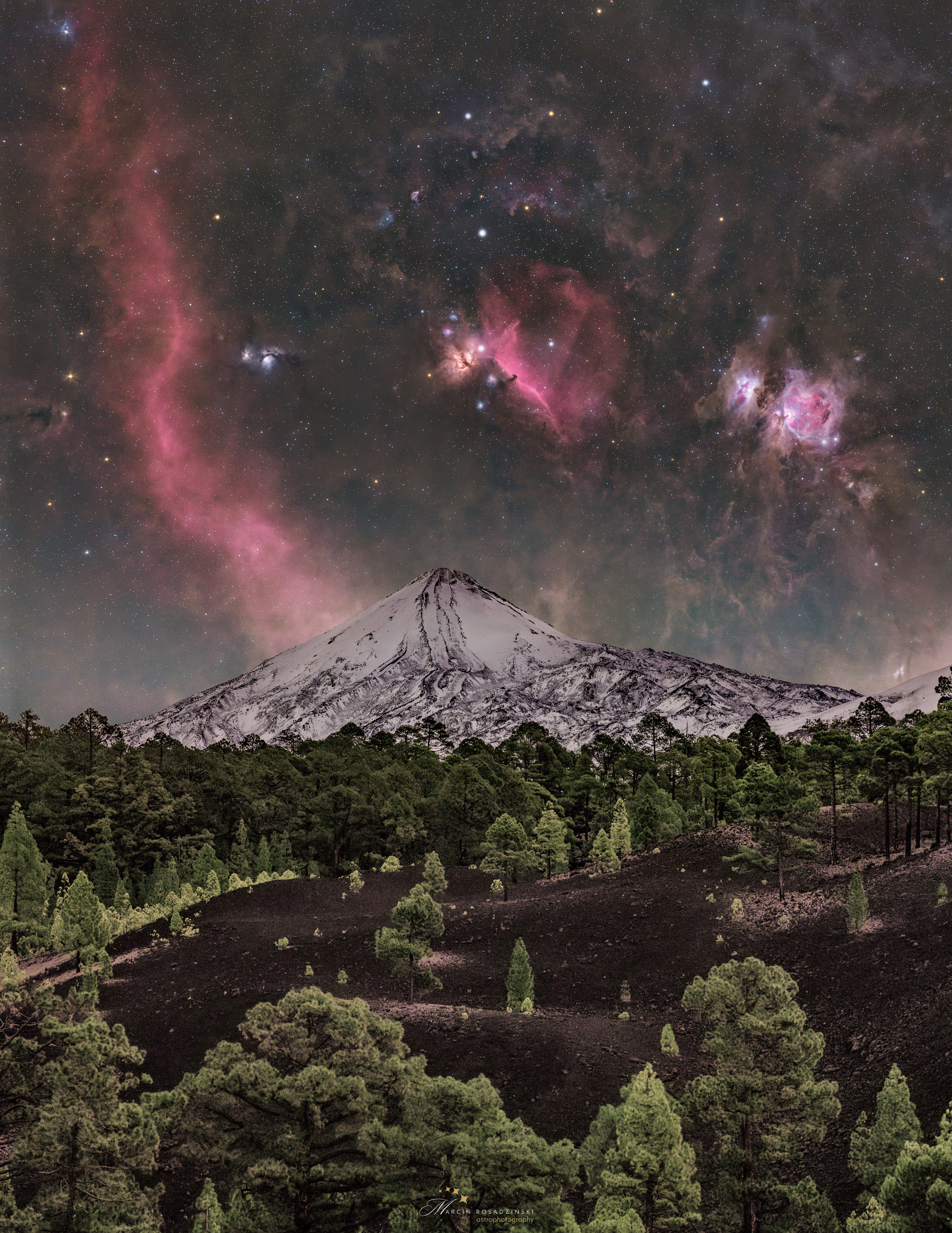
Orion is rarely seen like this. To achieve this majestic vista, you need a camera capable of taking such long duration exposures that faint features in the night sky become revealed. Iconic nebulas that appear include the Orion Nebula, the Flame Nebula, and Barnard's Loop. For contrast, it also helps to have a volcano on the foreground, in this case the Teide volcano on Tenerife on the Canary Islands of Spain. But if you want your Teide volcano snow-covered, you also need good timing -- because that only happens, typically, for a few days each year. Good timing also includes waiting for Orion to appear just behind Teide, which occurred late last year after sunset. The featured image is the result of a series of images taken consecutively with the same camera from the same location. Sky Surprise: What picture did APOD feature on your birthday? (after 1995)
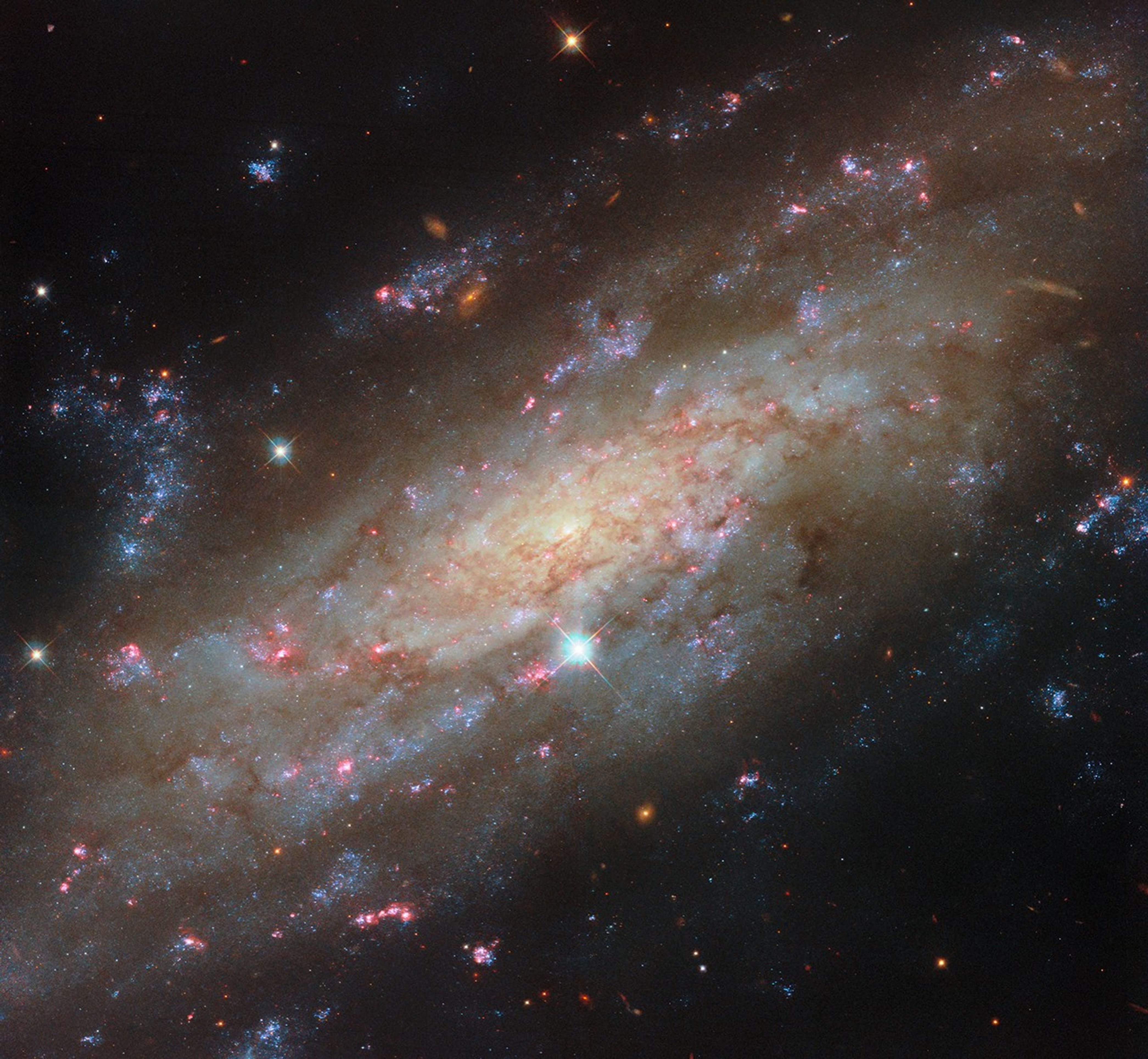
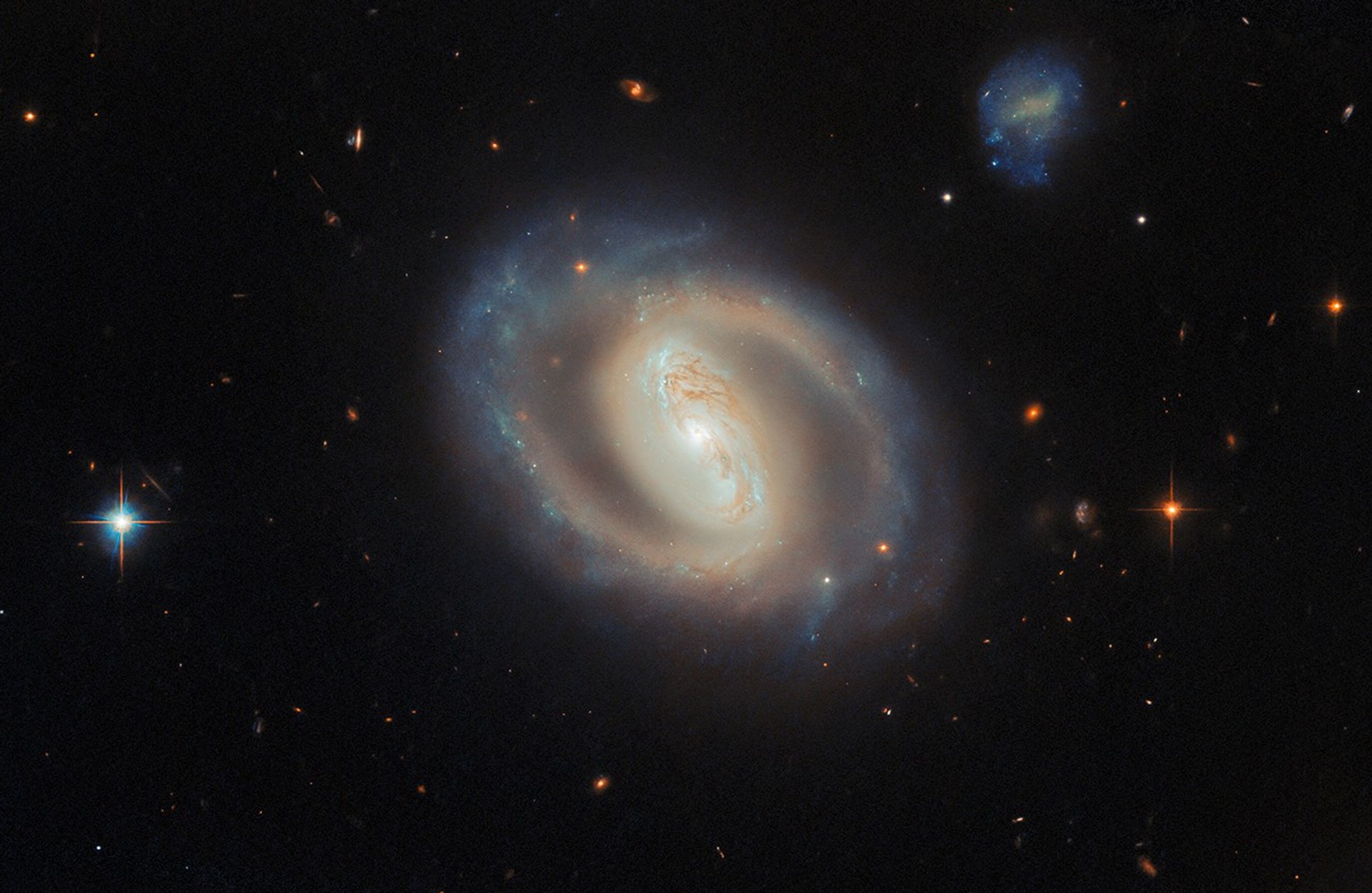
This NASA Hubble Space Telescope image features the glittering spiral galaxy NGC 3137, located 53 million light-years away in the constellation Antlia (the Air Pump).
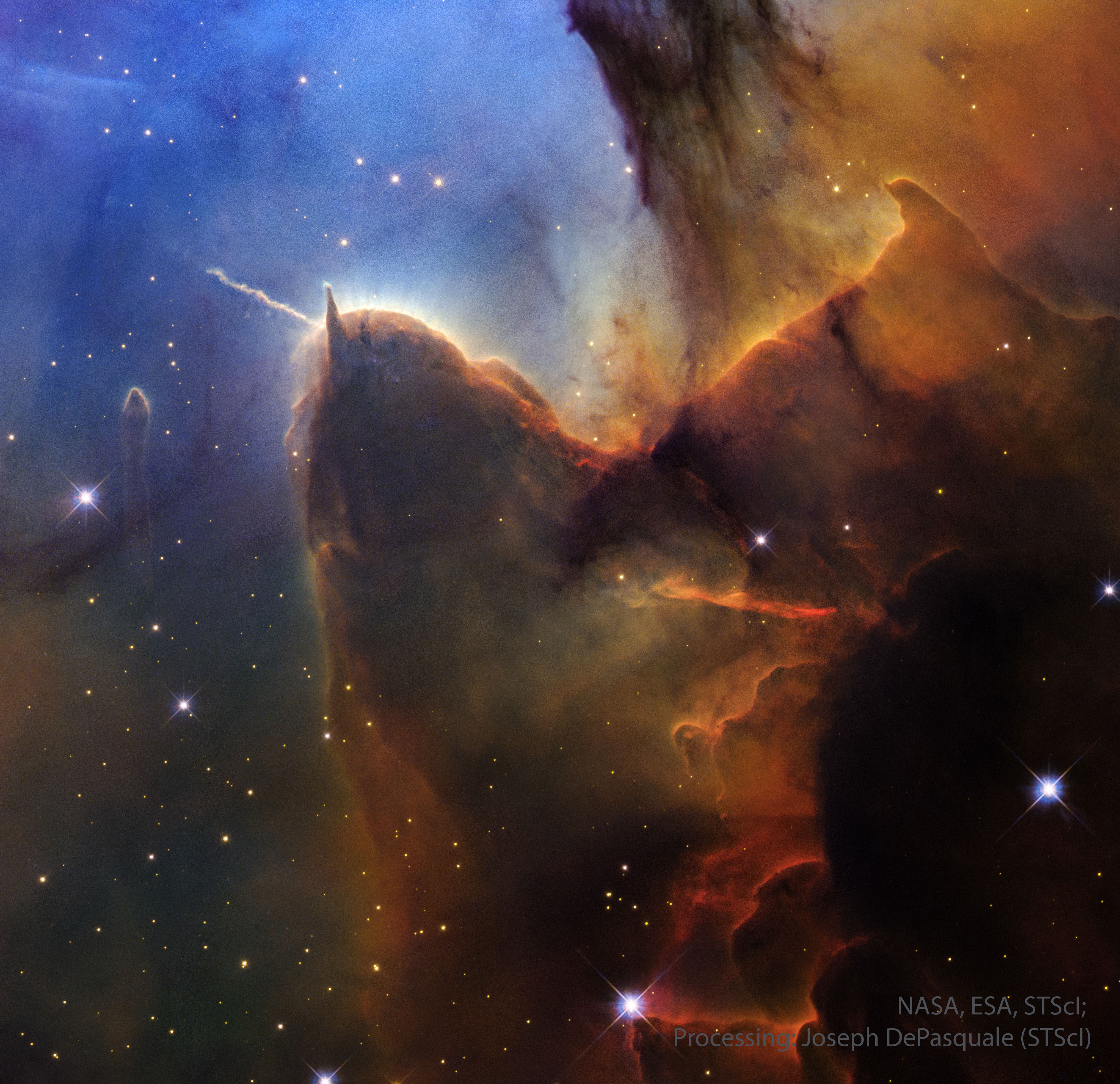
Dust pillars are like interstellar mountains. They survive because they are more dense than their surroundings, but they are slowly being eroded away by a hostile environment. Visible in the featured picture by the Hubble Space Telescope is the end of a huge gas and dust pillar in the Trifid Nebula (M20), punctuated by a smaller pillar pointing up and an unusual jet pointing to the upper left. Many of the bright dots are newly formed stars. A star near the small pillar's end is slowly being stripped of its accreting gas by radiation from a tremendously brighter star situated off the top of the image. The jet extends nearly a light-year and would not be visible without external illumination. As gas and dust evaporate from the pillars, the hidden stellar source of this jet will likely be uncovered, possibly over the next 20,000 years. Explore the Universe: Random APOD Generator
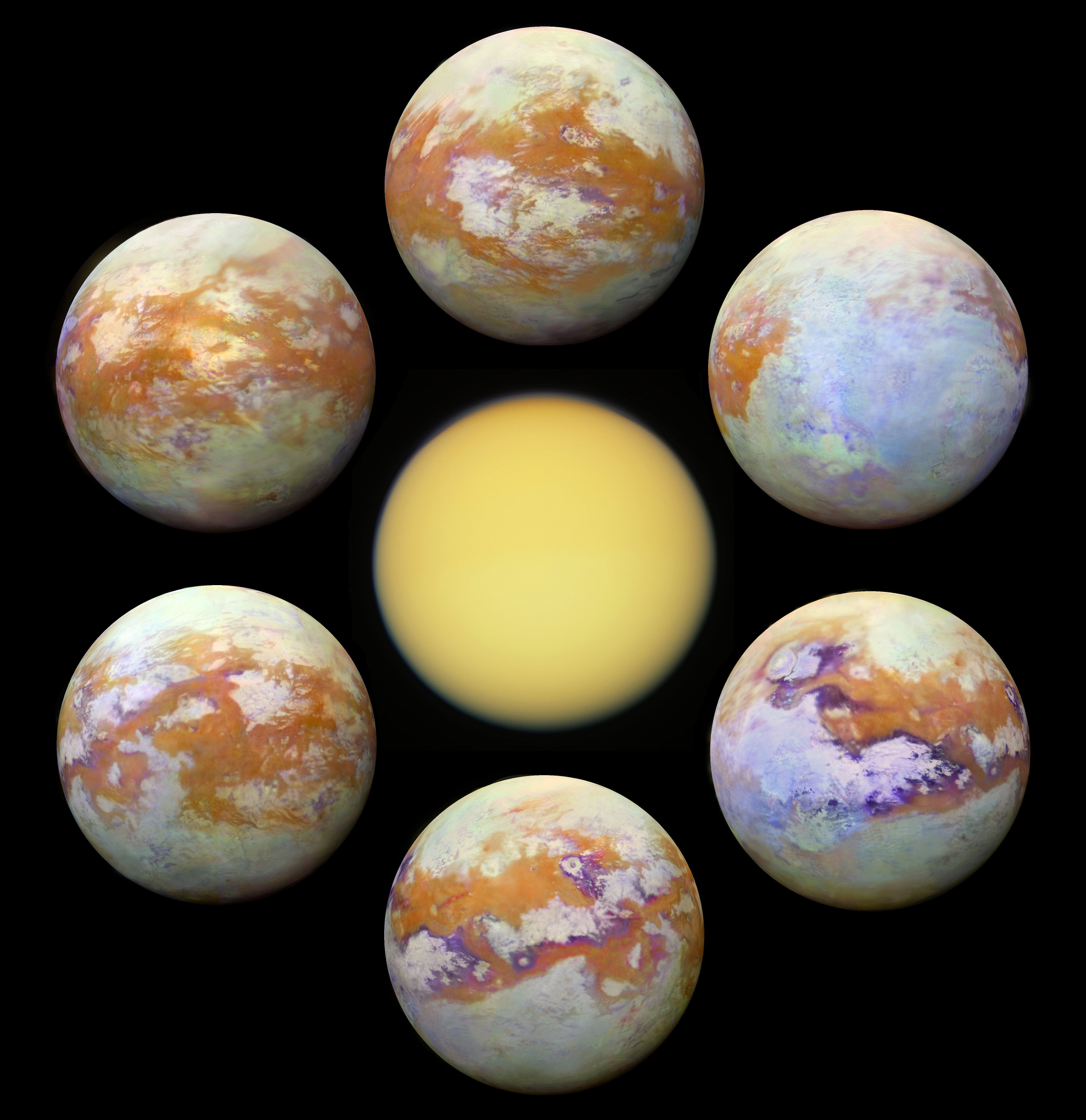
Shrouded in a thick atmosphere, the surface of Saturn's largest moon, Titan, is really hard to see. Small particles suspended in Titan's upper atmosphere cause an almost impenetrable haze, strongly scattering light at visible wavelengths and hiding surface features from prying eyes. Still, Titan's surface is better imaged at infrared wavelengths, where scattering is weaker and atmospheric absorption is reduced. Arrayed around this visible light image (center) of Titan are some of the clearest global infrared views of the tantalizing moon so far. In false color, the six panels present a consistent processing of 13 years of infrared image data from the Visual and Infrared Mapping Spectrometer (VIMS) on board the Cassini spacecraft orbiting Saturn from 2004 to 2017. They offer a stunning comparison with Cassini's visible light view. NASA's revolutionary rotorcraft mission to Titan's surface is due to launch no earlier than July, 2028.
Nasdaq Chair and Chief Executive Officer Adena T. Friedman, left, and NASA’s Artemis II crew ring the closing bell of the Nasdaq market session, Thursday, April 30, 2026.
Earth’s magnetic field is like a powerful trap. It lures electrically charged particles in space, near our planet, and snares them in an invisible, doughnut-shaped pen around Earth known as the ring current. This captive swarm of charged particles plays an important role in how Earth reacts to changing conditions in space, called space weather, which
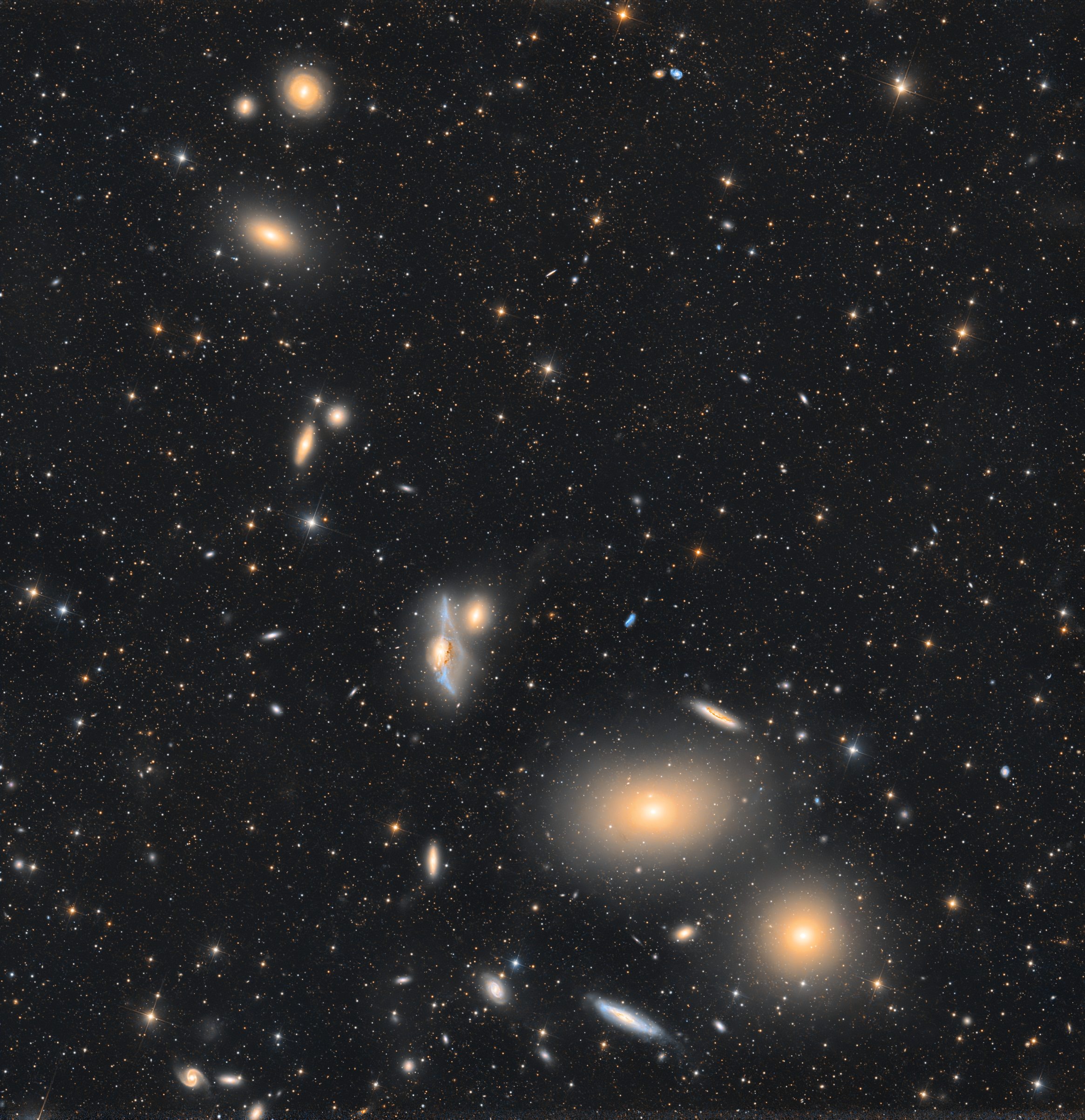
Near the heart of the Virgo Galaxy Cluster, a string of galaxies known as Markarian's Chain stretches across this telescopic field of view. Anchored in the frame at bottom right by prominent lenticular galaxies, M84 (bottom) and M86, you can follow the chain's gentle arc up and toward the left. Near center you'll spot the pair of interacting galaxies NGC 4438 and NGC 4435, known to some as Markarian's Eyes. An estimated 50 million light-years distant, the Virgo Cluster itself is the nearest galaxy cluster. With up to about 2,000 member galaxies, it has a noticeable gravitational influence on our own Local Group of Galaxies. Within the Virgo Cluster at least seven galaxies in Markarian's Chain appear to move coherently, while others may appear to be part of the chain by chance.
NASA’s SLS (Space Launch System) core stage for the Artemis III mission moves into the Vehicle Assembly Building at the agency's Kennedy Space Center in Florida on Tuesday, April 28, 2026.
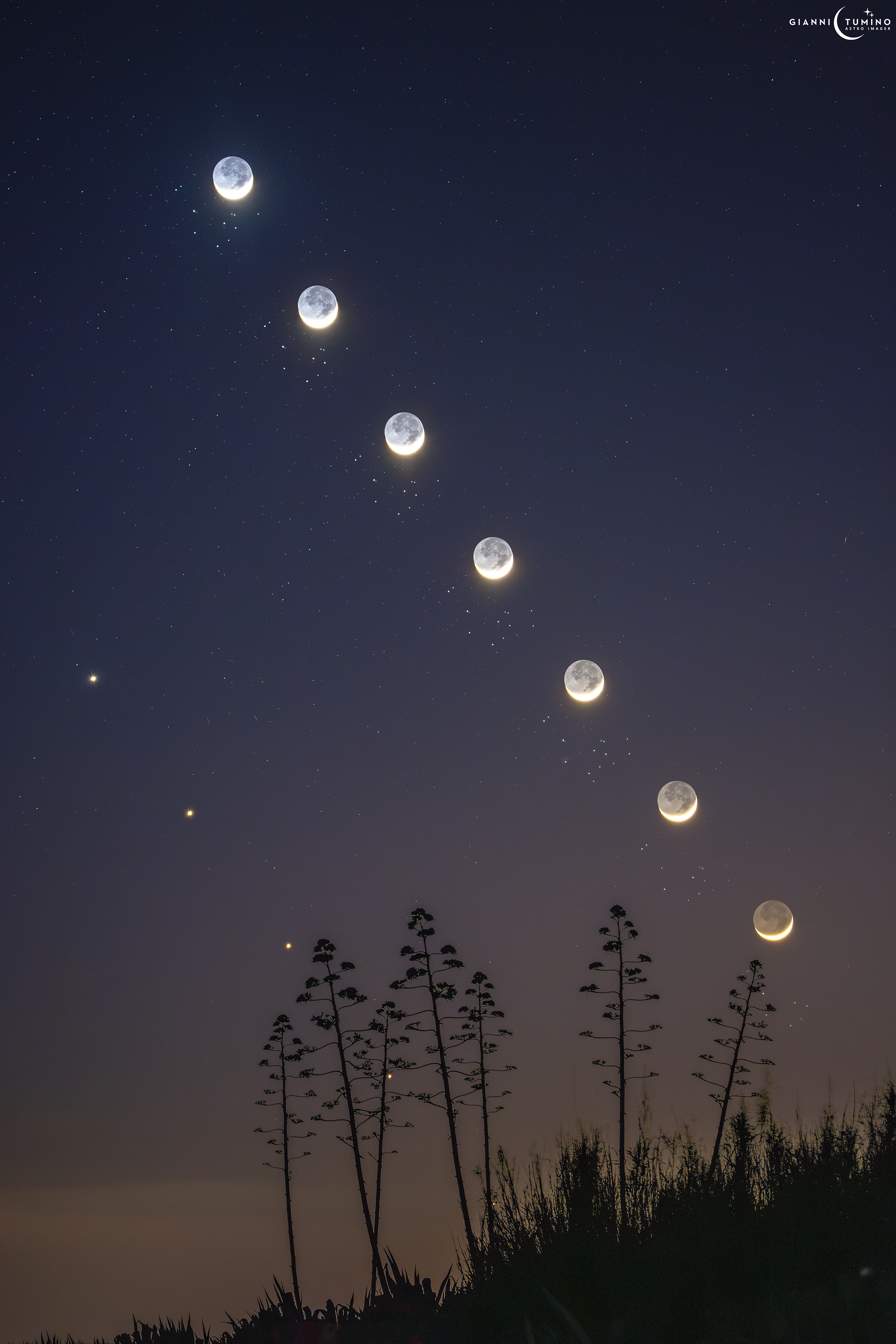
No, Earth did not recently acquire six more moons! Today’s APOD is a combination of images following the Moon, Venus, and the Pleiades across a southern Sicilian sky as twilight turned to evening on April 19. From 2023 to 2029, the Pleiades' and the Moon “visit" each other once per month due to the Pleiades' location in the ecliptic plane. April 2026 saw the celestial alignment of their visit with Venus. About six stars in the Pleiades cluster (Messier 45) are typically visible with the unaided eye. Due to the cluster’s visibility across the world, there are many myths and legends across cultures associated with the Pleiades. The Haudenosaunee people of North America, for example, say that seven boys danced so enthusiastically that they lifted off into the sky. Astronomers recently found thousands more Pleiades members, showing that after thousands of years of gazing upon this cluster, there is yet more to learn about the Pleiades.
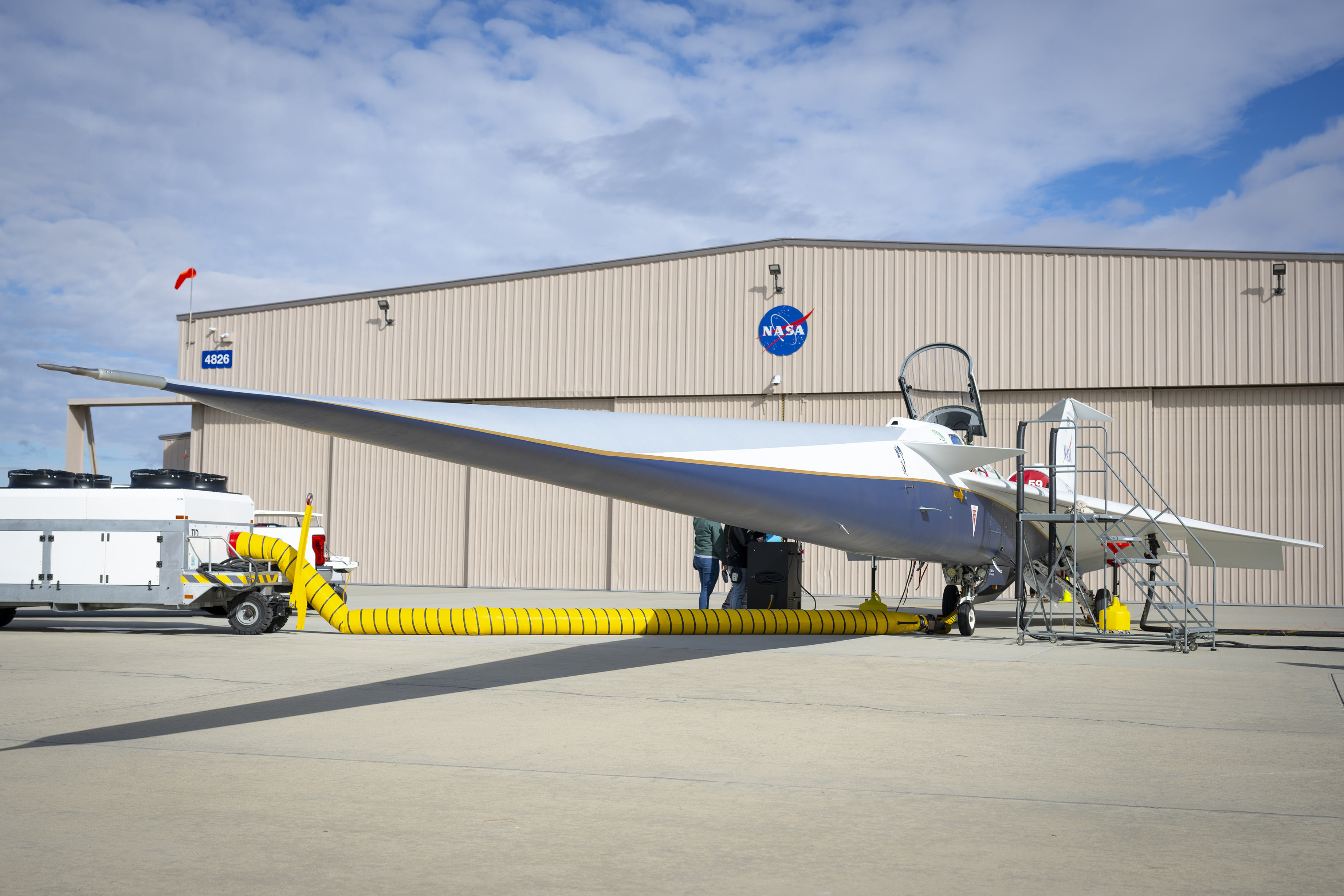
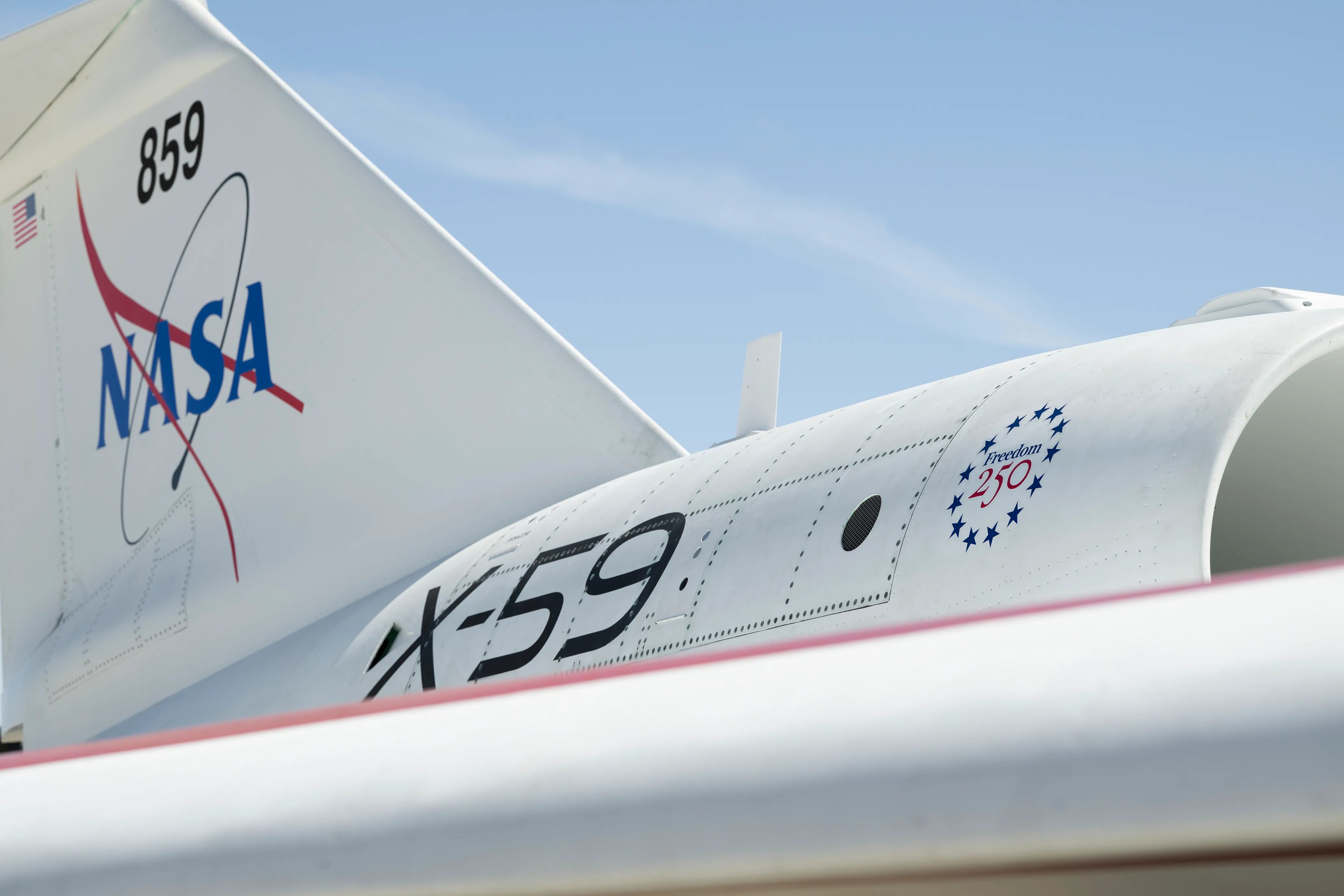
There’s no sign reading “home sweet home” in the hangar where the X‑59 now sits, but the sentiment is unmistakable among those tending to the quiet supersonic aircraft. Located at NASA’s Armstrong Flight Research Center in Edwards, California, the X-59 hangar was built in 1968 but looks like new thanks to a full renovation and
A technology that could propel crewed missions to Mars and robotic spacecraft throughout the solar system was recently put to the test at NASA’s Jet Propulsion Laboratory in Southern California. On Feb. 24, for the first time in years and at power levels exceeding any previous test in the United States, a team fired up
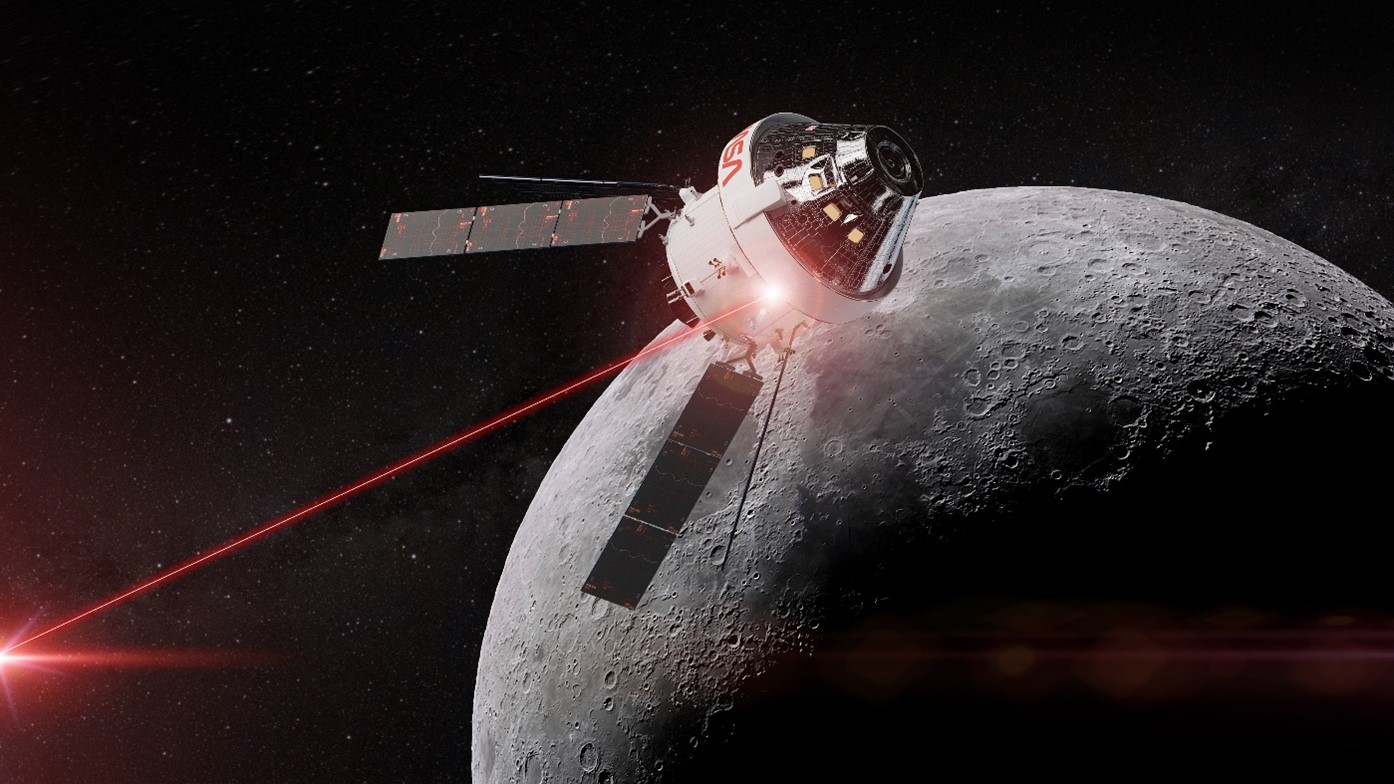
Millions of people watched the historic launch of Artemis II and were captivated by the mission’s 10-day journey around the Moon as NASA astronauts Reid Wiseman, Victor Glover, and Christina Koch, and CSA (Canadian Space Agency) astronaut Jeremy Hansen ventured farther into space than any human before. Part of the public’s ability to experience the
Description NASA’s Curiosity Mars rover used its right navigation camera — one of two on the rover’s mast, or head — to capture the images in this timelapse, which spans six years of driving. The images were snapped between Jan. 2, 2020, and March 8, 2026 (the 2,633rd and 4,830th Martian day, or sol, of […] The post Six Years of Curiosity’s Wheels on the Move appeared first on NASA Science .
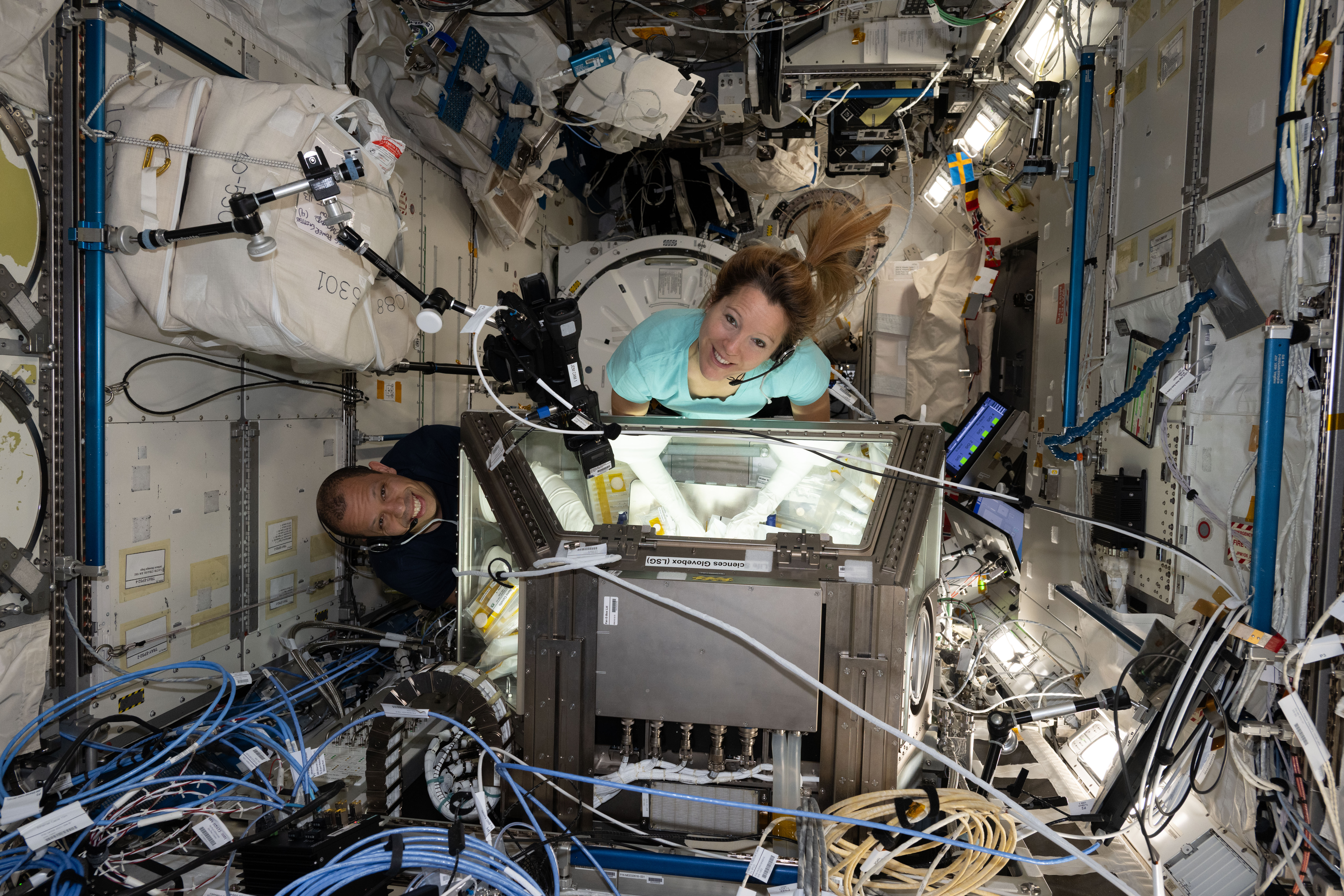
Expedition 74 flight engineers Chris Williams of NASA and Sophie Adenot of the European Space Agency work together in the Kibo laboratory module’s Life Science Glovebox.
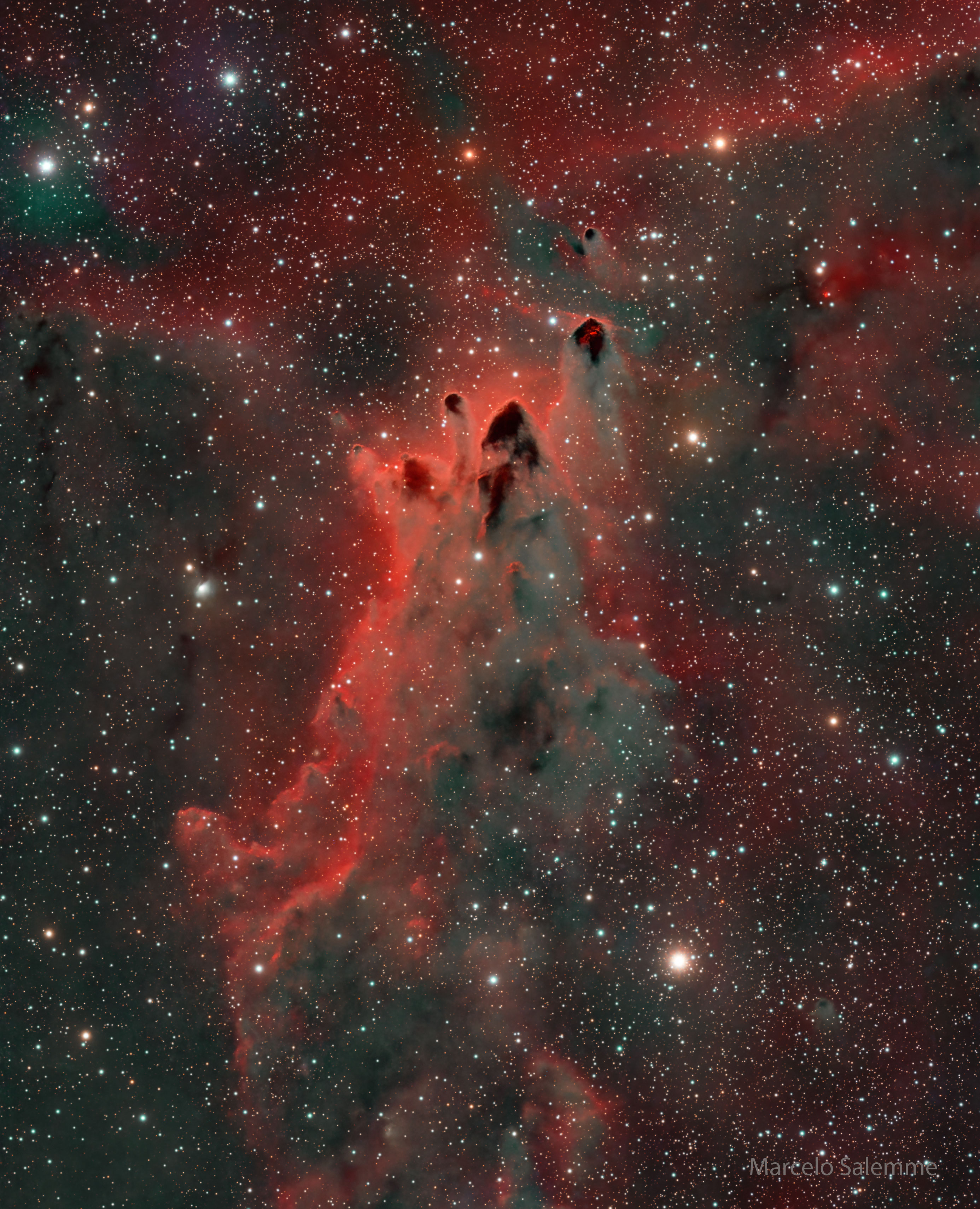
They're like mountain peaks, but they are forming stars. Bright-rimmed, flowing shapes gather near the center of this rich starfield toward the borders of the nautical southern constellations Puppis and Vela. Composed of interstellar gas and dust, the grouping of light-year sized cometary globules is about 1300 light-years distant. Energetic ultraviolet light from nearby hot stars has molded the globules and ionized their bright rims. The globules also stream away from the Vela supernova remnant which may have influenced their swept-back shapes. Within them, cores of cold gas and dust are likely collapsing to form low mass stars whose formation will ultimately cause the globules to disperse. In fact, cometary globule CG 30 (upper right in the group) sports a small reddish glow inside its head, a telltale sign of energetic jets from a star in the early stages of formation.
NASA’s Curiosity and Perseverance rovers have captured two 360-degree landscapes that highlight how the missions are revealing details of the Red Planet’s formation, watery past, and potential for life. Located 2,345 miles (3,775 kilometers) apart from each other on Mars — about the distance from Los Angeles to Washington, D.C. — both rovers are exploring