From black holes to star clusters, scientists are turning space data into sound with a process called sonification. Dr. Kimberly Arcand, visual scientist with the Harvard-Smithsonian Center for Astrophysics, joins us to explore how data sonification lets more people experience the cosmos and give researchers a new way to interpret science one note at a time.
As an administrative assistant in the Safety and Mission Assurance Office at NASA’s White Sands Test Facility in Las Cruces, New Mexico, Juliana Barajas approaches her work with one clear mission: to help others succeed. For over two decades, she has supported NASA’s mission with a career grounded in service, perseverance, and gratitude. Whether coordinating
NASA project scientists Maria Banks and Sue Lederer revisit recent Commercial Lunar Payload Services missions and discuss research on the Moon. HWHAP 396.
Desde su órbita alrededor de nuestro planeta, el telescopio espacial Hubble de la NASA ha sido un ojo incansable que mira hacia lo más profundo de nuestro universo desde hace más de tres décadas. Sus hallazgos no solo han revolucionado nuestra comprensión del cosmos; también nos han acercado a él de manera íntima. La astrofísica Rosa Díaz nos acompaña en un recorrido de esta misión emblemática desde el Centro de Control de Operaciones de Hubble.
With the James Webb Space Telescope, we are seeing the early universe like never before. Webb produces beautiful images and detailed scientific data that leave astronomers in awe. In this episode, Mic Bagley, a NASA scientist on the Webb team, guides us through new discoveries made possible by Webb. Mic tells the story of a remarkable galaxy discovered in the early days of Webb’s science mission and explains why Webb is teaching us “everything” about how galaxies form and evolve.
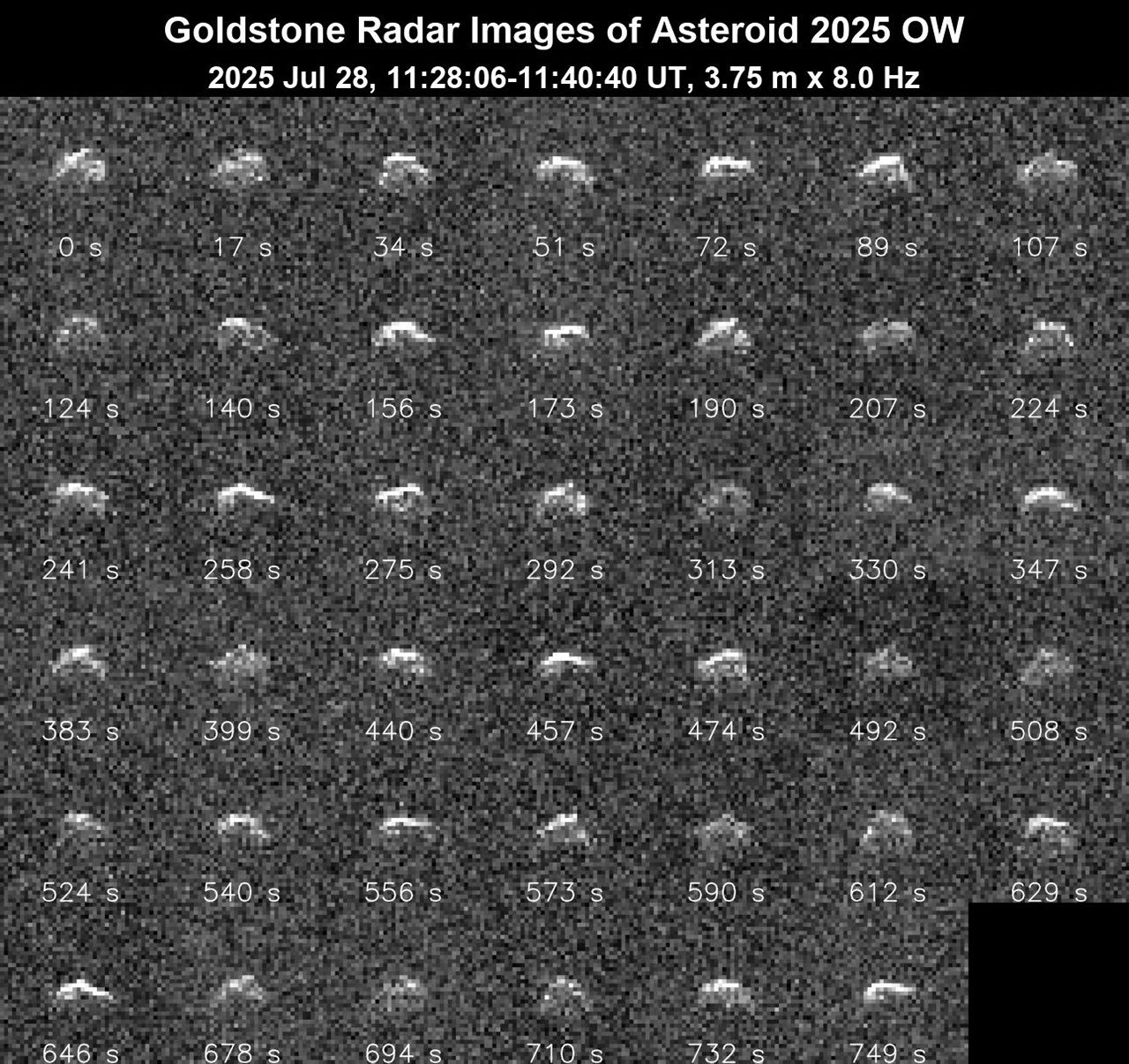
This series of 41 radar images obtained by the Deep Space Network's Goldstone Solar System Radar on July 28, 2025, shows the near-Earth asteroid 2025 OW as it made its close approach with our planet.
USACE Chief Historian John Lonnquest shares the legacy of the U.S. Army Corps of Engineers and their role in building NASA’s spaceflight infrastructure. HWHAP 395.
For Melissa John, protecting the environment is her way of contributing to space exploration while preserving the Earth we call home. As the sustainability program lead at NASA’s White Sands Test Facility in Las Cruces, New Mexico, John manages efforts to reduce waste, prevent pollution, and promote eco-conscious practices. Over the past 13 years, she
The Hubble Space Telescope has changed humanity’s understanding of the universe. Now in orbit for 35 years, it remains a remarkable feat of engineering.
July will see the launch of the groundbreaking Solar EruptioN Integral Field Spectrograph mission, or SNIFS. Delivered to space via a Black Brant IX sounding rocket, SNIFS will explore the energy and dynamics of the chromosphere, one of the most complex regions of the Sun’s atmosphere. The SNIFS mission’s launch window at the White Sands Missile Range in New Mexico opens on Friday, July 18.
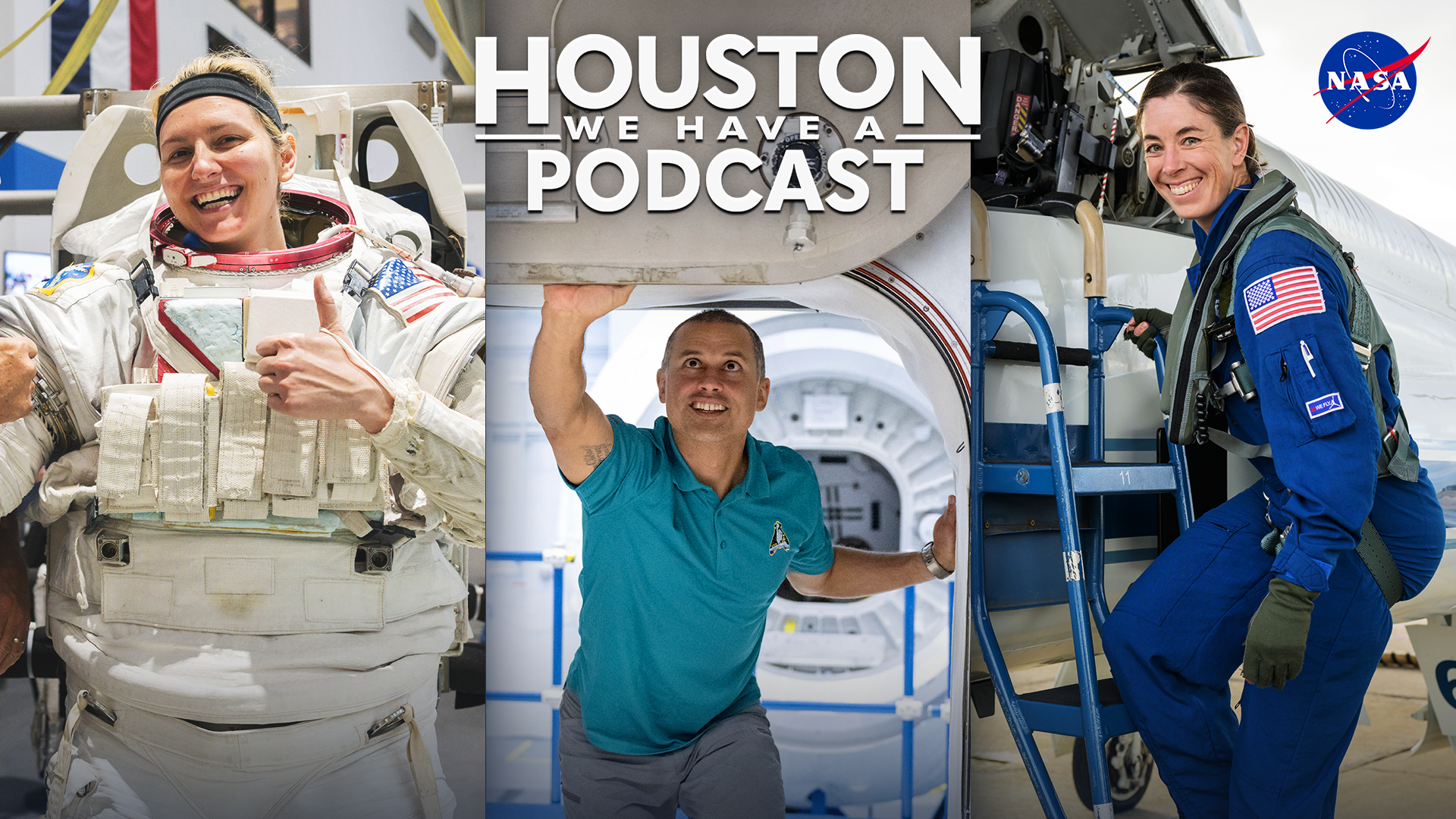
Houston We Have a Podcast celebrates eight years! Three astronauts from the agency’s most recent class discuss their first year of training and answer questions from our listeners. HWHAP 392.
Fighting wildland fires by air at night is especially hazardous. NASA’s ACERO Project aims to make firefighting safer, day or night, with drones and smarter airspace management.
La Luna no solo conserva secretos del pasado de la Tierra, sino que representa el próximo capítulo en nuestra aventura espacial. En este episodio, descubre cómo los hallazgos de misiones robóticas están allanando el camino para el regreso de la humanidad a la Luna con la campaña Artemis, y por qué nuestro satélite natural servirá como plataforma crucial para la exploración del sistema solar.
This animation depicts NASA's Mars Reconnaissance Orbiter performing a 120-degree roll that increases the strength of its radar signal by 10 times or more.
IXPE, or the Infrared X-ray Polarimetry Explorer, is NASA’s first space telescope dedicated to studying X-ray polarization from extreme objects like black holes and quasars.
In space, microgravity changes the body. Body fluids shift from the legs toward the head, the back of our eyes flatten, we lose muscle strength, our bones lose some of their density, and even the amount of blood pumped by the heart with each beat drops. To learn more about how microgravity affects the human body and develop new ways to help astronauts stay healthy, scientists are asking dozens of volunteers to spend 60 days in bed with their heads tilted down at a specific angle. This research approach tricks the body into reacting very similarly to how it would if a person was aboard the International Space Station for a longer-term mission. Join Andreas Joshi, a volunteer who agreed to be part of this bedrest work, and two NASA scientists leading the study. They’re investigating different ways to combat space-based muscle loss and improve astronauts’ sense of balance by, among other things, teaching volunteers like Joshi to play video games with their feet.