
Clear all
24 Mar 2026, 17:38 GMT By Jacob Williams

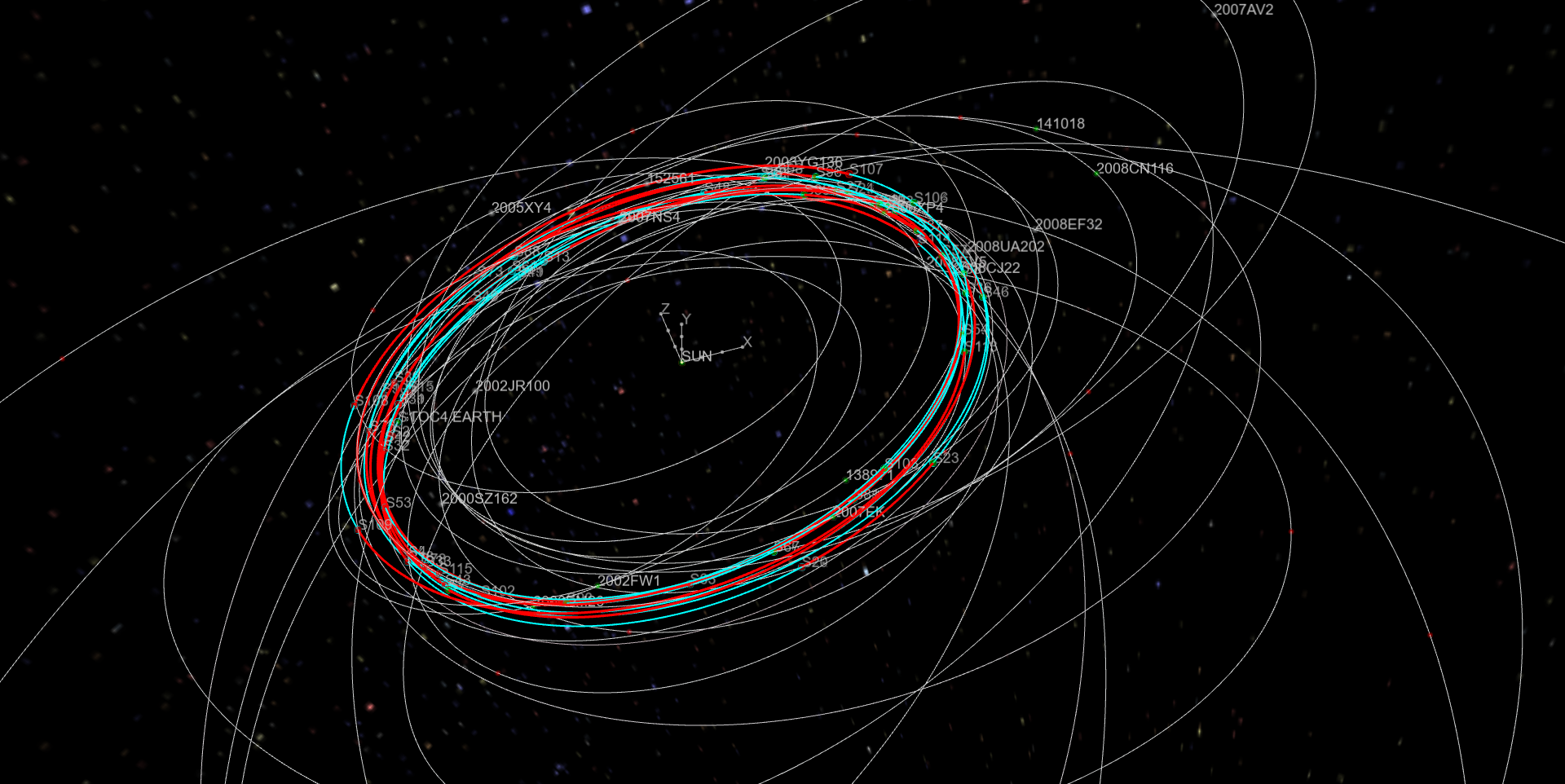
Copernicus, a generalized spacecraft trajectory design and optimization system, is capable of solving a wide range of trajectory problems such as planet or moon centered trajectories, libration point trajectories, planet-moon transfers and tours, and all types of interplanetary and asteroid/comet missions. Latest News Development The Copernicus Project started at the University of Texas at Austin

Download item bundle
Copernicus Trajectory Design and Optimization System
24 Mar 2026, 14:18 GMT By Loura Hall 5 variants

As NASA seeks to understand the mysteries of the universe, the agency is advancing technologies to locate and explore Earth-like planets far beyond our solar system. A key element of this research involves observing reflected light from exoplanets, which can reveal indicators of Earth-like features such as water and oxygen. However, detecting this faint reflected

Download item bundle
24 Mar 2026, 13:59 GMT By Arezu Sarvestani 2 variants

NASA is joining international partners to hunt for ice on the Moon in support of future human exploration. The agency is providing a water-detecting instrument, the Neutron Spectrometer System (NSS), to the Lunar Polar Exploration (LUPEX) mission led by JAXA (Japan Aerospace Exploration Agency) and ISRO (Indian Space Research Organisation).

Download item bundle
NASA’s Water-Hunting Tool Will Help Scout Moon’s South Pole
13 Mar 2026, 15:06 GMT

A testing replica of the “backbone” of NASA’s James Webb Space Telescope and a full-scale model of the agency’s Parker Solar Probe are now on permanent display at the Smithsonian’s National Air and Space Museum, Steven F. Udvar-Hazy Center in Chantilly, Virginia.

Download item bundle
Video
10 Mar 2026, 18:40 GMT By Heather Roe 4 variants

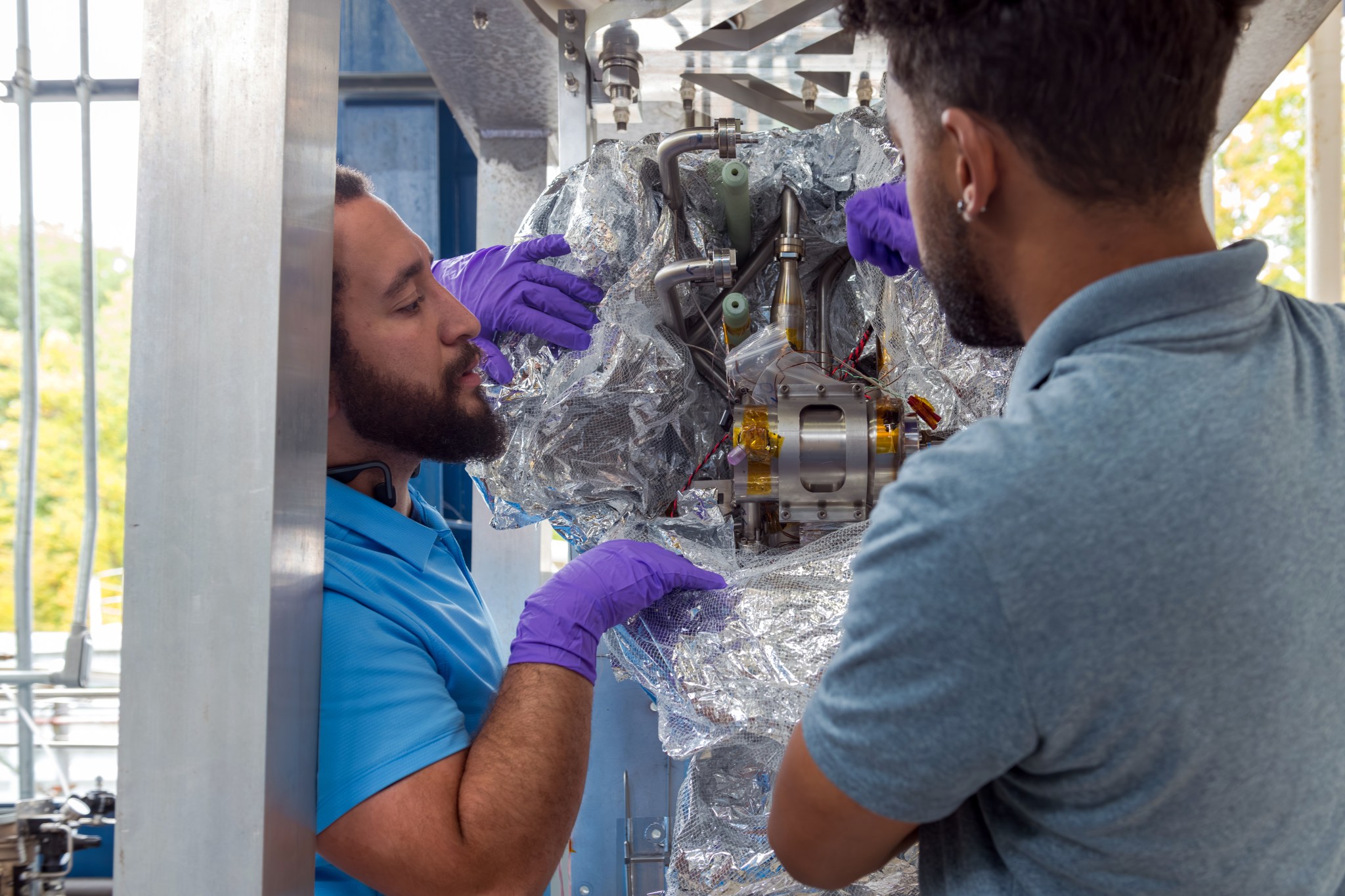
The farther the destination, the more fuel a rocket needs. The more fuel the rocket carries, the heavier the spacecraft. The heavier the spacecraft, the more fuel it requires to launch. Experts at NASA’s Glenn Research Center in Cleveland are testing technology that could solve this problem. The CryoFILL (Cryogenic Fluid In-Situ Liquefaction for Landers) project could transform the way NASA fuels future space exploration missions, reducing costs and extending the duration of planetary surface operations. “If

Download item bundle
Ice to Fuel: NASA Tests Technology for Refueling Landers