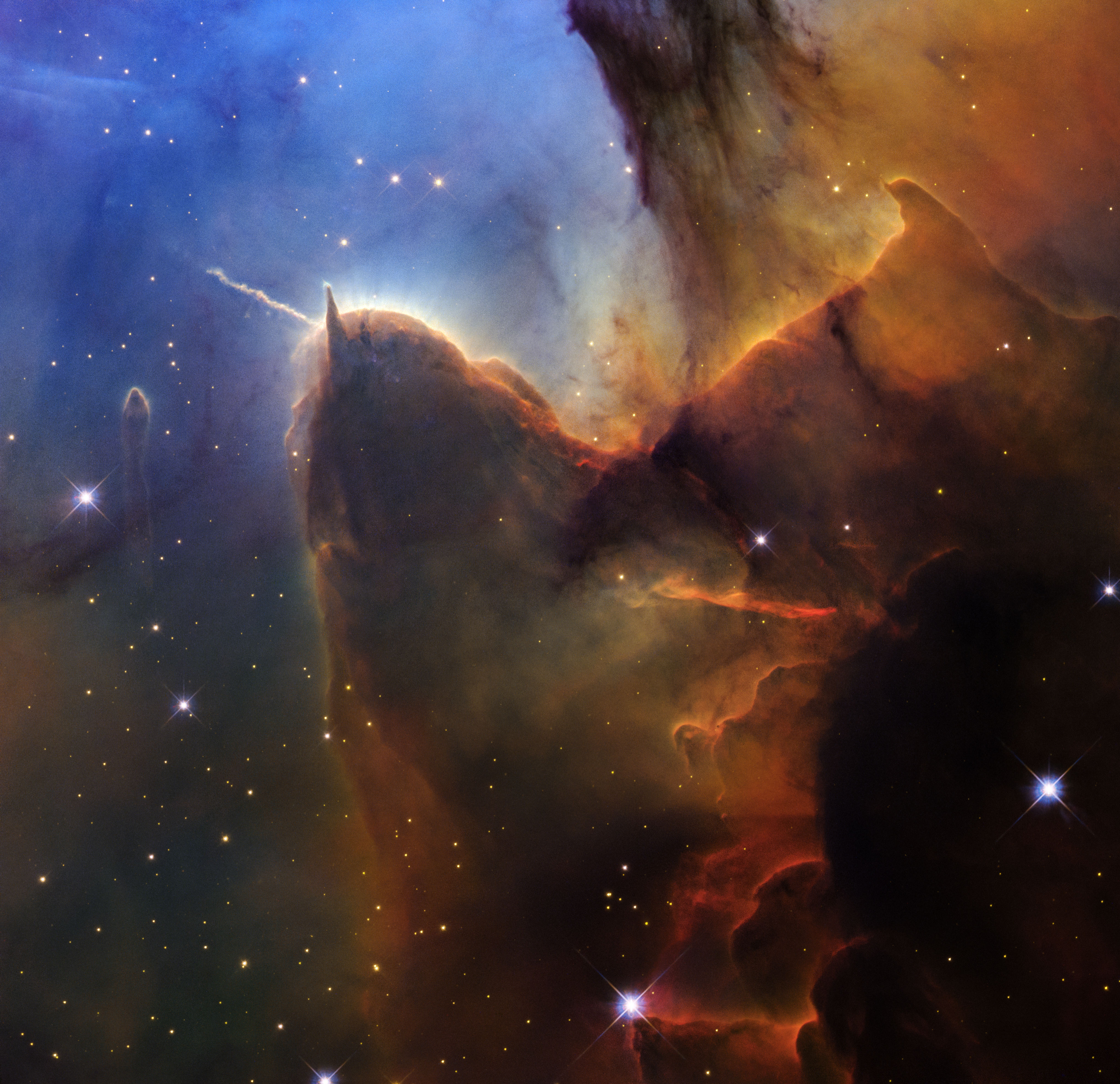
NASA celebrates Hubble’s 36th anniversary with a new image of the Trifid Nebula, a star-forming region it first captured in 1997. The telescope leveraged almost its full operational lifetime to show us changes in the nebula on human time scales with an improved camera.
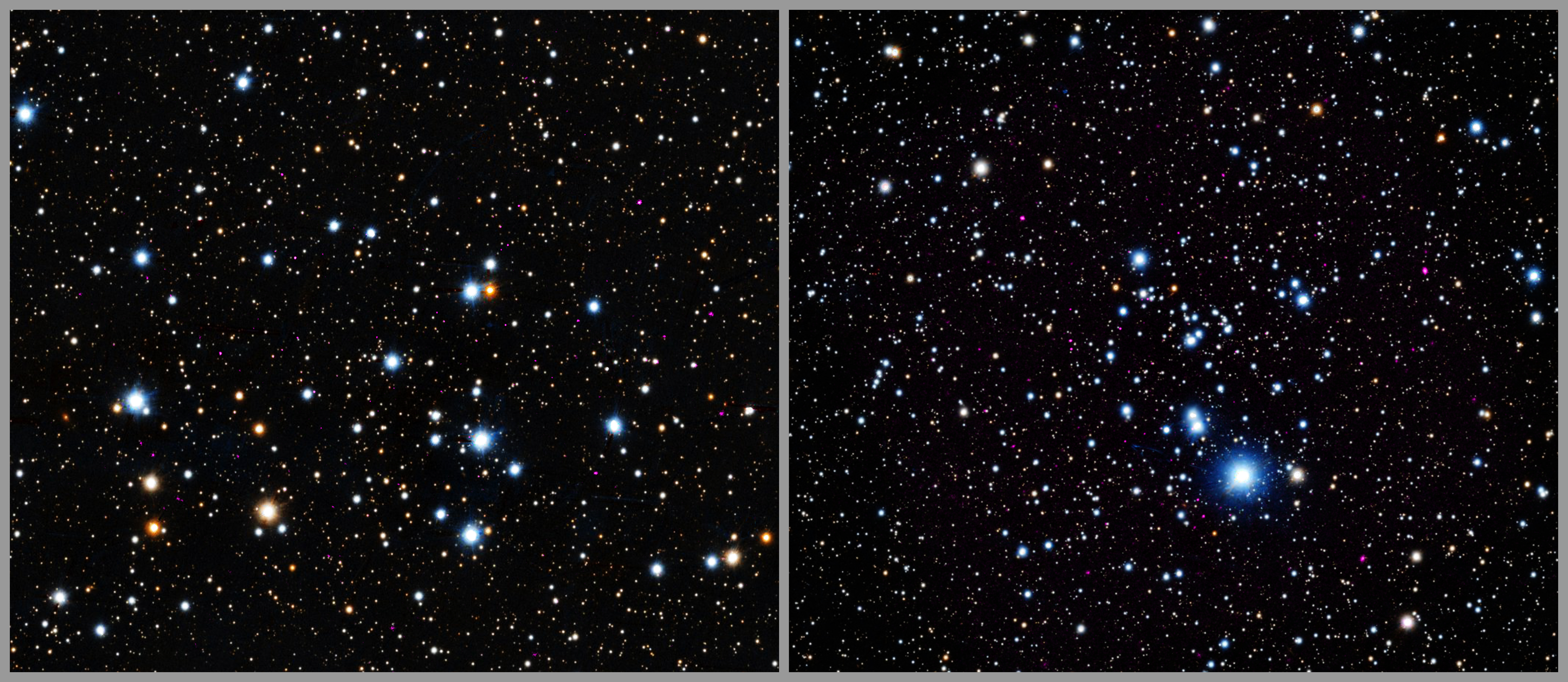
Scientists have found that young stellar cousins of our Sun are calming down and dimming more quickly in their X-ray output than previously thought, according to a study using NASA’s Chandra X-ray Observatory.
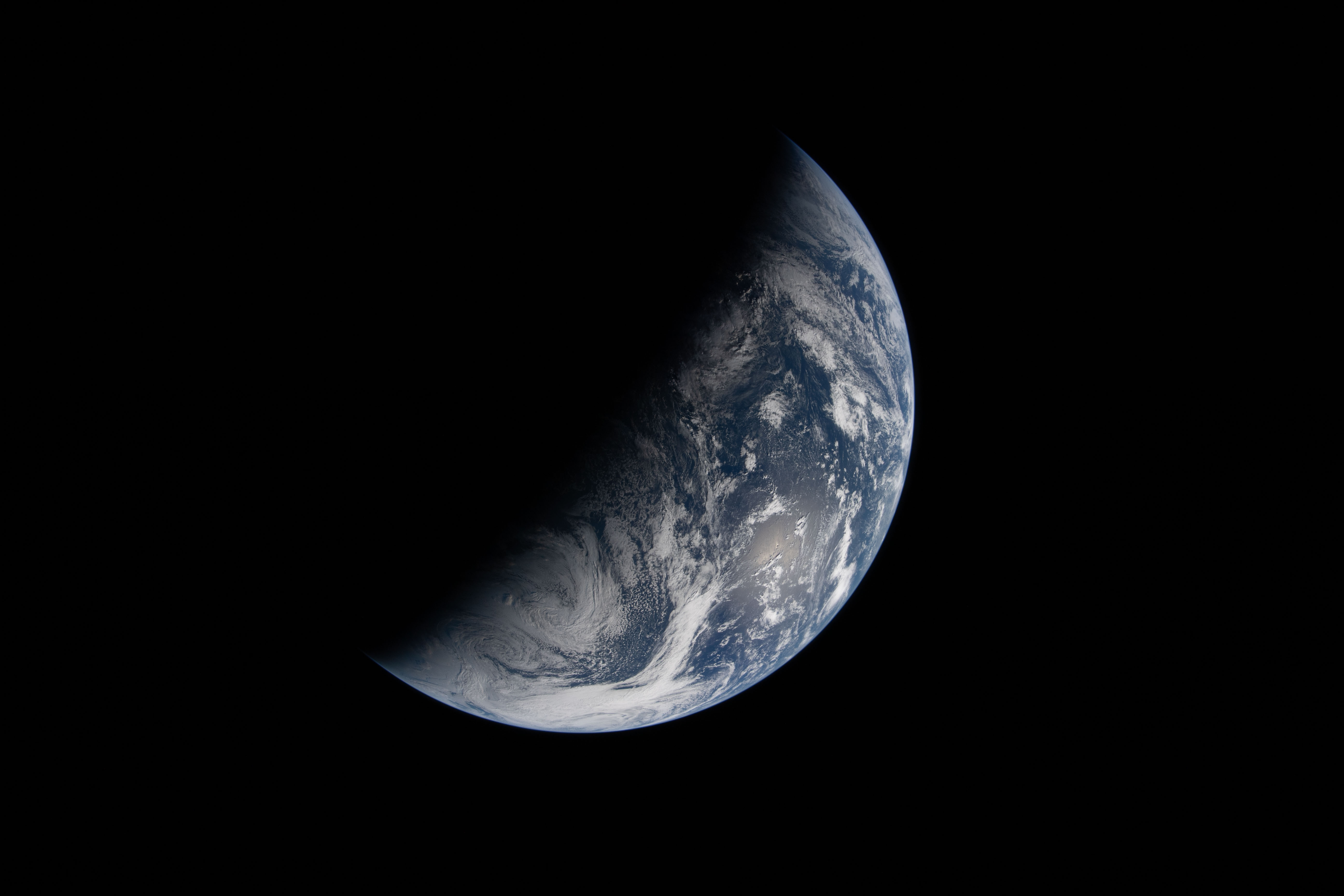
This image, released in celebration of Earth Day, shows the terminator – the line between night and day – on Earth. The Artemis II astronauts captured this view on April 2, 2026, during their journey to the Moon.
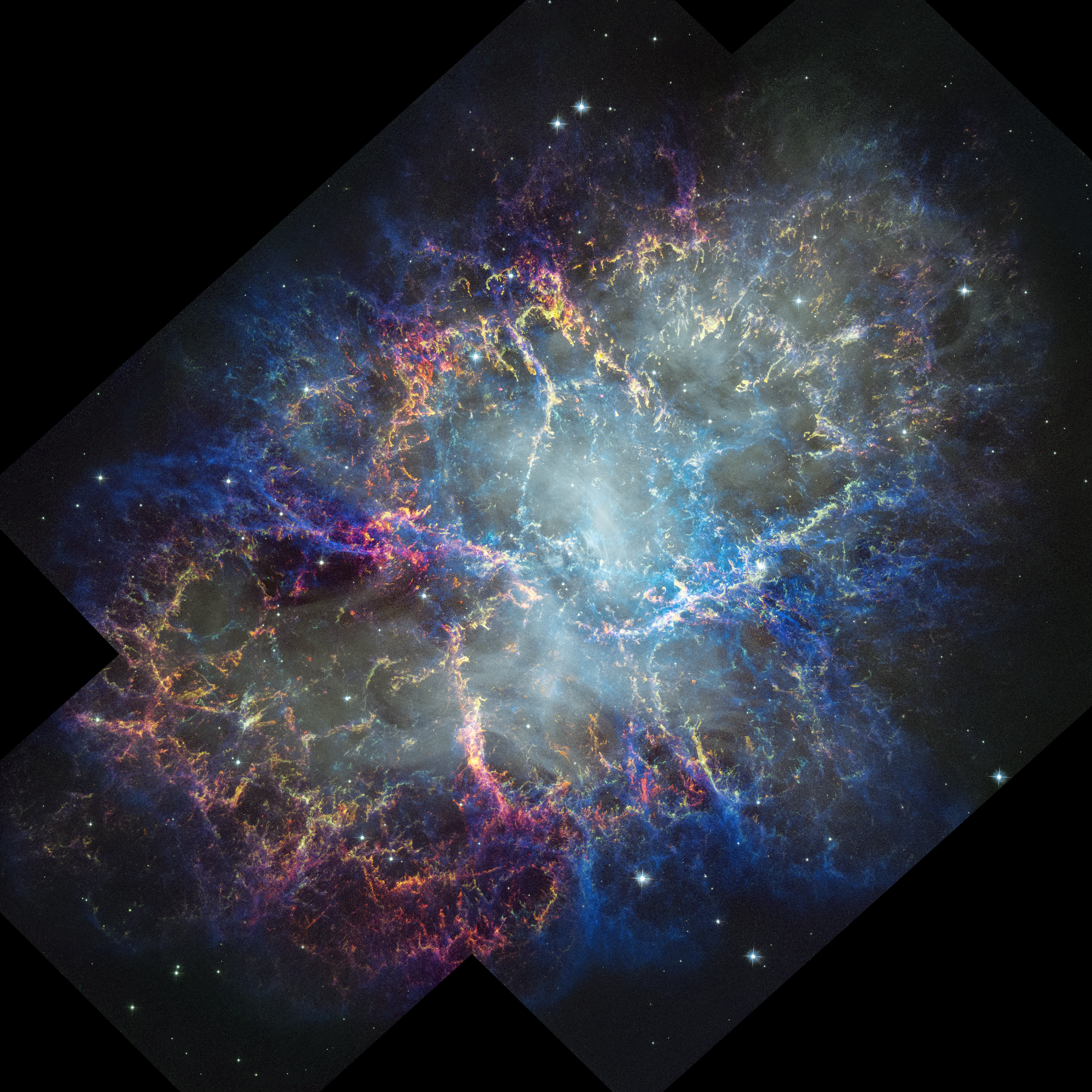
This image that NASA’s Hubble Space Telescope captured of the Crab Nebula, paired with its past observations and those of other telescopes, allows astronomers to study how the supernova remnant is expanding and evolving over time.
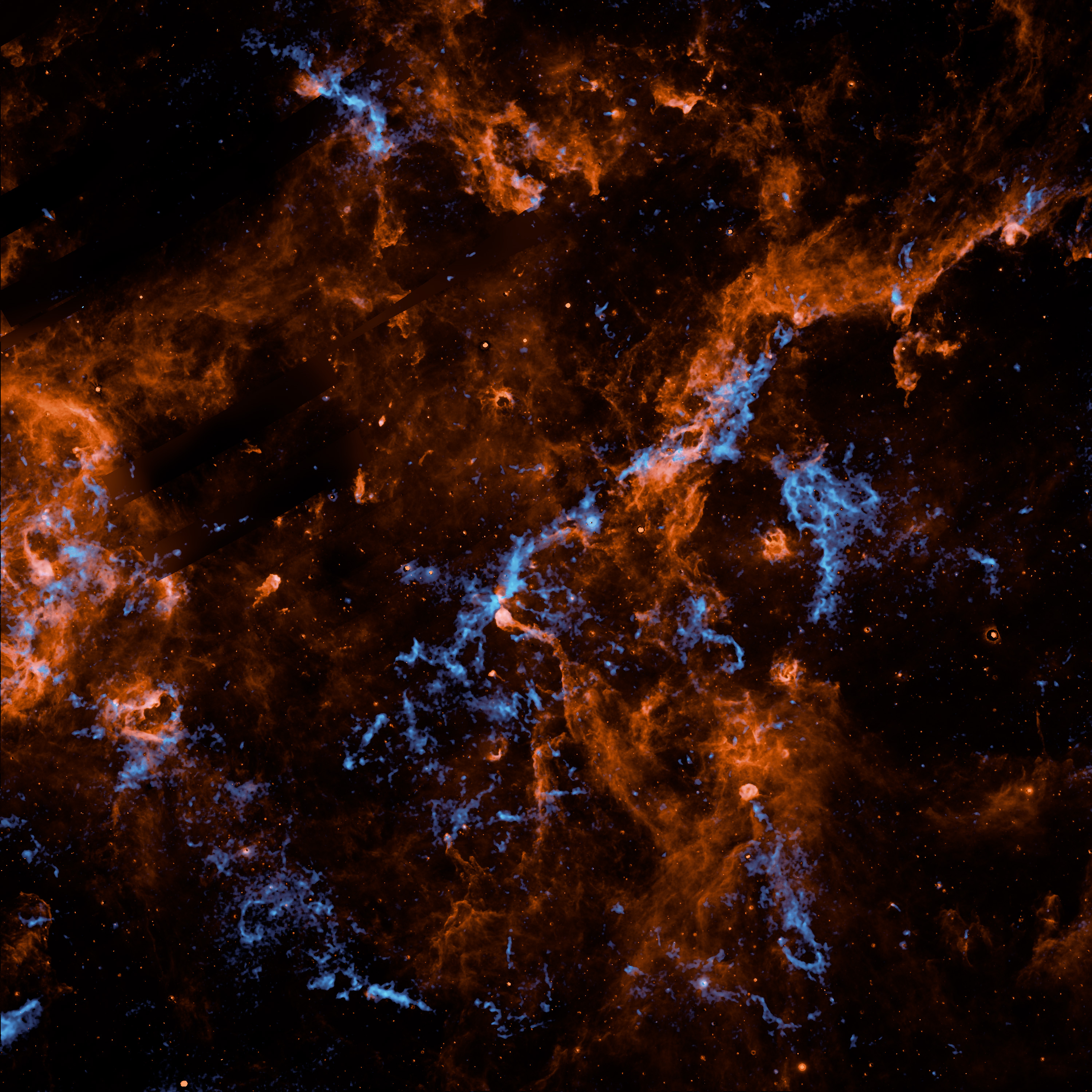
An observation made by NASA’s SPHEREx mission reveals vast frozen complexes in the Cygnus X star-forming region of the Milky Way galaxy. The chemical signature of water ice is shown as bright blue structures, while polycyclic aromatic hydrocarbons are in orange.
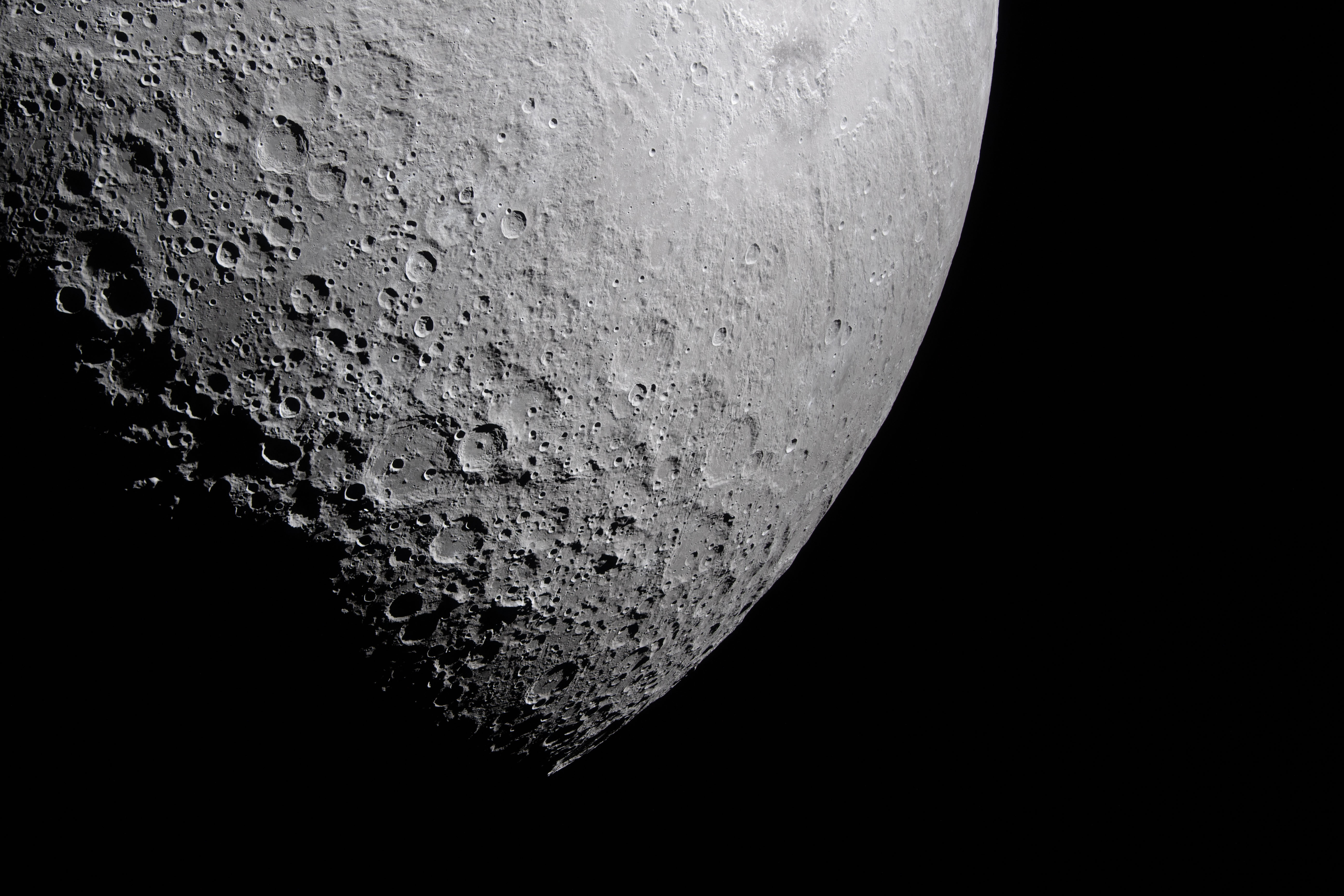
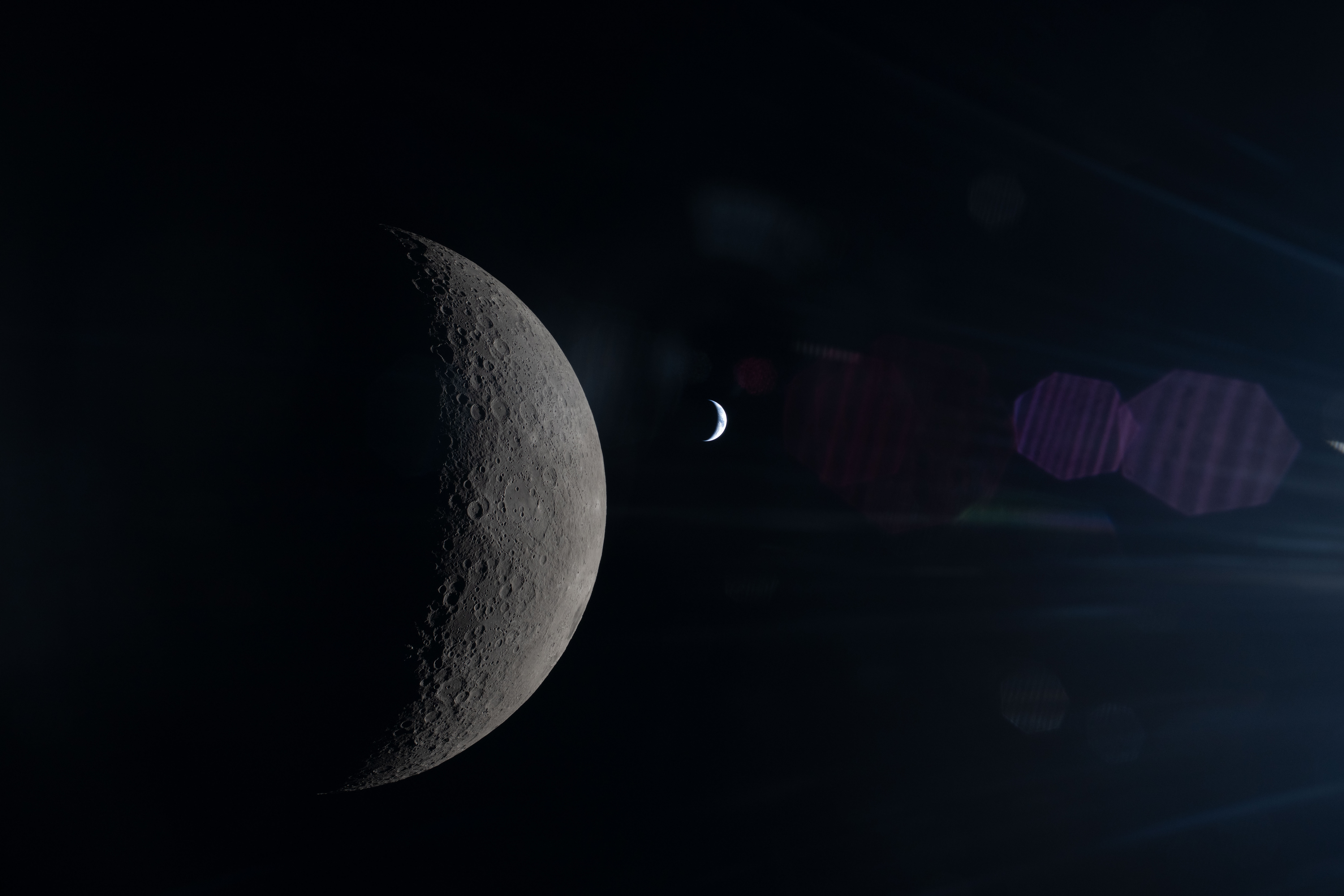
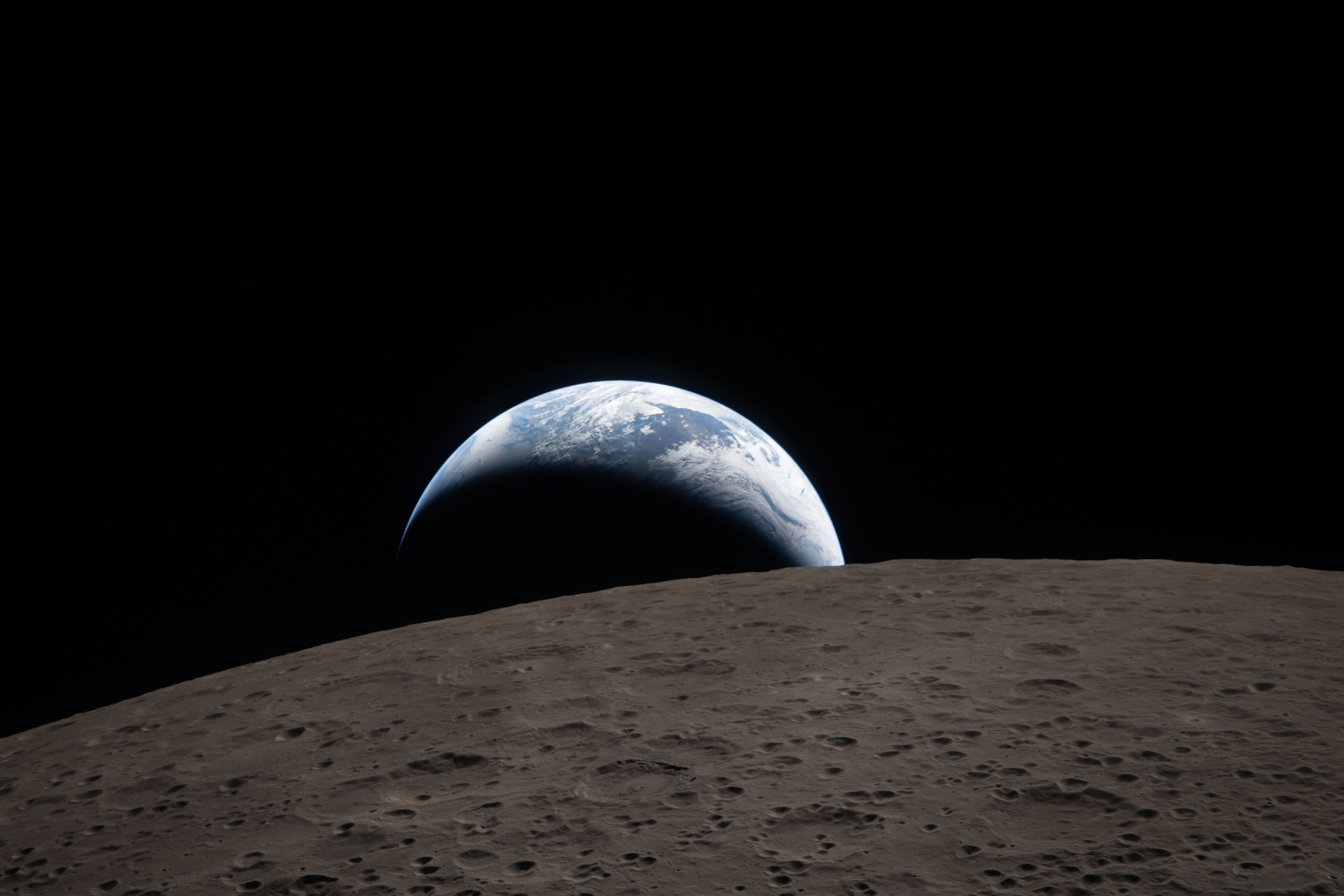
A portion of the Moon’s far side is seen along the terminator—the boundary between lunar day and night—where low-angle sunlight casts long shadows across the surface.
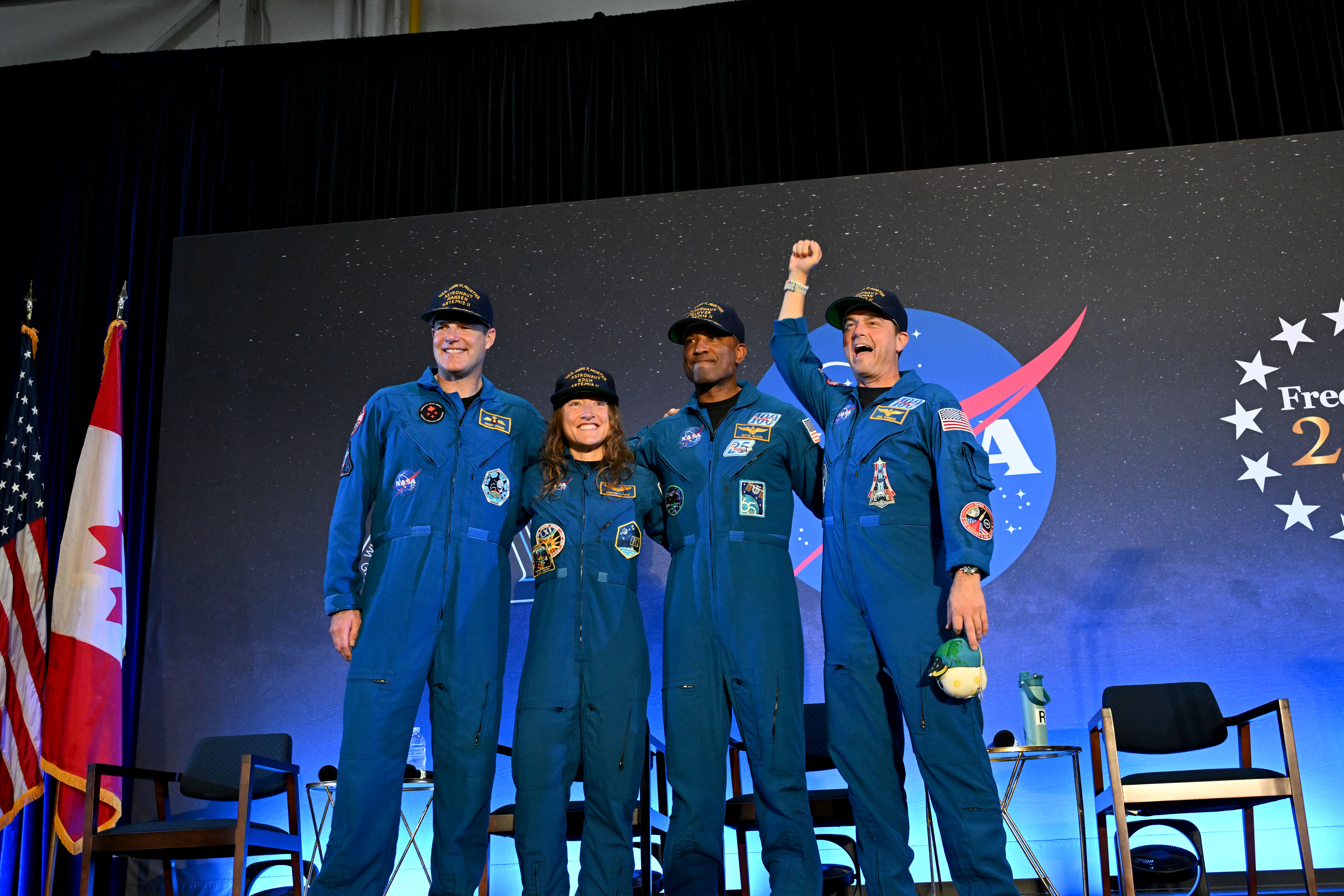
NASA’s Artemis II crew shared brief remarks with friends, family, and colleagues after they landed at Ellington Airport near NASA’s Johnson Space Center in Houston on Saturday, April 11, 2026, after a nearly 10-day journey around the Moon and back to Earth.
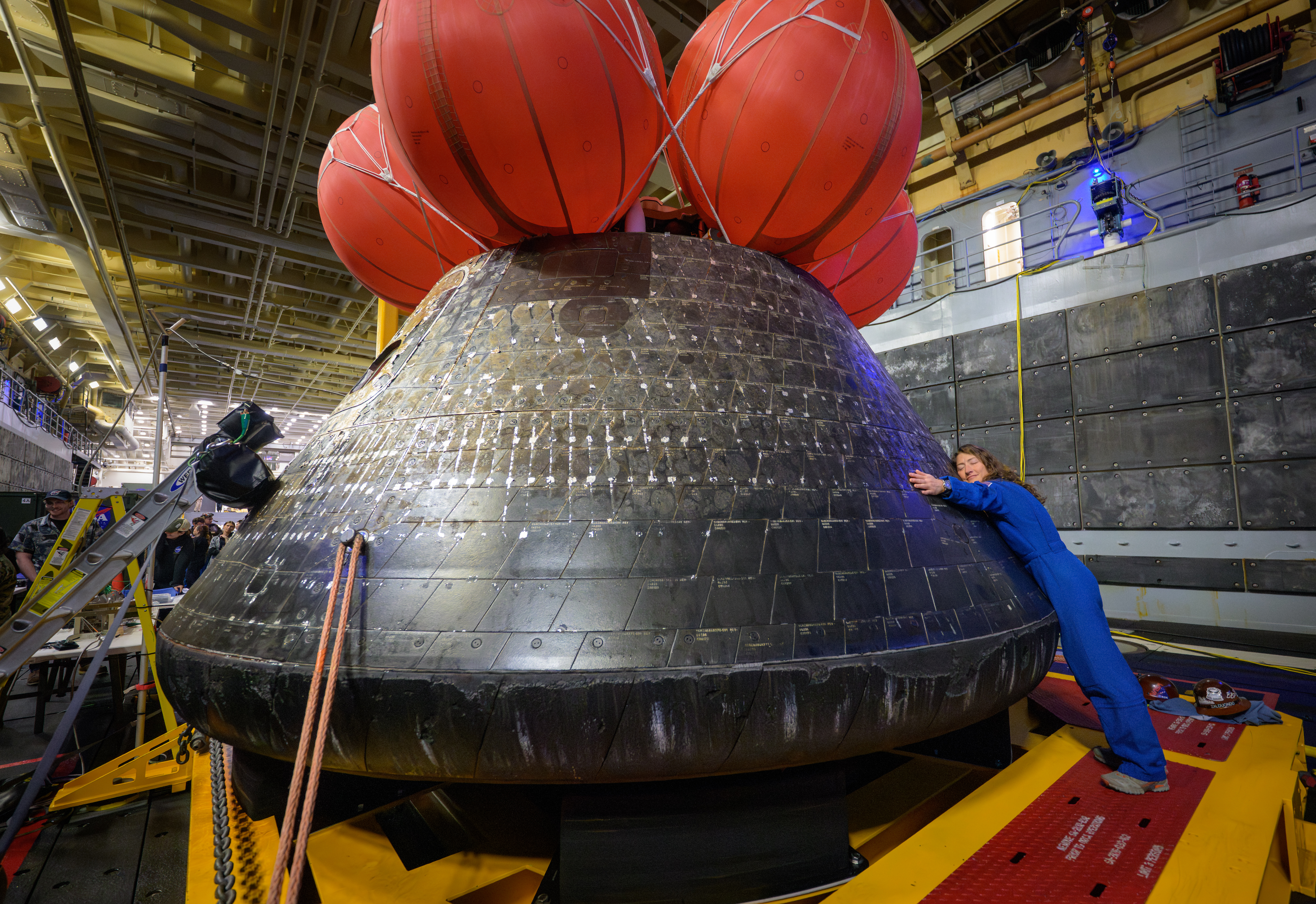
NASA astronaut Christina Koch, Artemis II mission specialist hugs the Orion spacecraft in the well deck of USS John P. Murtha, Saturday, April 11, 2026.
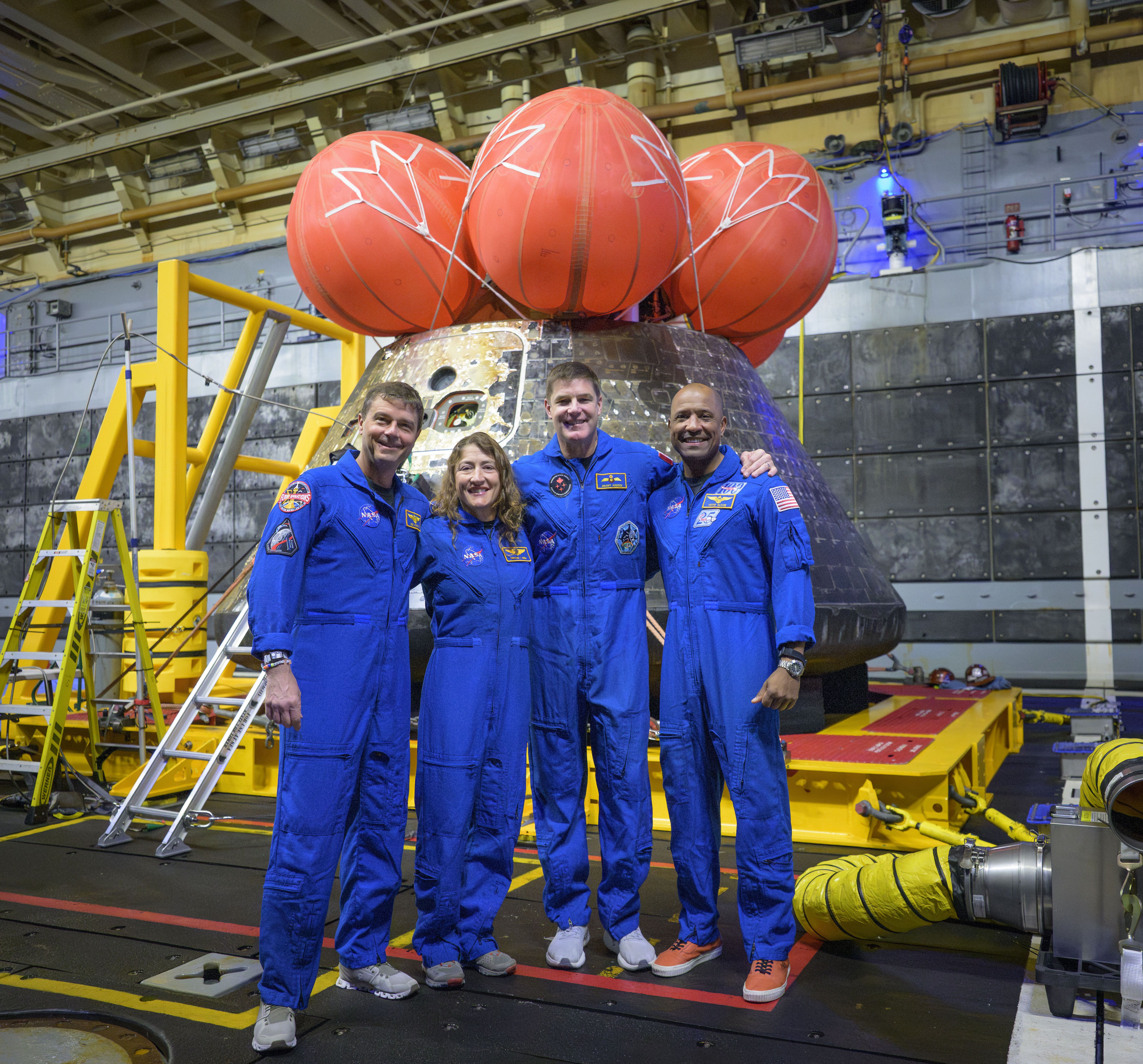
NASA astronauts Reid Wiseman, commander; left, Christina Koch, mission specialist; CSA (Canadian Space Agency) astronaut Jeremy Hansen, mission specialist; and NASA astronaut Victor Glover, Artemis II pilot, right, pose for a group photo after viewing the Orion spacecraft in the well deck of USS John P. Murtha, Saturday, April 11, 2026, in the Pacific Ocean off the coast of California. The quartet splashed down Friday, April 10 at 5:07 p.m. PDT (8:07p.m. EDT).
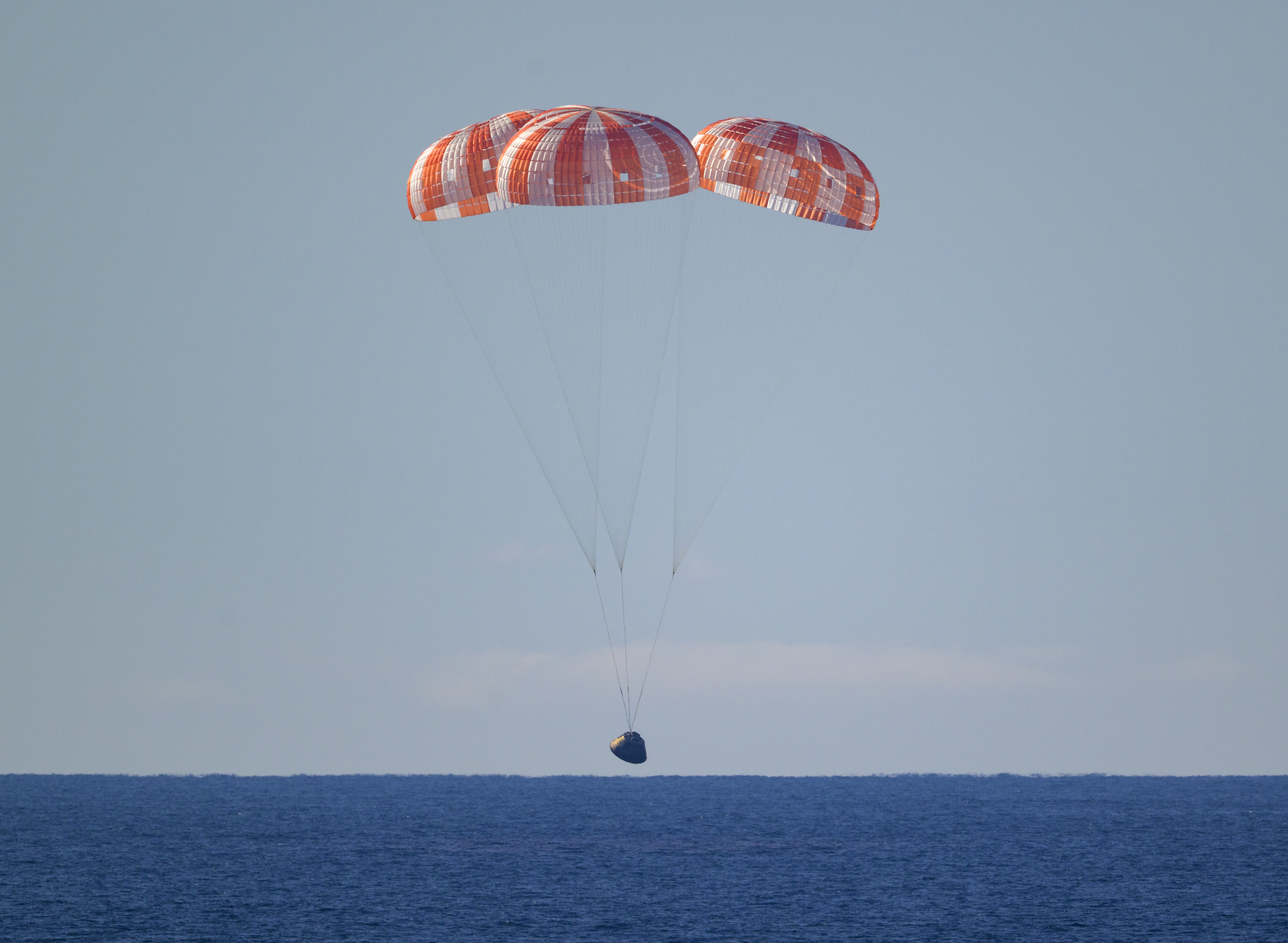
NASA’s Orion spacecraft with Artemis II crewmembers NASA astronauts Reid Wiseman, commander; Victor Glover, pilot; Christina Koch, mission specialist; and CSA (Canadian Space Agency) astronaut Jeremy Hansen, mission specialist aboard is seen under parachutes as it lands in the Pacific Ocean off the coast of California, Friday, April 10, 2026. NASA’s Artemis II mission took Wiseman, Glover, Koch, and Hansen on a 10-day journey around the Moon and back to Earth. Following a splashdown at 8:07 p.m. EDT, NASA, U.S. Navy, and U.S. Air Force teams are working to bring the crewmembers and Orion spacecraft aboard USS John P. Murtha.
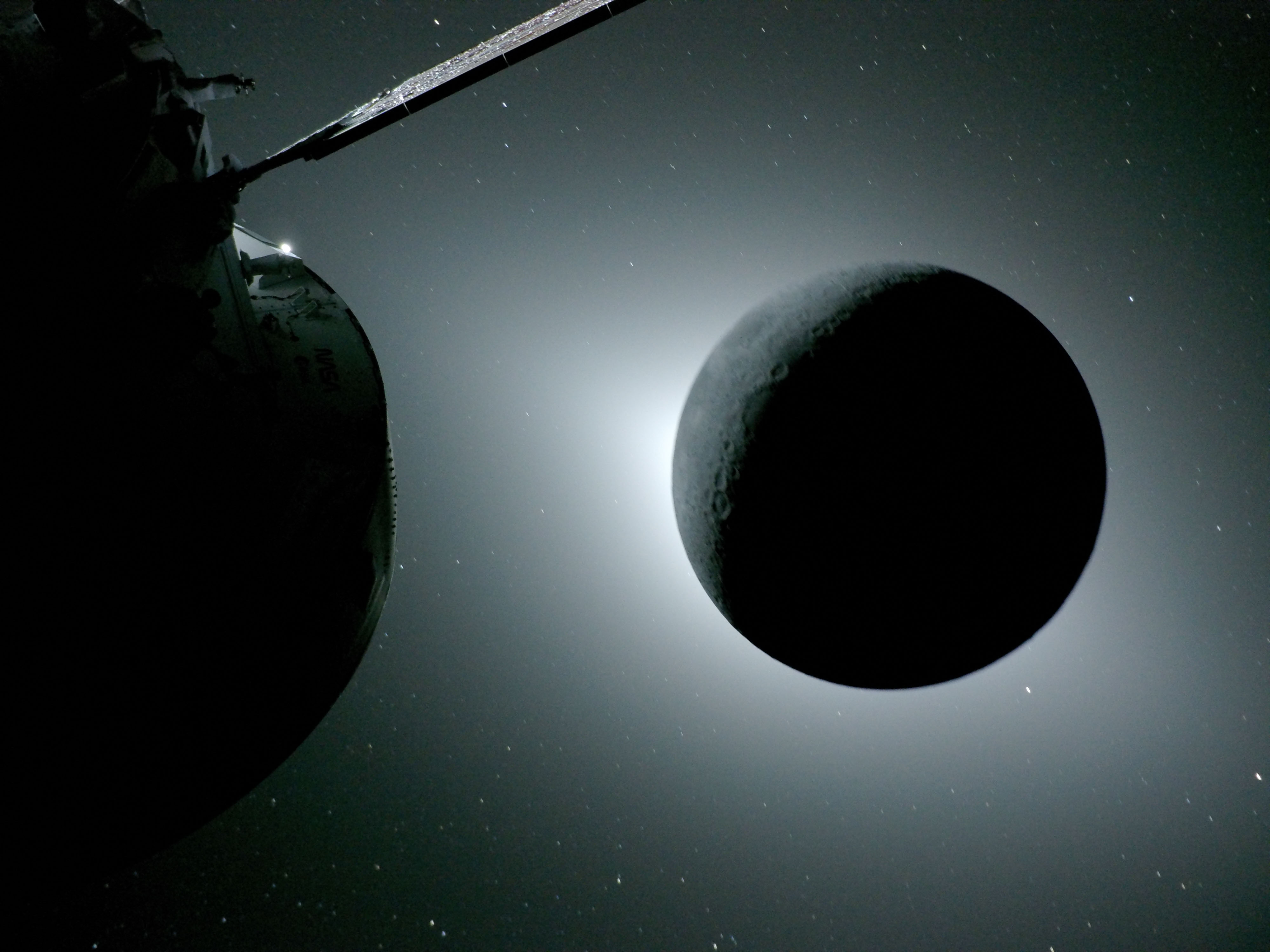
The Moon, seen here backlit by the Sun during a solar eclipse on April 6, 2026, is photographed by one of the cameras on the Orion spacecraft’s solar array wings. Orion is visible in the foreground on the left.
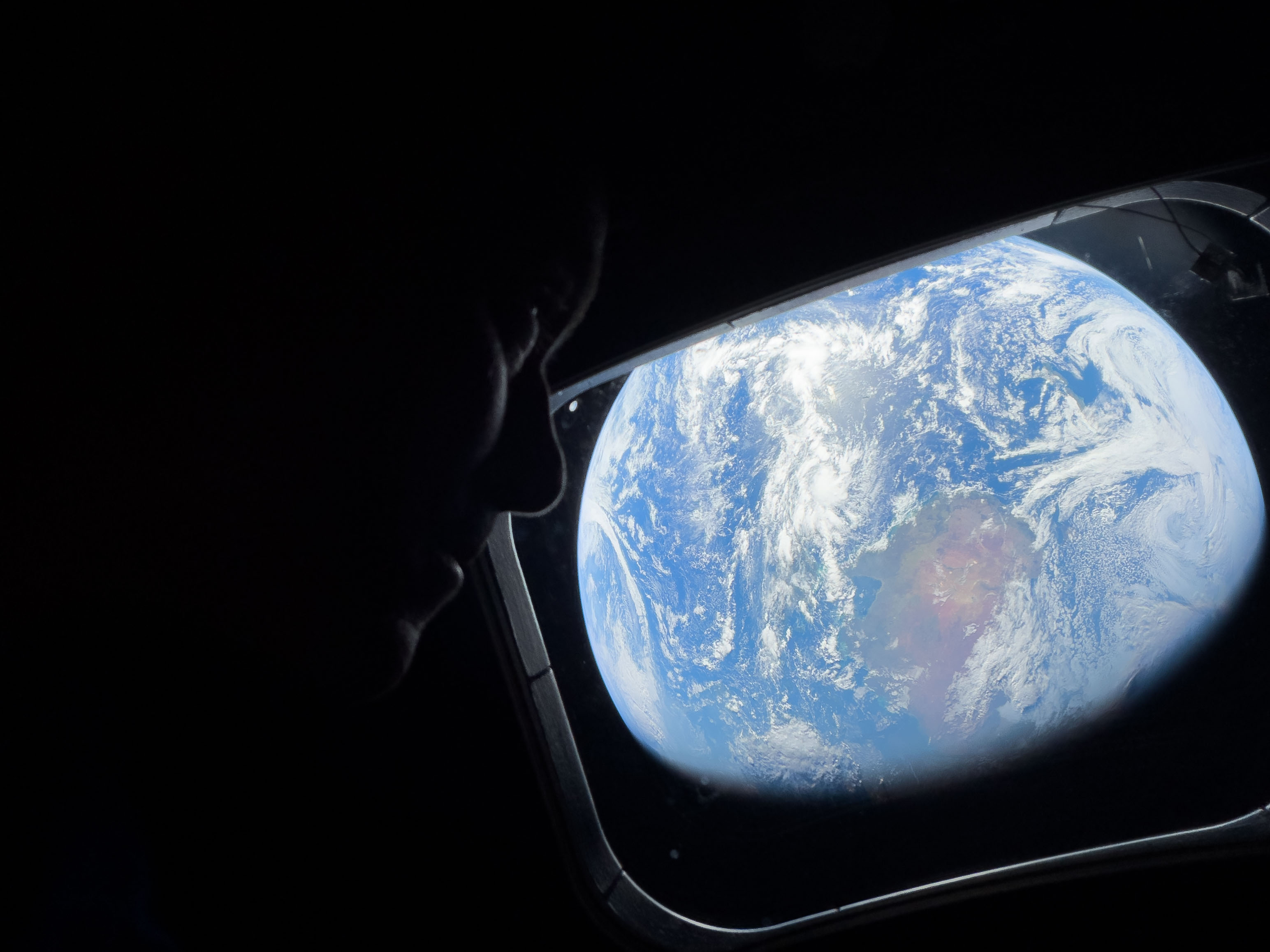
NASA astronaut and Artemis II Commander Reid Wiseman peers out of one of the Orion spacecraft's main cabin windows on April 4, 2026, looking back at Earth, as the crew travels towards the Moon.
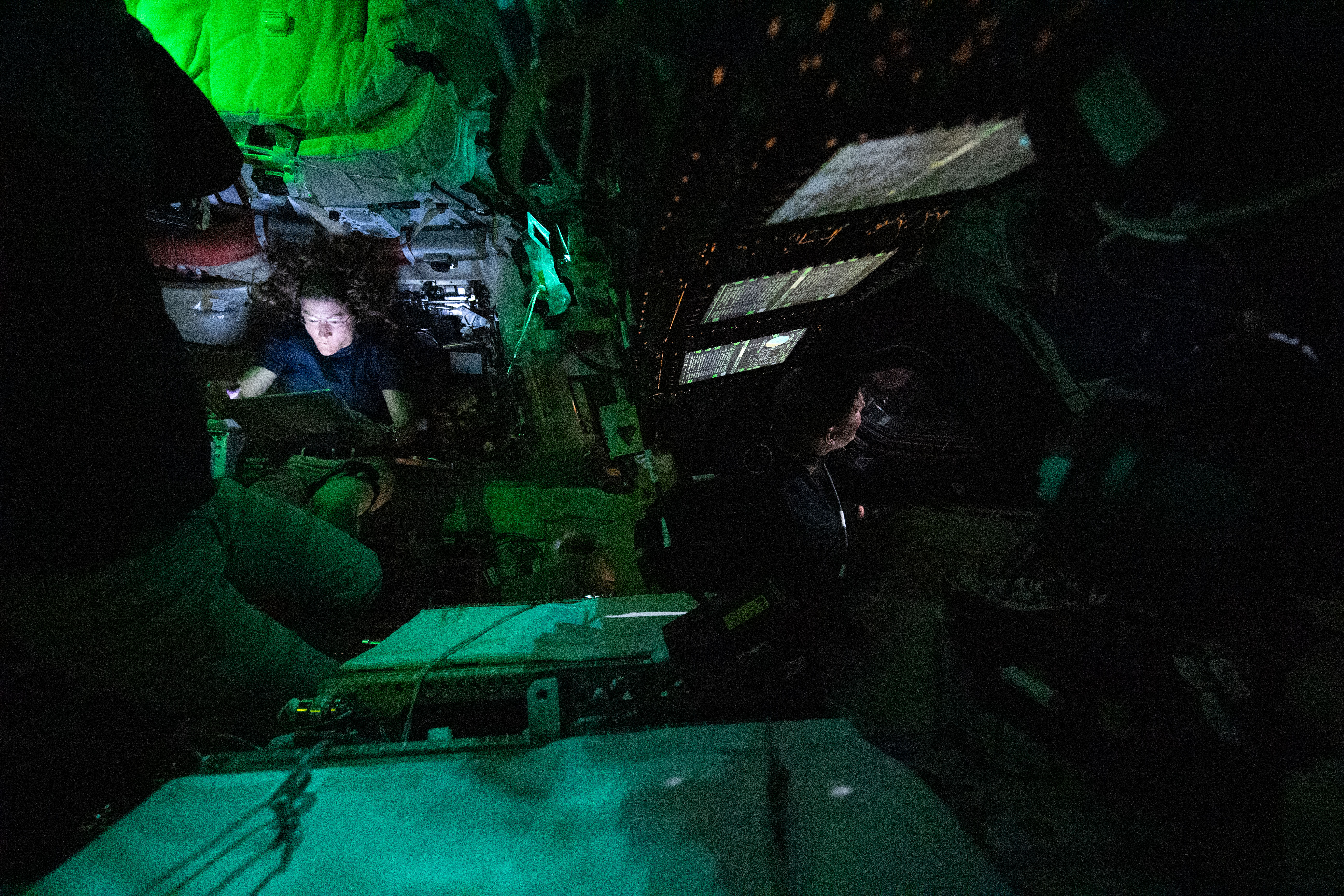
NASA astronaut Christina Koch is illuminated by a screen inside the darkened Orion spacecraft on the third day of the agency's Artemis II mission. To the right of the image's center, CSA (Canadian Space Agency) astronaut Jeremy Hansen is seen in profile peering out of one of Orion's windows. Lights are turned off to avoid glare on the windows.
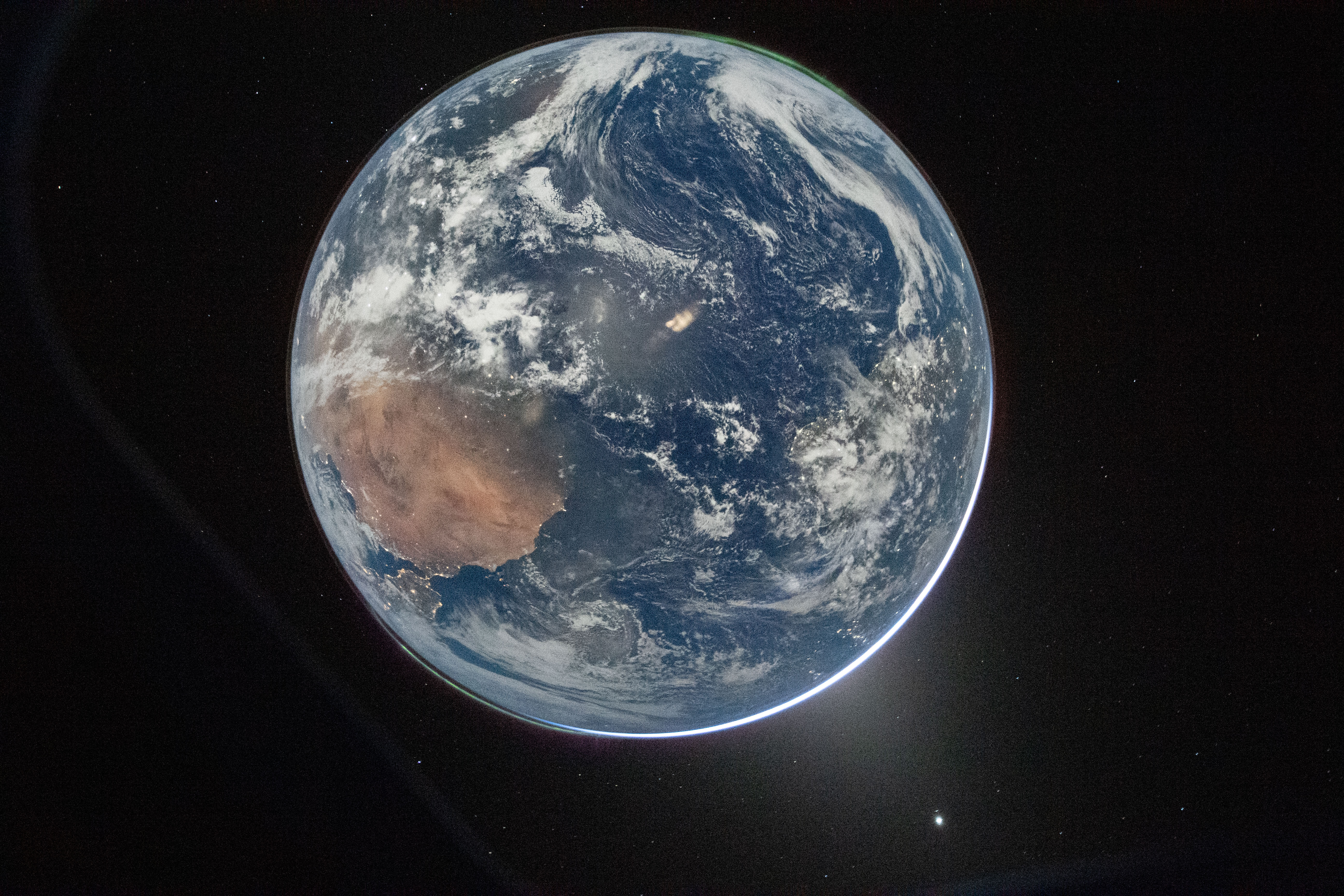
This nighttime picture of Earth was taken on April 2, 2026, by an Artemis II crew member aiming a camera through a window of the Orion spacecraft. The image was captured after Orion completed its translunar injection burn, the critical maneuver that sent the spacecraft on its path toward the Moon and back.
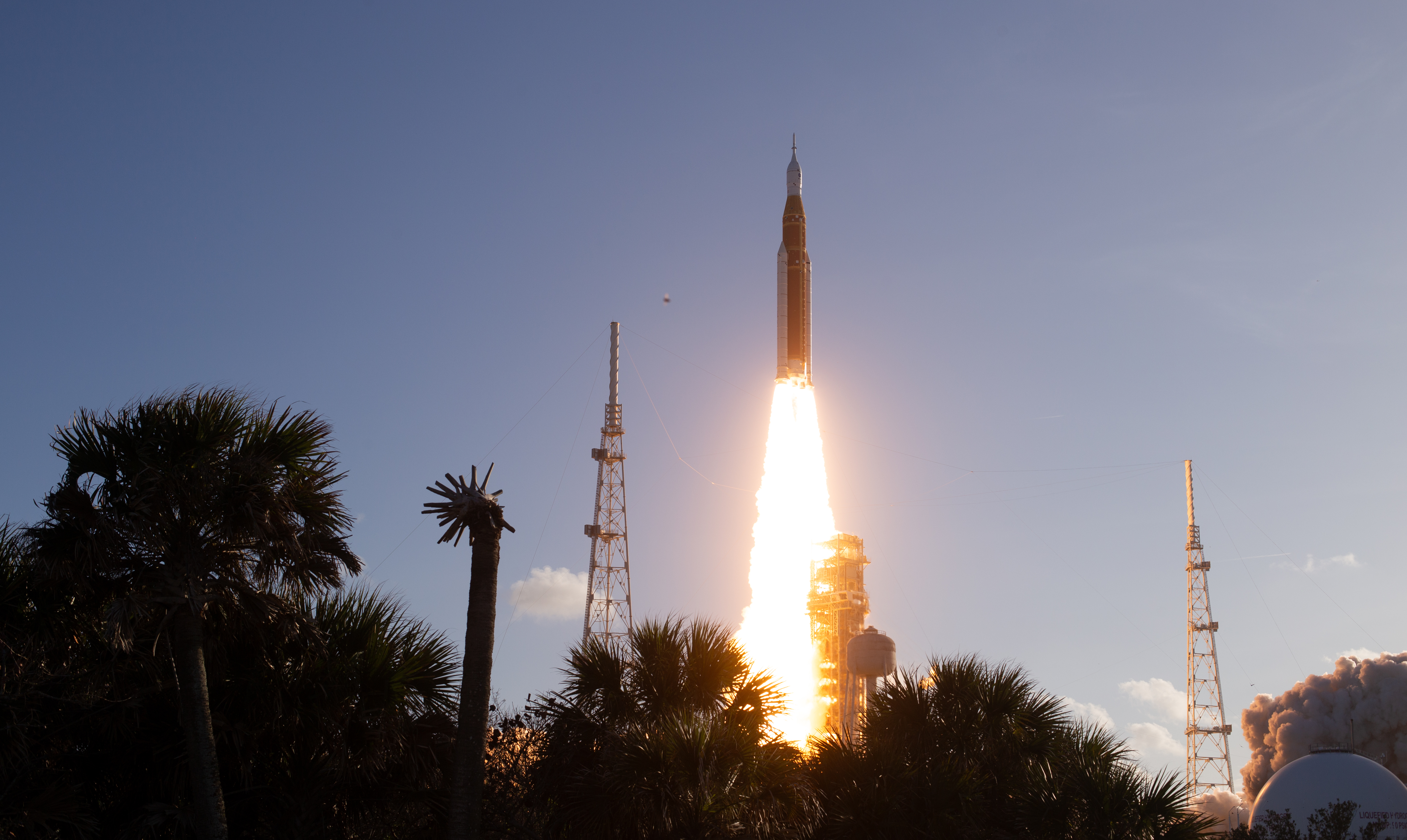
NASA’s Space Launch System rocket carrying the Orion spacecraft with NASA astronauts Reid Wiseman, commander; Victor Glover, pilot; Christina Koch, mission specialist; and CSA (Canadian Space Agency) astronaut Jeremy Hansen, mission specialist onboard launches on the Artemis II mission, Wednesday, April 1, 2026, from Launch Complex 39B at NASA’s Kennedy Space Center in Florida.