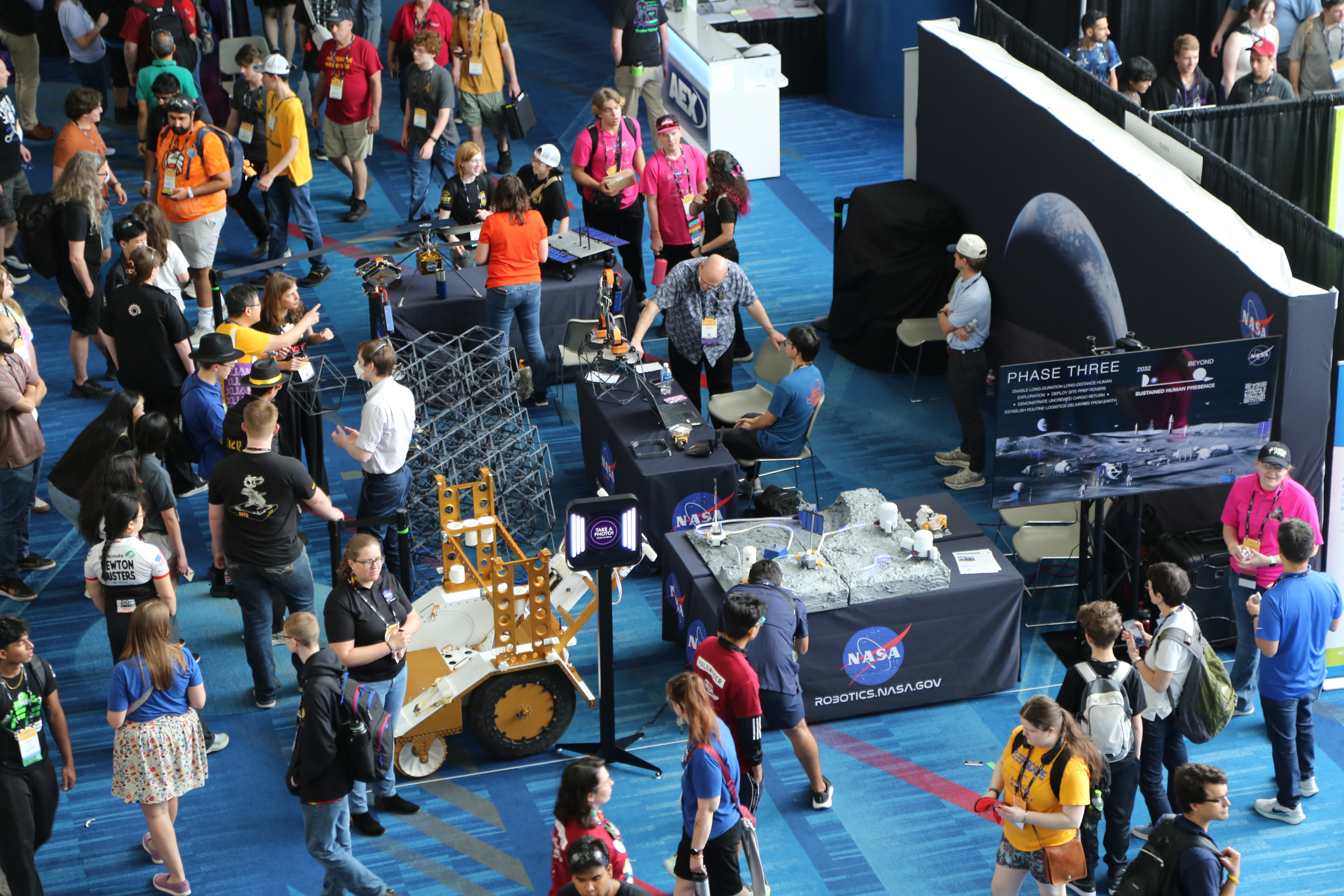
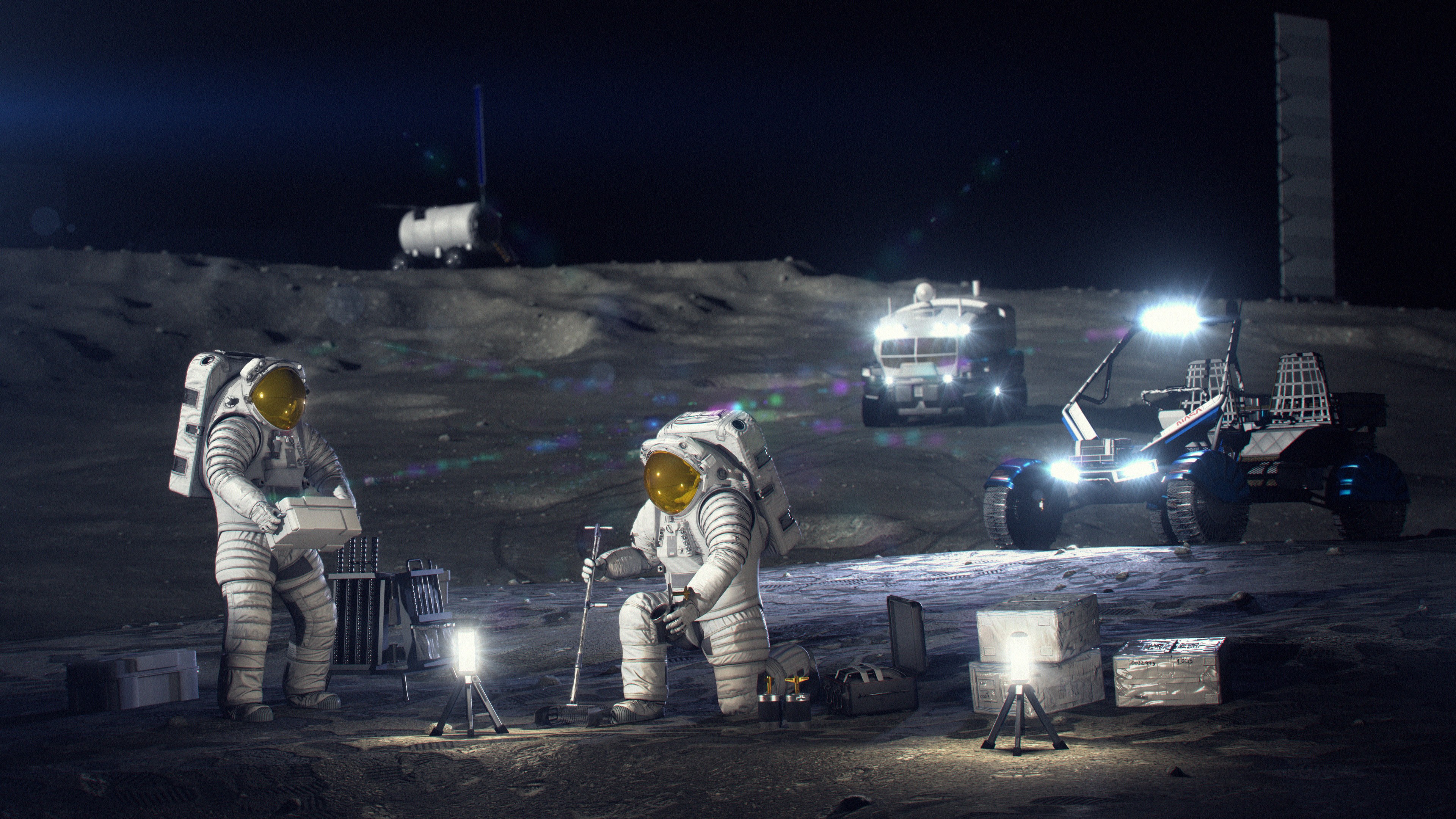
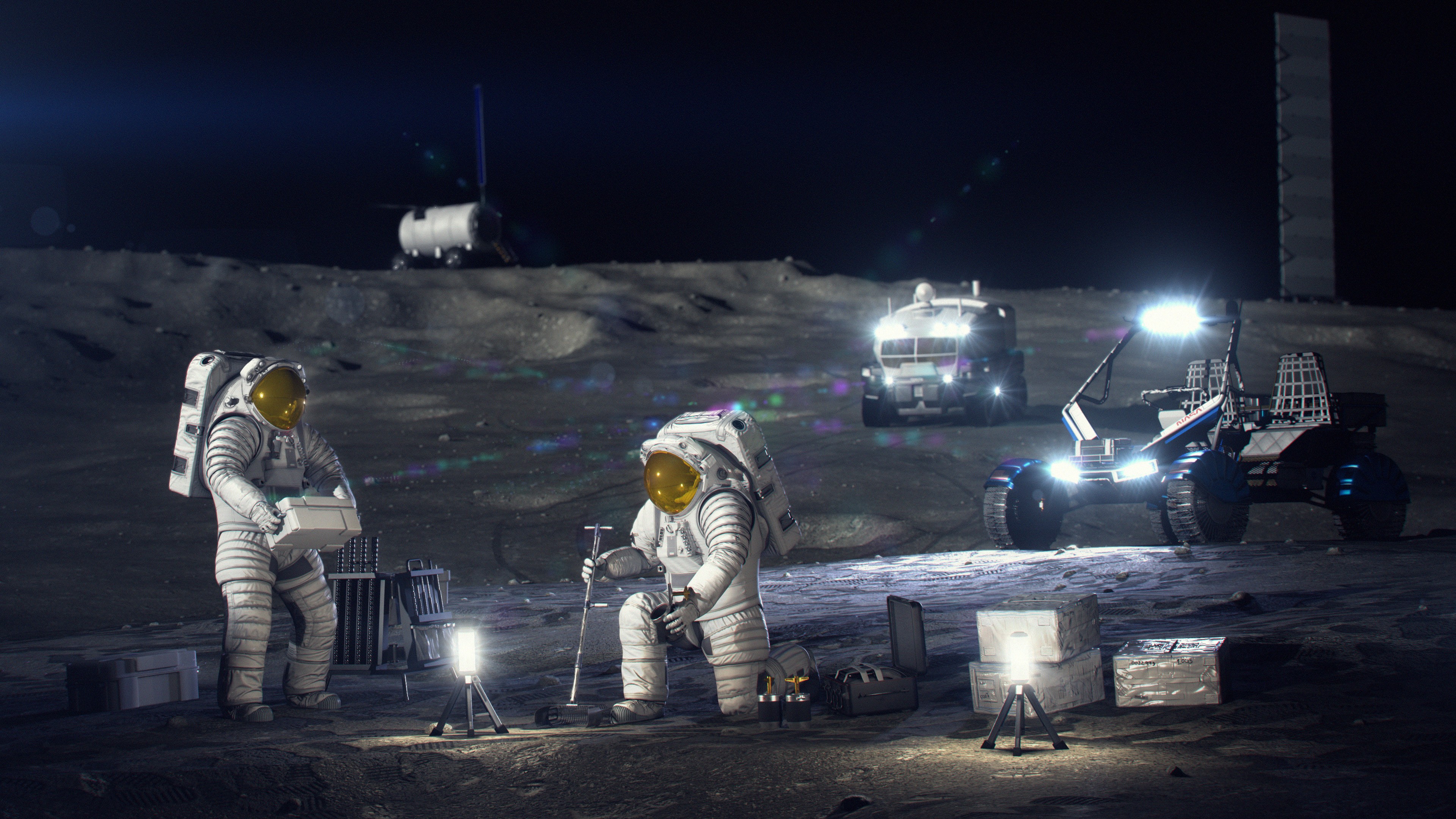
Robotics will play a critical role in NASA’s ambitious plan to establish a long-term presence on the Moon, presenting opportunities for the next generation of engineers, technologists, and innovators to contribute to a bold vision for the future. That was the agency’s message to students, partners, and industry leaders at the 2026 FIRST Robotics World
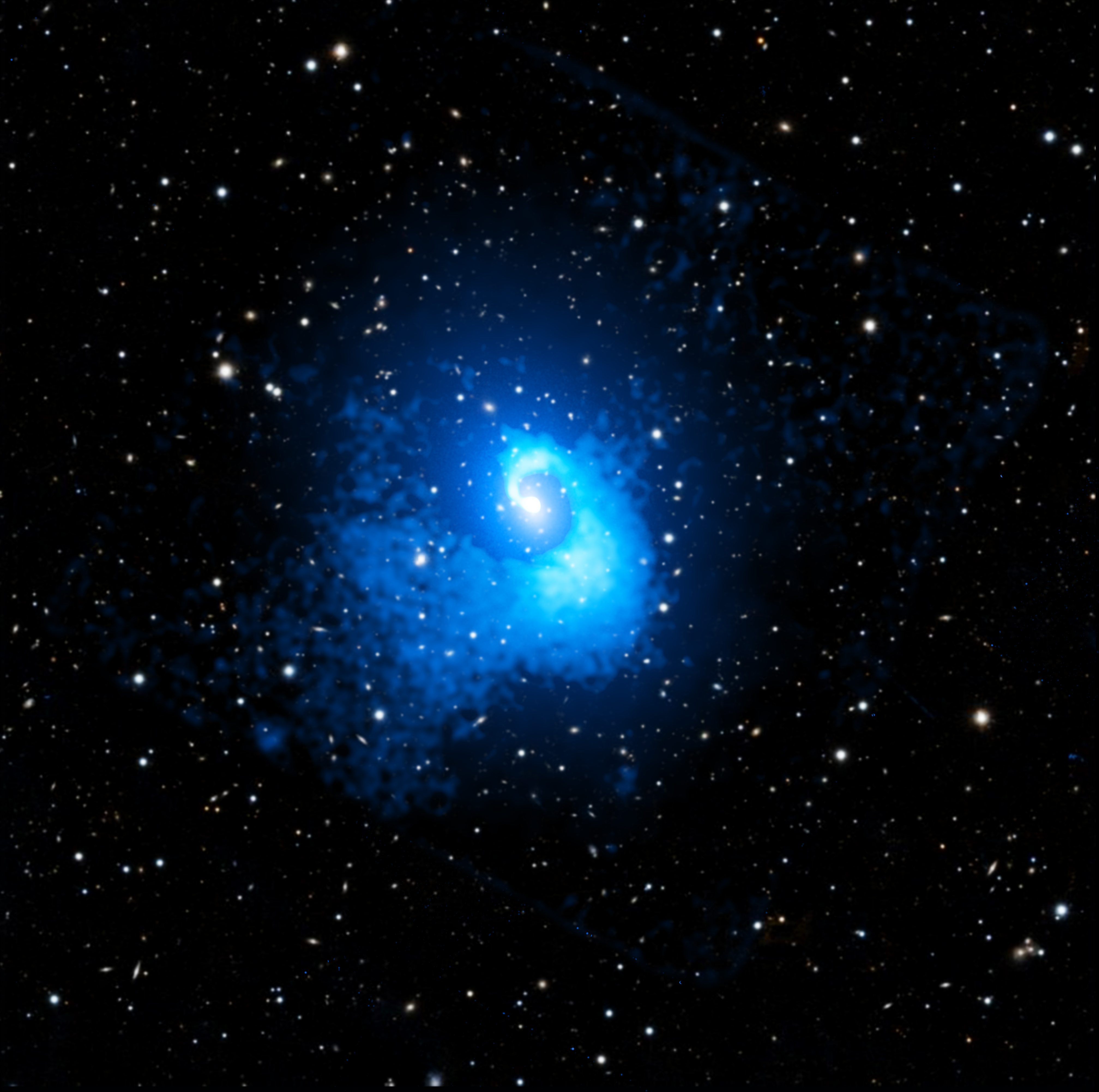
This big beautiful spiral shines in X-ray light. It is about 20 times larger than our Galaxy. It belongs to Abell 2029, a galaxy cluster one billion light-years away. (To see only the galaxies, hover your cursor over the image, or follow this link.) Galaxy clusters are the largest structures in the universe that are supported by gravity. Abell 2029 is formed by thousands of galaxies, surrounded by a huge cloud of hot gas and the equivalent of hundreds of trillions times the mass of the Sun in dark matter. The spiral is made of gas, mostly hydrogen and helium, heated to tens of millions of degrees. It was found in a recent study that used data from NASA's Chandra X-ray Observatory to show that Abell 2029 had a collision with a smaller cluster four billion years ago. The collision affected the gravitational field and caused the intracluster gas to slosh, like wine moving in a wine glass, shaping the spiral.
20 May 2026, 20:48 GMTBy Bailey G. Light4 variants
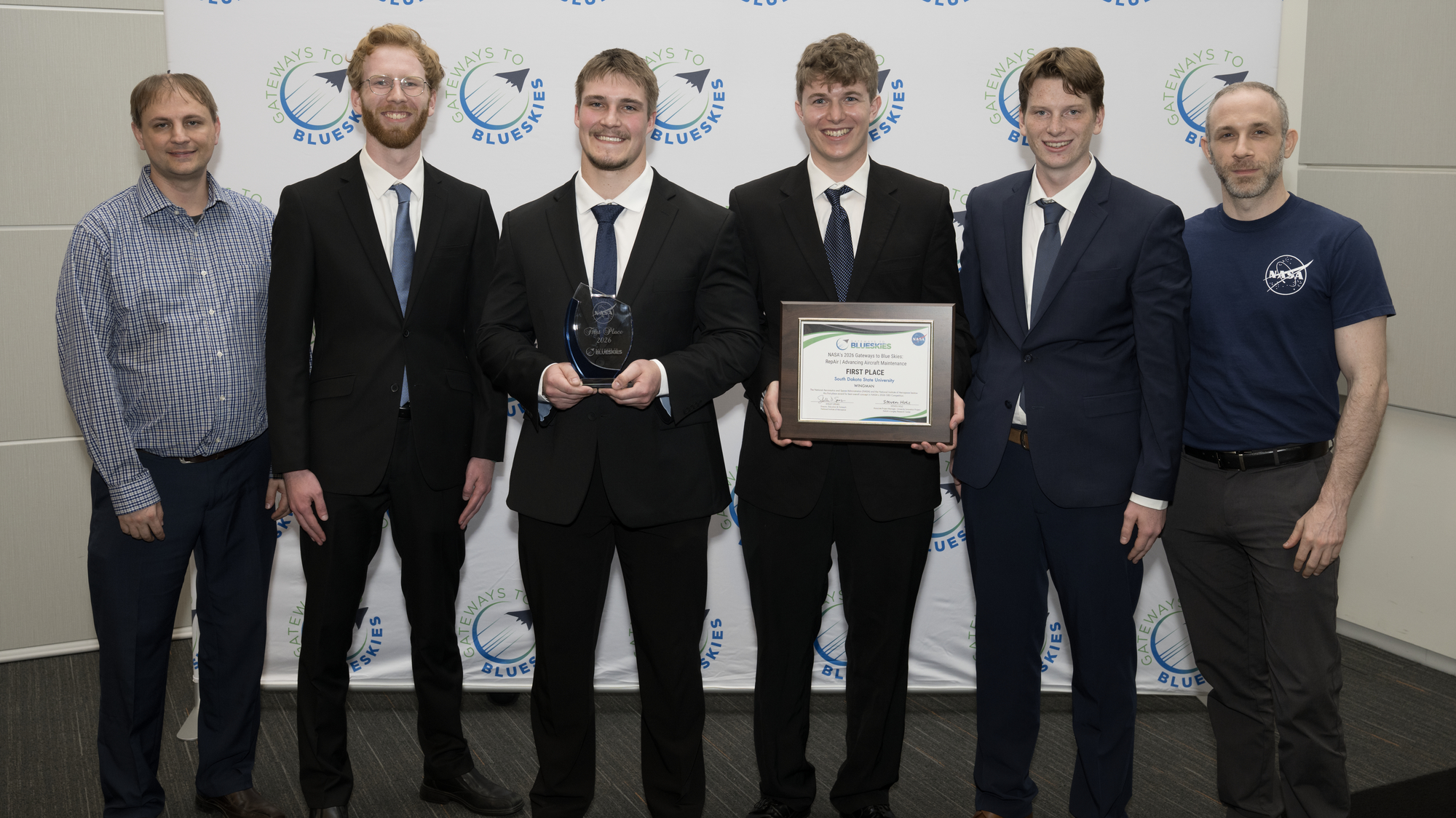
A South Dakota State University team took first place at NASA’s fifth annual Gateways to Blue Skies Competition, which challenged student teams to address a critical element of U.S. aviation: aircraft maintenance. This year’s competition, RepAir: Advancing Aircraft Maintenance, asked teams of postsecondary students to develop innovative systems and practices that could advance commercial aircraft maintenance
## Community Coordinated Modeling Center Database Of Notifications, Knowledge, Information (CCMC DONKI) ## Message Type: Weekly Space Weather Summary Report for May 13, 2026 - May 19, 2026 ## ## Message Issue Date: 2026-05-20T19:56:50Z ## Report Coverage Begin Date: 2026-05-13T00:00Z ## Report Coverage End Date: 2026-05-19T23:59Z ## Message ID: 20260520-7D-001 ## ## Disclaimer: NOAA's Space Weather Prediction Center is the United States Government official source for space weather forecasts. This "Experimental Research Information" consists of preliminary NASA research products and should be interpreted and used accordingly. ## Summary: Solar activity was at moderate levels during this reporting period with 4 M-class flares, 1 O-type CME, and 10 C-type CMEs (see details below). Based on preliminary analysis by the Moon to Mars Space Weather Analysis Office and heliospheric modeling carried out at NASA Community Coordinated Modeling Center, it was estimated that the following CMEs were predicted to impact missions near Earth: CME Starting time | Predicted Impacts (plus minus 7 hours) ----------------------------------------------------------------------------- 2026-05-16T16:36Z NASA missions near Earth at 2026-05-19T00:00Z (glancing blow), Kp index 3-5 (below minor to minor) (see notification 20260516-AL-006). The arrival of this CME was likely detected at L1 around 2026-05-19T06:31Z. It was also estimated that the following CMEs were predicted to impact the listed locations: CME Starting time | Predicted Impacts (plus minus 7 hours) ----------------------------------------------------------------------------- 2026-05-13T22:24Z Parker Solar Probe at 2026-05-15T19:33Z, Juice at 2026-05-19T22:00Z (glancing blow), Mars at 2026-05-18T22:00Z (glancing blow), Psyche at 2026-05-18T22:00Z (glancing blow), and STEREO A at 2026-05-17T10:00Z (glancing blow) (see notification 20260514-AL-001). 2026-05-16T08:09Z Mars at 2026-05-20T08:00Z (glancing blow), Psyche at 2026-05-20T06:00Z (glancing blow), and Solar Orbiter at 2026-05-20T00:00Z (glancing blow) (see notification 20260516-AL-005). 2026-05-16T16:36Z Europa Clipper at 2026-05-20T21:00Z (glancing blow) and OSIRIS-APEX at 2026-05-19T16:00Z (glancing blow) (see notification 20260516-AL-006). The highest value of Kp = 6.33 occurred during the synoptic period 2026-05-15T21:00Z to 2026-05-16T00:00Z (see notifications 20260516-AL-001, 20260516-AL-002). This enhancement in geomagnetic activity was associated with the interplanetary shock detected at L1 by ACE and DSCOVR at 2026-05-15T07:14Z (see notification 20260515-AL-001) which was associated with the arrival of the coronal hole high speed stream detected by ACE and DSCOVR at L1 on 2026-05-15. The > 2.0 MeV energetic electron flux in the Earth's outer radiation belt crossed the threshold level of 1000 pfu starting at 2026-05-16T15:20Z (see notifications 20260516-AL-003, 20260516-AL-004, 20260518-AL-001). This elevation of energetic electron flux levels was likely associated with the arrival of a coronal hole high speed stream detected at L1 by ACE and DSCOVR on 2026-05-15. The energetic proton flux of >10 MeV protons detected at GOES and the 13-100 MeV protons at STEREO A were all at background levels for the entire reporting period. Space Weather Impact: Space weather impacts on NASA spacecraft are expected to have been moderate this reporting period due to the elevated energetic electron flux in the Earth's outer radiation belt described above. ##Events: Flares (M-class and above) Date Start Stop Peak Class Location 2026-05-16 15:50:00 16:22:00 16:12:00 M1.9 N22W17 ( 14436 ) 2026-05-16 16:22:00 16:34:00 16:29:00 M1.3 N18W15 ( 14436 ) 2026-05-16 17:39:00 17:44:00 17:42:00 M1.9 N21W90 ( 14435 ) 2026-05-17 03:29:00 03:42:00 03:39:00 M1.4 N22W97 ( 14435 ) CMEs (>500 km/s): Earth directed: Starting time Speed (km/s) Type Direction (LON/LAT in HEEQ) Half-Angle width (degrees) Detecting spacecraft (real-time) 2026-05-16T16:36Z ~1201 O 9/37 22 SOHO, STEREO A, GOES Non-Earth directed (POS = Plane Of Sky): Starting time Speed (km/s) Type Direction (LON/LAT in HEEQ) Half-Angle width (degrees) Detecting spacecraft (real-time) 2026-05-13T03:12Z ~736 C 102/-31 11 SOHO, STEREO A, GOES 2026-05-13T22:24Z ~519 C 87/26 34 SOHO, STEREO A, GOES 2026-05-14T20:12Z ~501 C -20/34 15 SOHO 2026-05-15T02:00Z ~522 C 49/-46 23 SOHO, STEREO A 2026-05-15T14:24Z ~564 C -75/17 29 SOHO, STEREO A, GOES 2026-05-16T05:00Z ~503 C 90/44 21 SOHO, STEREO A, GOES 2026-05-16T08:09Z ~548 C 175/2 40 STEREO A 2026-05-17T10:24Z ~508 C -40/37 10 SOHO, STEREO A 2026-05-18T22:00Z ~594 C NONE(POS)/3 10 SOHO, GOES 2026-05-19T11:01Z ~564 C -26/32 20 SOHO, STEREO A ## Space Weather Outlook: ## Outlook Coverage Begin Date: 2026-05-20T00:00Z ## Outlook Coverage End Date: 2026-05-26T23:59Z Solar activity is expected to be at low to moderate levels during the outlook period. There are currently four numbered Active Regions on the Earth-facing disk. Active Region 14436 (N18W72) produced M-class flaring during the reporting period and may produce similar levels of flaring activity during the outlook period. Geomagnetic activity is expected to be at low levels during the outlook period. A southern coronal hole started crossing the central meridian on 2026-05-20 (as seen in available imagery from SDO/AIA 193) and may reach geoeffective longitudes on or around 2026-05-23. ## Notes: SCORE CME typification system: S-type: CMEs with speeds less than 500 km/s C-type: Common 500-999 km/s O-type: Occasional 1000-1999 km/s R-type: Rare 2000-2999 km/s ER-type: Extremely Rare >3000 km/s
20 May 2026, 19:08 GMTBy Gerelle Q. Dodson2 variants
Read this news release in English here. La NASA ofrecerá una conferencia de prensa el martes 26 de mayo a las 2 p.m. EDT (hora del este) para compartir los planes para la Base Lunar y destacar los avances hacia una presencia sostenida en la superficie lunar. La sesión informativa para los medios tendrá lugar
20 May 2026, 19:02 GMTBy Bailey G. Light2 variants
The Robotically Manipulated Payload Challenge — the fifth in the NASA TechLeap Prize series — is a competition to advance persistent infrastructure for in-space servicing, assembly, and manufacturing. NASA Flight Opportunities invites applicants to propose a payload that can be manipulated by a robotic arm in low Earth orbit. Up to three winners will each receive up
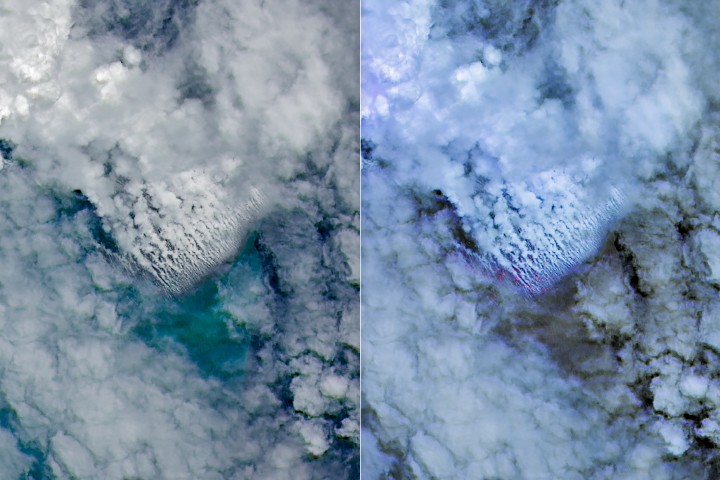
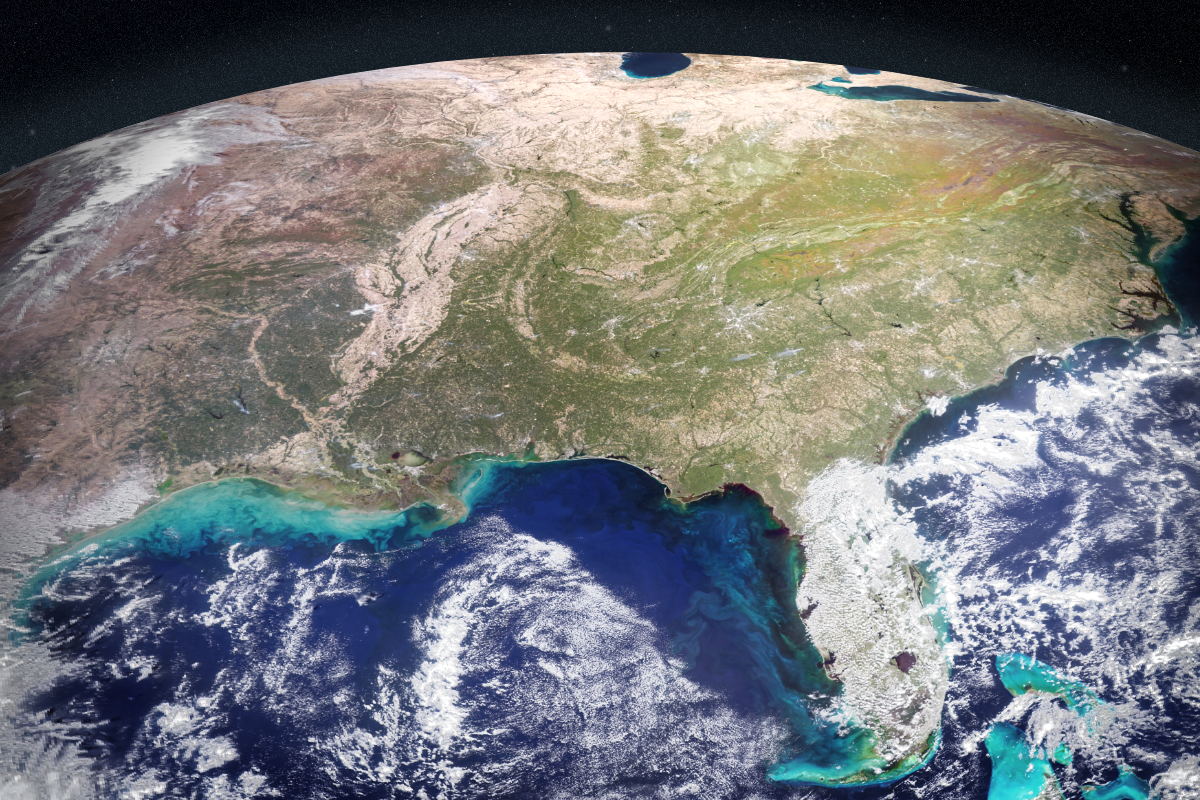
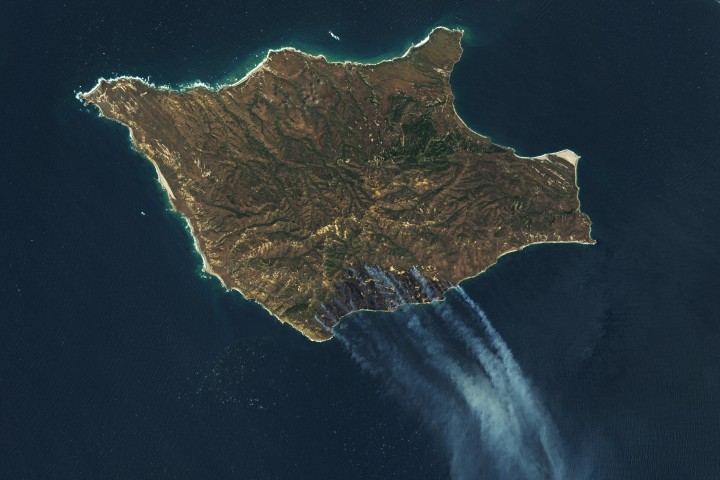
NASA scientists have developed an artificial intelligence tool to take on a longstanding challenge in ocean waters. In a study recently published in AGU Earth and Space Science, researchers reported the tool was able to fuse data from multiple satellites and detect harmful algal blooms that occurred in western Florida and Southern California. Severe blooms
20 May 2026, 17:13 GMTBy Gerelle Q. Dodson3 variants
NASA will host a news conference at 2 p.m. EDT, Tuesday, May 26, to share Moon Base plans and highlight progress toward a sustained presence on the lunar surface. The media briefing will take place at the agency’s Headquarters in Washington. Leadership will discuss program progress, including new industry partners and mission plans. Subject matter
NASA released the 2026 Civil Space Shortfall Ranking list on Wednesday, which integrates more than 400 responses from stakeholders including industry organizations, government agencies, and academia. Shortfalls refer to technology areas requiring further development to meet future exploration, science, and other mission needs. The goal of this document is to rank the space community’s most pervasive shortfalls to
Listen to this audio excerpt from Tim Goddard, NASA open water lead: At the end of their mission around the Moon, NASA’s Artemis II astronauts were recovered from their Orion spacecraft by a team of U.S. Navy divers and NASA personnel. This included Tim Goddard, NASA open water lead, who helped guide the complex open
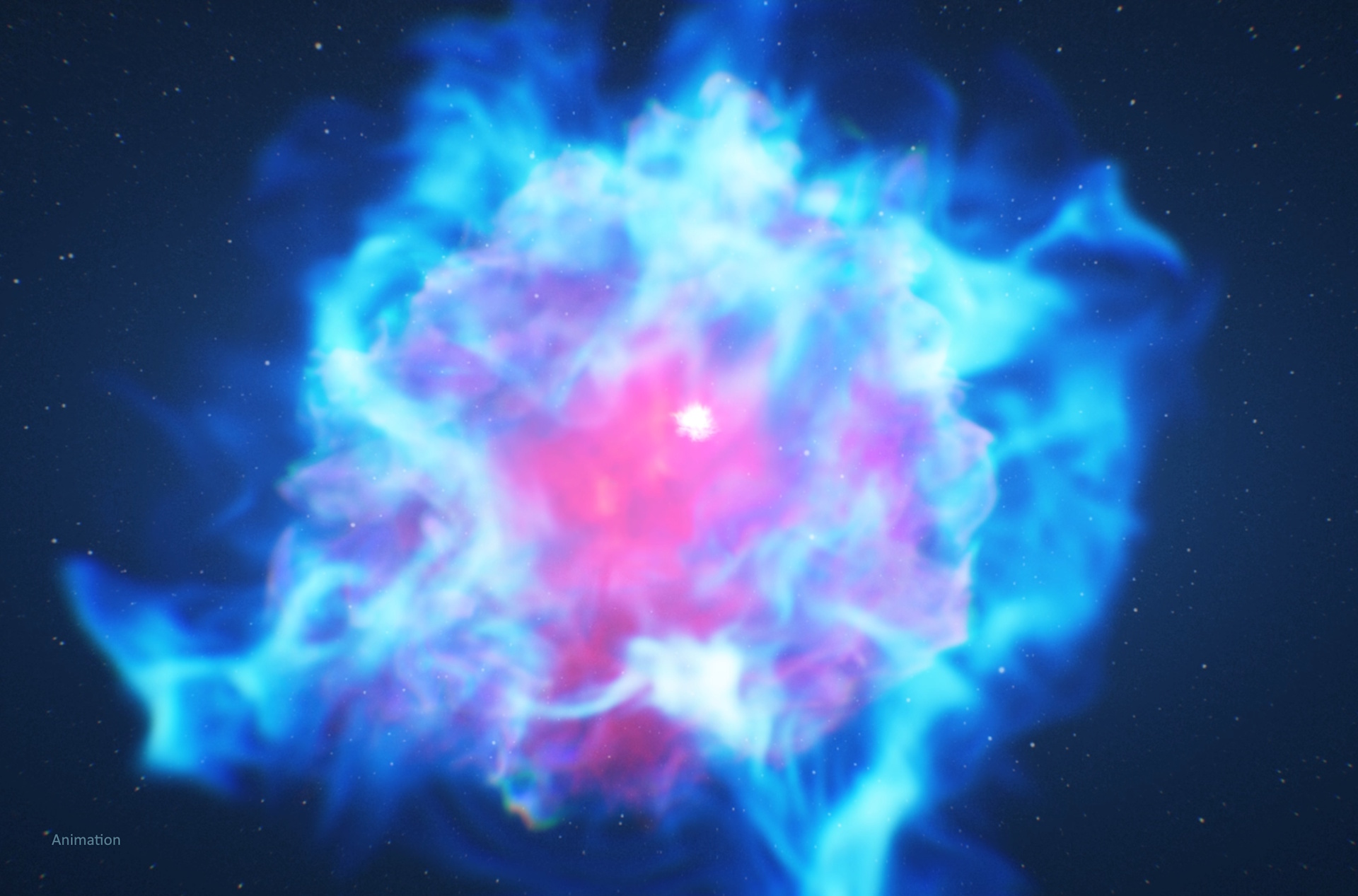
An international team studying data from NASA’s Fermi Gamma-ray Space Telescope concludes the mission detected a rare, unusually luminous supernova. The researchers say it likely received its power-up from a supermagnetized neutron star born in the stellar collapse that triggered the explosion.
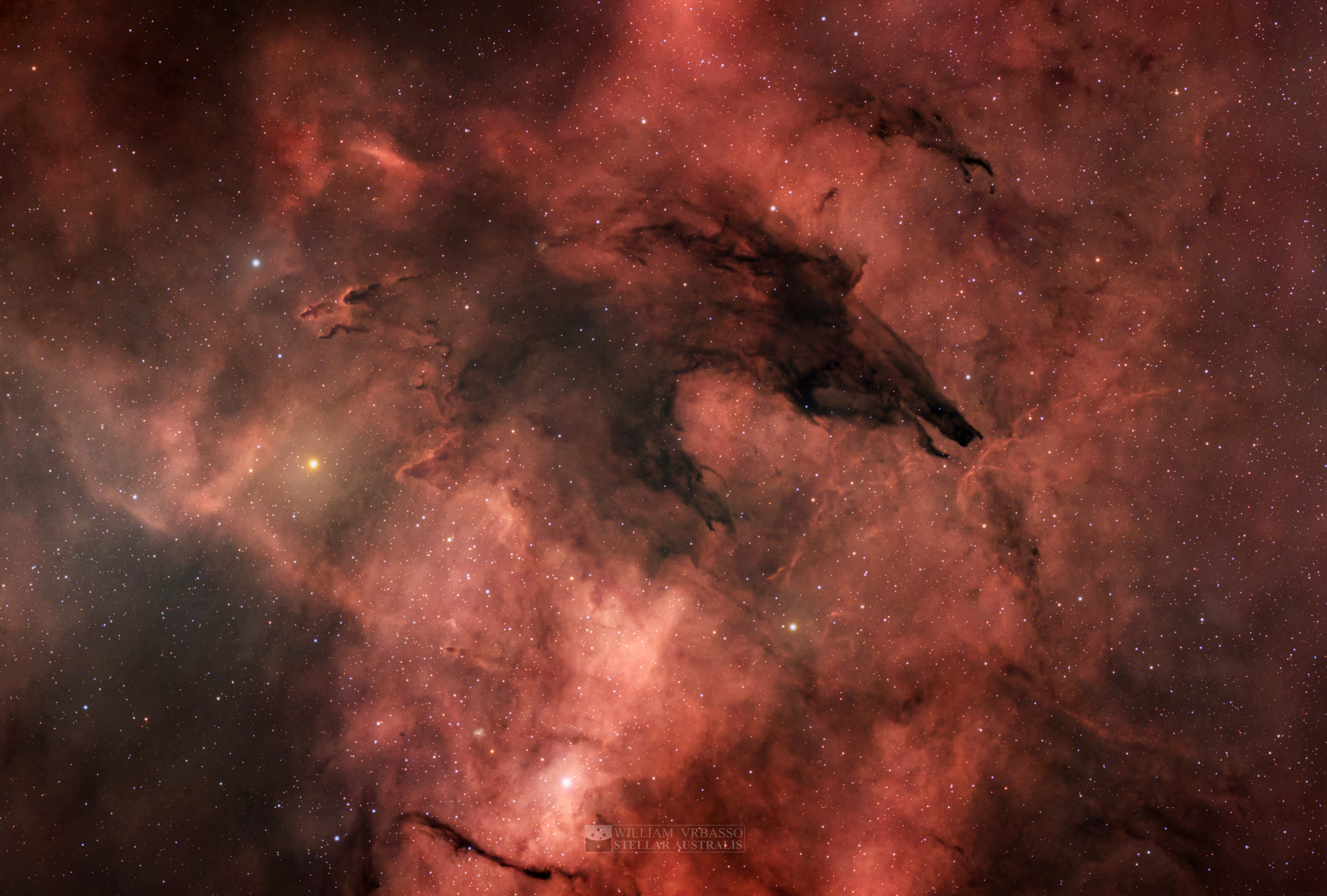
20 May 2026, 00:00 GMTBy William Vrbasso Text: Keighley Rockcliffe (NASA GSFC, UMBC CSST, CRESST II)
A dark wolf lies in gum. No, this isn’t a riddle! Today's image features the Dark Wolf Nebula (Sandqvist–Lindroos 17), a spooky dust cloud embedded within the Gum 55 (RCW 113) Nebula in the Scorpius constellation. While dust is a pest to us, it serves a vital role in creating the necessary conditions for stars to be born. The Dark Wolf absorbs the intense ultraviolet and visible light emitted by young stars in Gum 55 and re-emits it at longer, mainly infrared, wavelengths. This prevents the higher energy light from heating up the gas in the region. When a region of gas is cool enough, gravity takes over and causes the gas to collapse into a star. Not only does dust act as an interstellar thermostat, but it is also the meet-cute for single hydrogen atoms forming molecular hydrogen, the building block for stars. The seemingly sinister Dark Wolf is actually a harbinger of cosmic life.
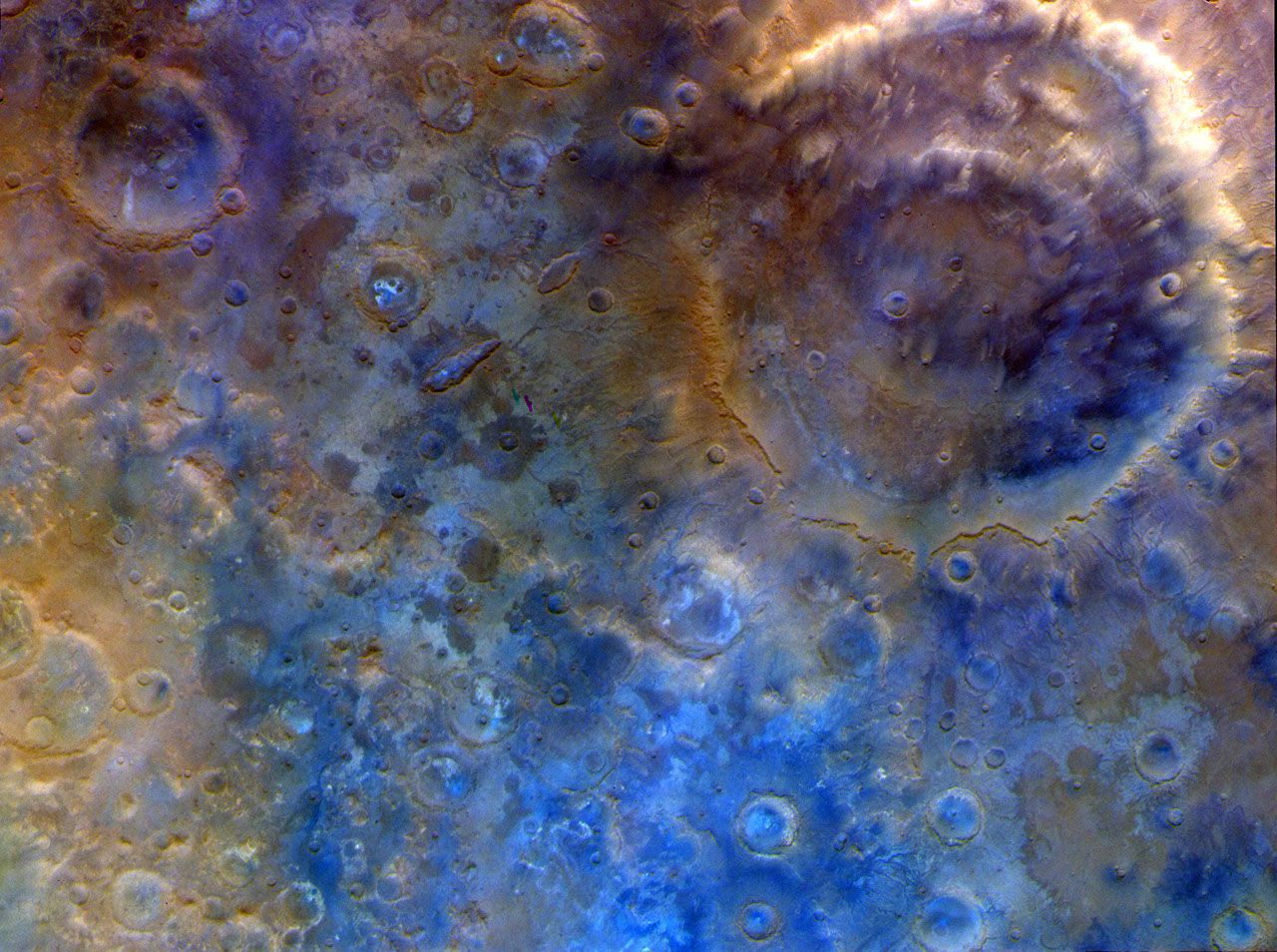
Captured by the multispectral imager instrument on NASA’s Psyche mission, this is an enhanced-color view of the large double-ring crater Huygens (upper right; about 290 miles, or 470 kilometers, in diameter) and the surrounding heavily cratered southern highlands near 15 degrees south latitude.
Captured by the multispectral imager instrument on NASA’s Psyche mission, this is an enhanced-color view of the large double-ring crater Huygens (upper right; about 290 miles, or 470 kilometers, in diameter) and the surrounding heavily cratered southern highlands near 15 degrees south latitude. The post NASA’s Psyche Mission Images Mars’ Huygens Crater appeared first on NASA Science .
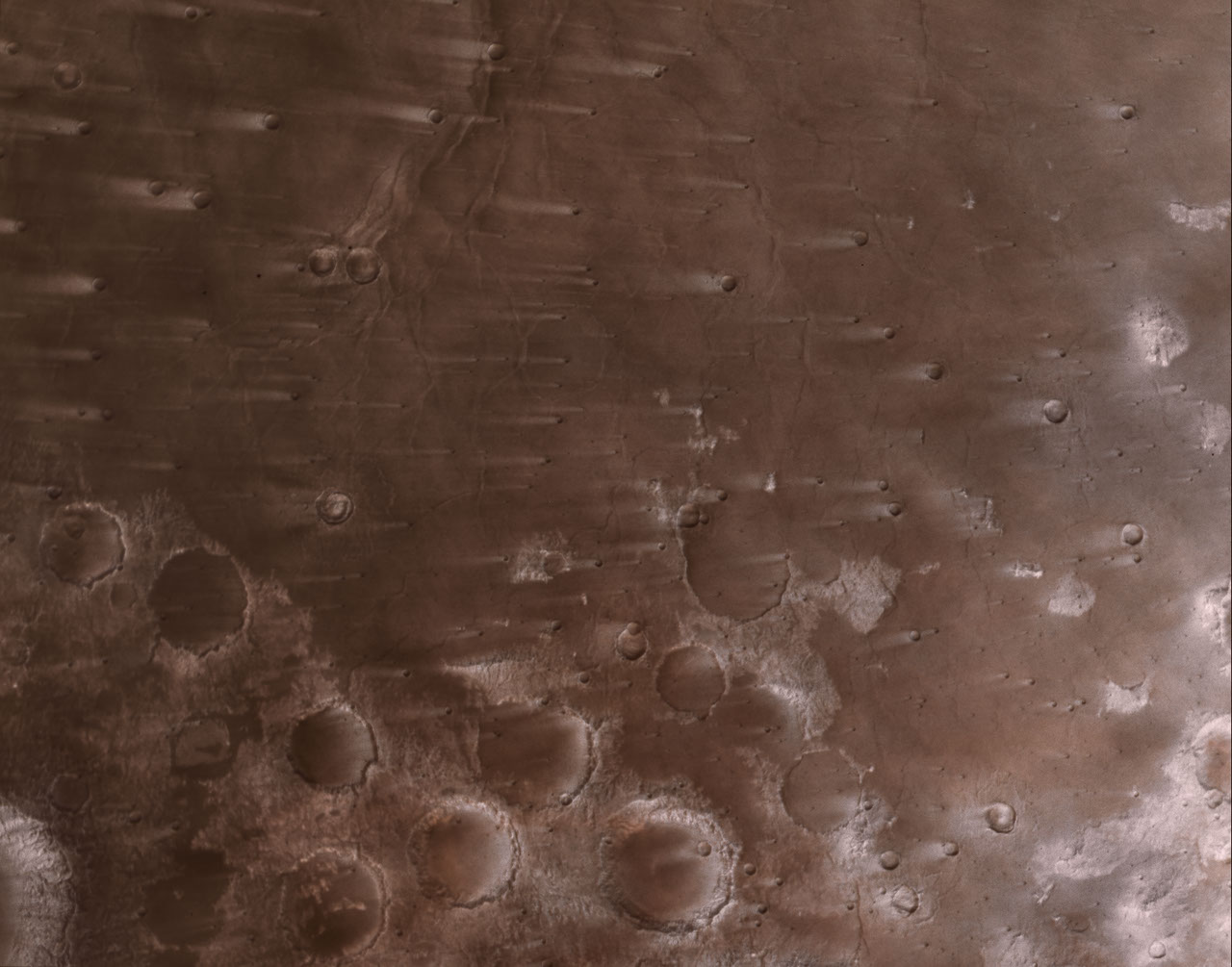
This view of the Martian surface, captured by NASA’s Psyche spacecraft on May 15, 2026, shows streaks that have formed due to wind blowing over impact craters in the Syrtis Major region.
This view of the Martian surface, captured by NASA’s Psyche spacecraft on May 15, 2026, shows streaks that have formed due to wind blowing over impact craters in the Syrtis Major region. The post NASA’s Psyche Mission Spies Mars’ Wind-Blown Craters During Close Approach appeared first on NASA Science .
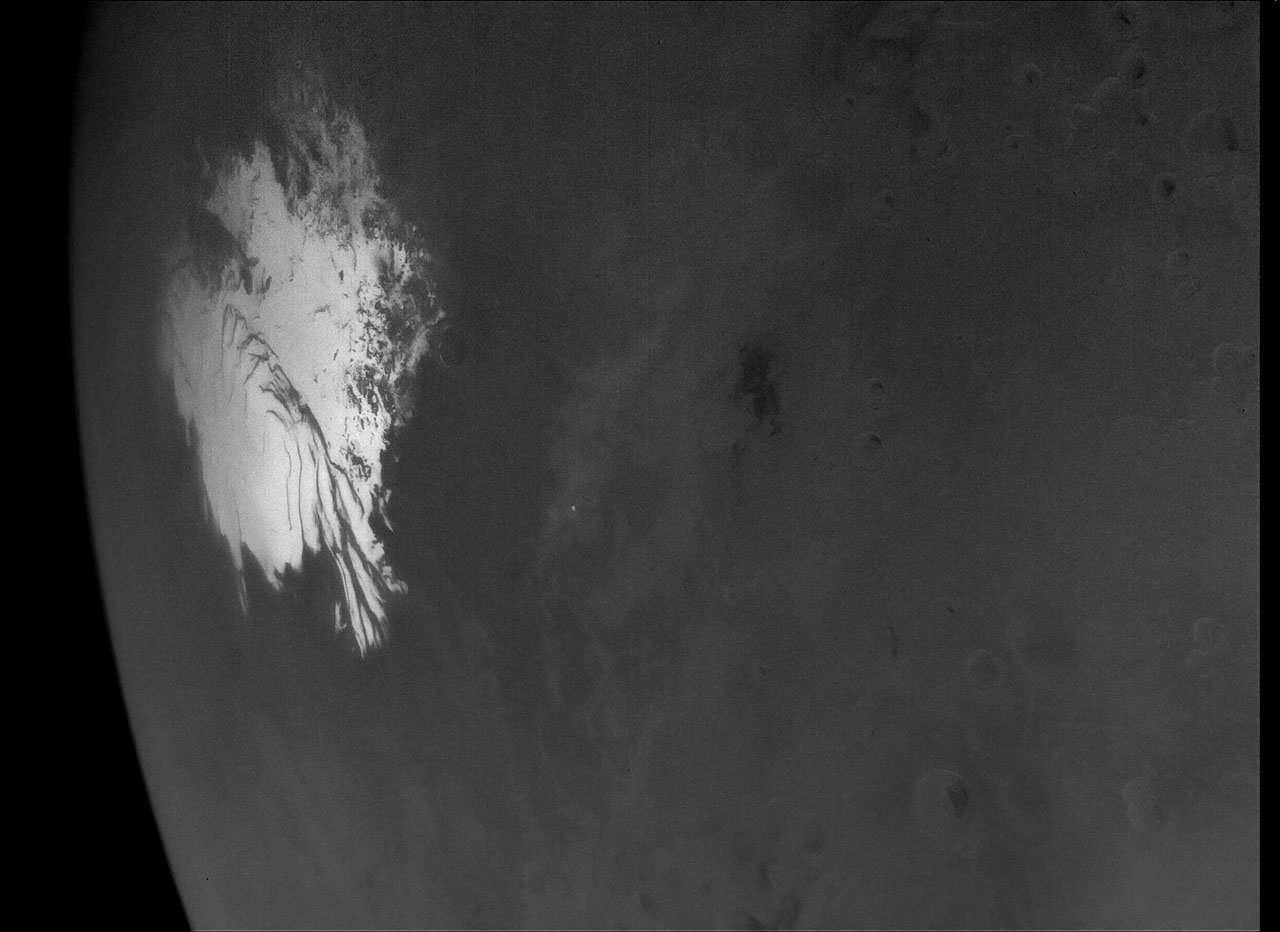
Description This is the highest-resolution view of the water ice-rich south polar cap of Mars captured by NASA’s Psyche mission after it made its close approach with the planet for a gravity assist. The image scale is around 0.7 miles per pixel (1.14 kilometers per pixel). The cap itself extends across more than 430 miles