
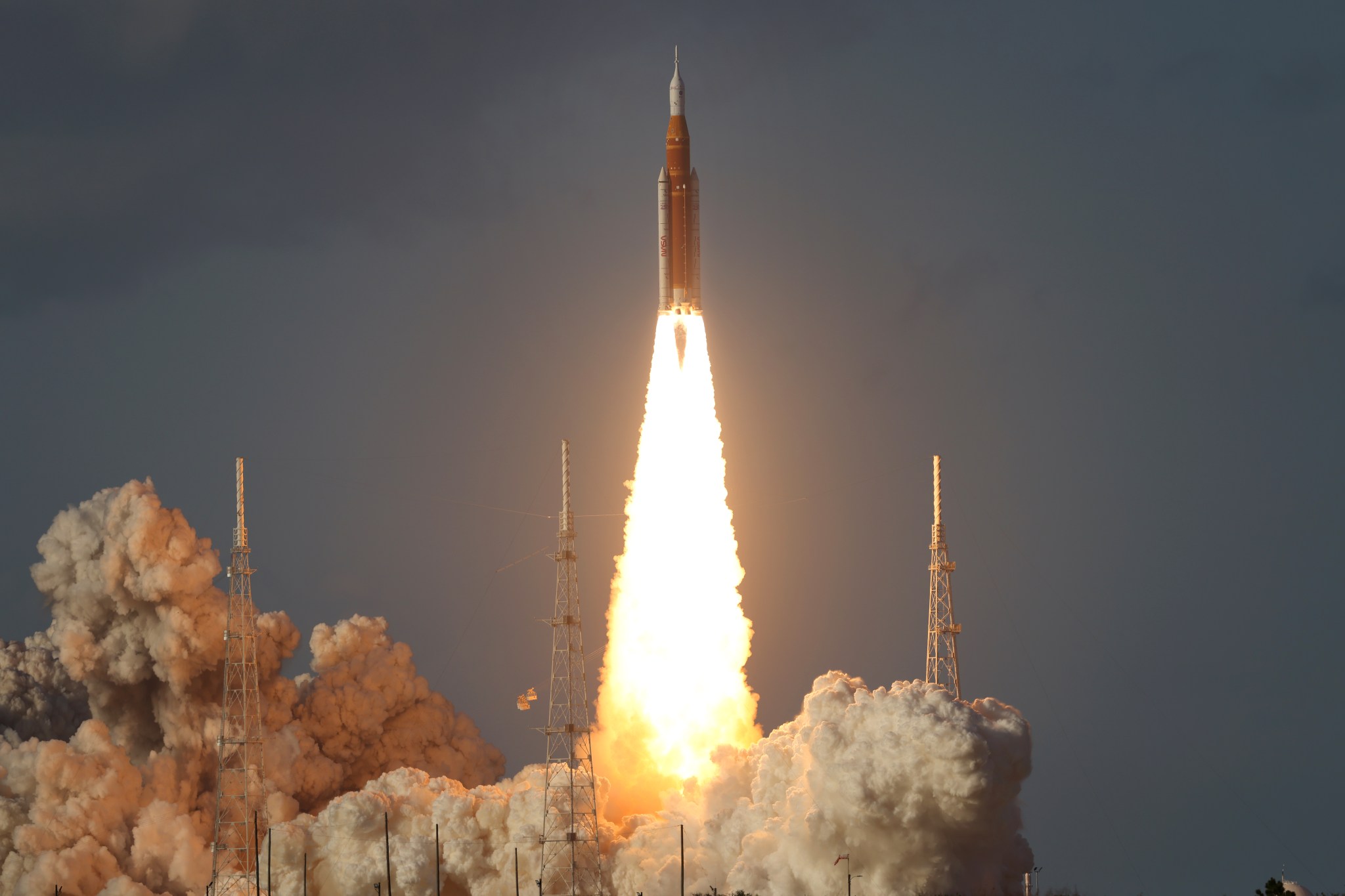
Following NASA’s Artemis II mission successfully splashing down on Earth, engineers started diving into detailed analysis of data to assess how key systems and subsystems on the Orion spacecraft, SLS (Space Launch System) rocket, and systems at the launch pad at the agency’s Kennedy Space Center in Florida performed. The Artemis II test flight successfully
Following the recent successful test flight of NASA’s Artemis II mission around the Moon, NASA rolled out the core stage, or the largest section, of the agency’s SLS (Space Launch System) rocket that will launch the crewed Artemis III mission in 2027. The stage departed from the agency’s Michoud Assembly Facility in New Orleans on
Media accreditation is open for the next U.S. launch to deliver NASA science investigations, supplies, and equipment to the International Space Station. This launch is the 34th SpaceX Commercial Resupply Services mission to the orbital laboratory for NASA and will lift off on the company’s Falcon 9 rocket. NASA and SpaceX are targeting no earlier
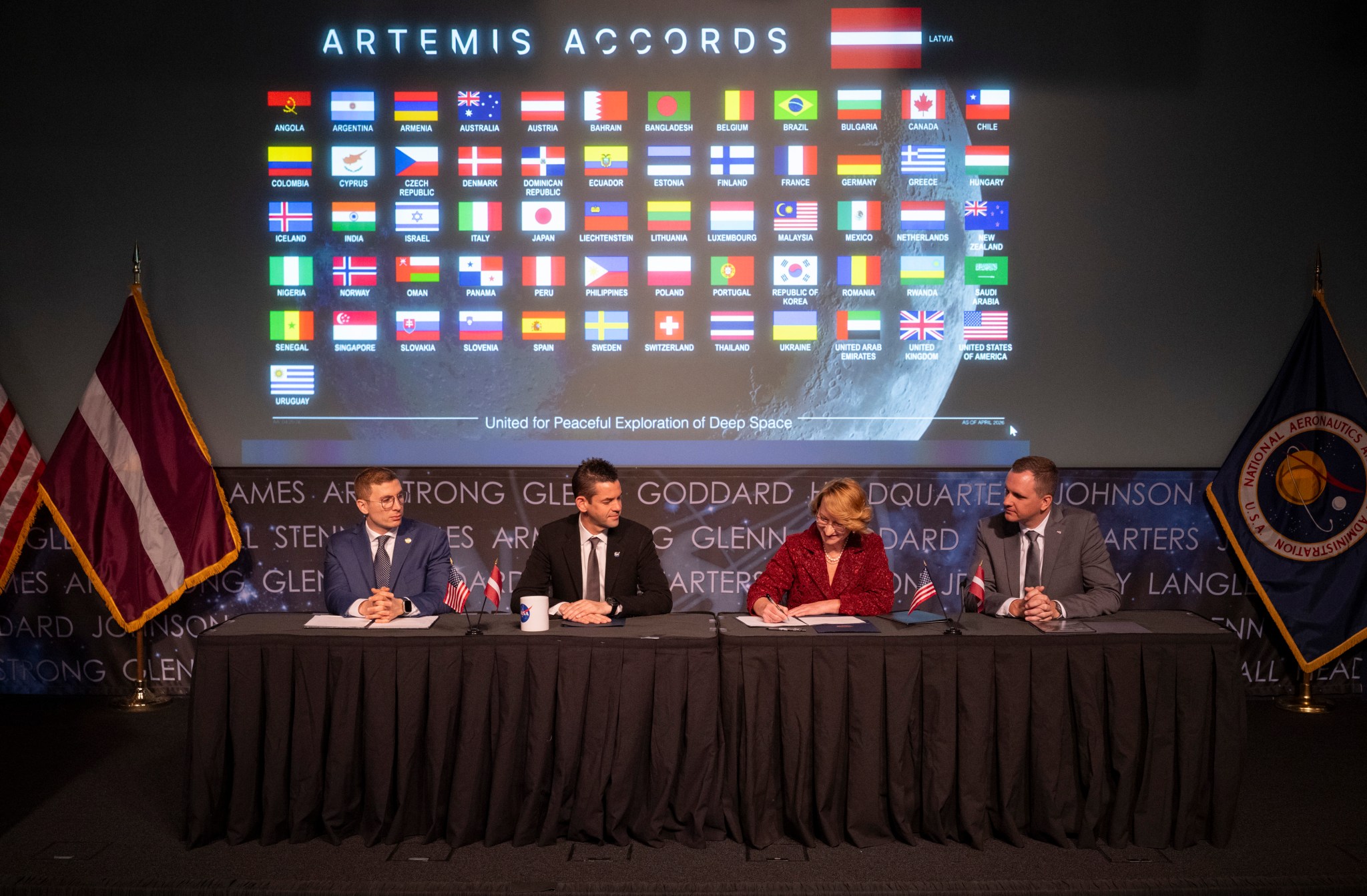
The Republic of Latvia signed the Artemis Accords Monday during a ceremony hosted by NASA at the agency’s headquarters in Washington, becoming the 62nd nation to commit to responsible space exploration for all humanity. “We are proud to welcome Latvia to the Artemis Accords,” said NASA Administrator Jared Isaacman. “Each new signatory strengthens a coalition committed to the transparent and peaceful exploration of space. The accords are the
NASA’s X-59 quiet supersonic research aircraft flies over the Mojave Desert in California in this April 14, 2026, image. The transition to flying with wheels up is a key milestone and an important step in the experimental aircraft’s test campaign. The X-59 has made its highest and fastest flights so far, expanding its operational range
2026 Space Policy Institute 4.29.26.pdf Planetary Society APLU and AAU 4.21.26.pdf 41st Space Symposium-suppl 04.13-16.26 Space Symposium 2026 Events 4.13-16.26 2026 NSCFL Space Heroes and Legends Award Banquet 4.18.26 Newport News State of the City Event 4.13.26 Space Policy Institute Event 4.6.26 SpaceX Networking Reception 3.24.26 Maryland Space Business Roundtable (MSBR) 3.26.26 SIA_27th Annual Leadership
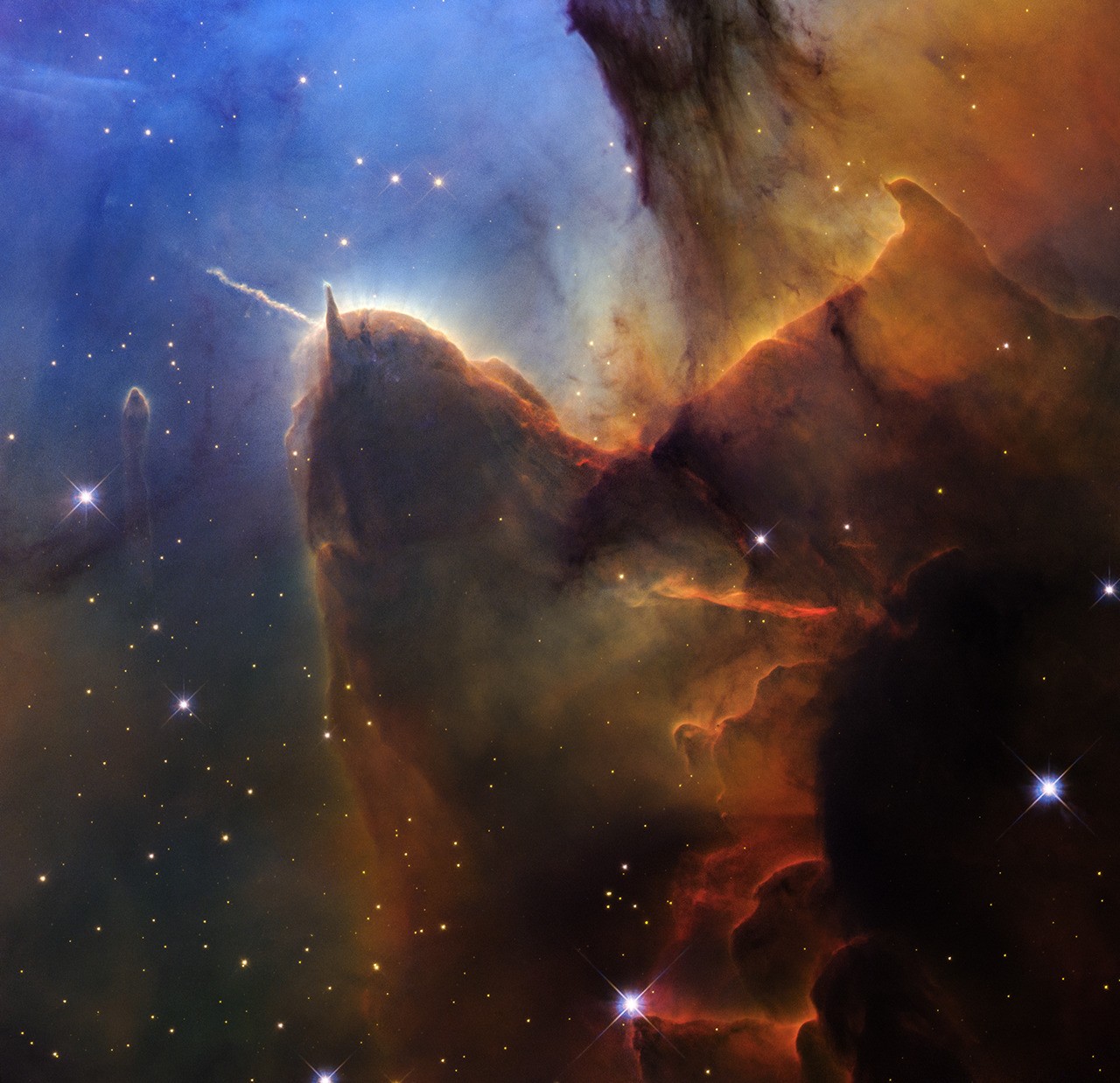
This shimmering region of star-formation, a close-up of the Trifid Nebula about 5,000 light-years from Earth, was captured in intricate detail by NASA’s Hubble Space Telescope. The colors in Hubble’s visible light image, which marks the 36th anniversary of the mission’s launch on April 24, are reminiscent of an underwater scene filled with fine-grained sediments fluttering through the ocean’s depths.
17 Apr 2026, 18:41 GMTBy Bailey G. Light2 variants
NASA’s Human Research Program (HRP) uses research to develop methods to protect the health and performance of astronauts in space. In support of NASA’s goals for long-term missions on the surface of the Moon and human exploration of Mars, HRP is using ground research facilities, the International Space Station, and analog environments to monitor human health in deep space. NASA’s Artemis II mission was the first
17 Apr 2026, 17:04 GMTBy Jennifer M. Dooren2 variants
NASA and the U.S. Office of Personnel Management (OPM) launched the NASA Force website on Friday, opening applications for roles aimed at recruiting the nation’s top engineers and technologists to support America’s air and space program. NASA Force, a new hiring initiative developed in partnership with OPM, will recruit and place high-impact technical talent into mission-critical roles supporting NASA’s exploration, research, and advanced technology priorities,
Scientists are working to understand exactly how these waves behave, and the team behind NASA’s Heliophysics Audified: Resonances in Plasmas (HARP) citizen science project approaches this in a unique way: they compare the Earth’s magnetic field to a giant harp in space.
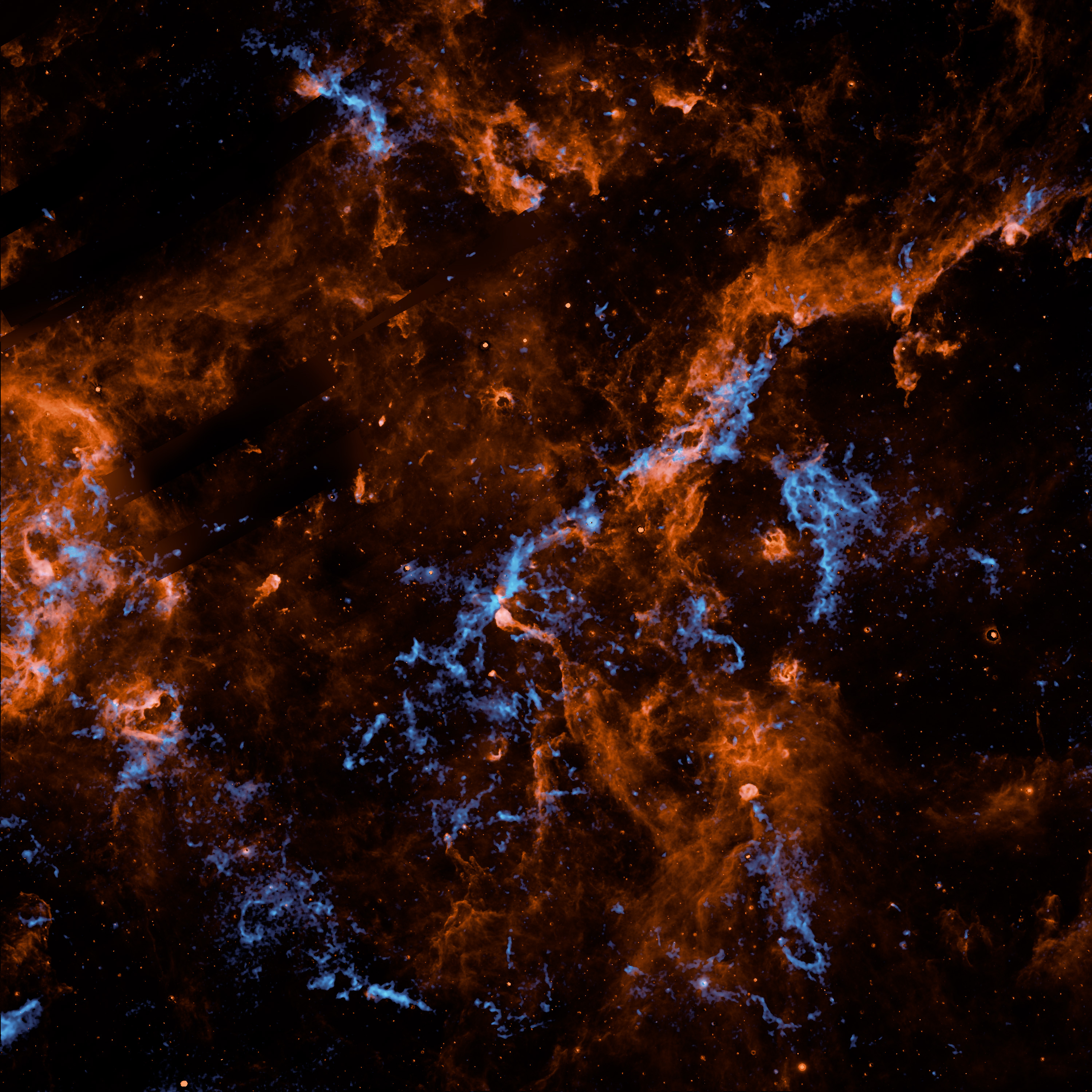
An observation made by NASA’s SPHEREx (Spectro-Photometer for the History of the Universe, Epoch of Reionization, and Ices Explorer) shows the chemical signatures of water ice (shown in bright blue) and polycyclic aromatic hydrocarbons (orange) in Cygnus X, one of the most active and turbulent regions of star birth in our Milky Way galaxy. The
The Republic of Latvia will sign the Artemis Accords during a ceremony at 9 a.m. EDT Monday, April 20, at NASA Headquarters in Washington. NASA Administrator Jared Isaacman will host Dace Melbārde, Latvia’s minister for education and science; Jānis Beķeris, chargé d’affaires at the Embassy of the Republic of Latvia to the United States; and
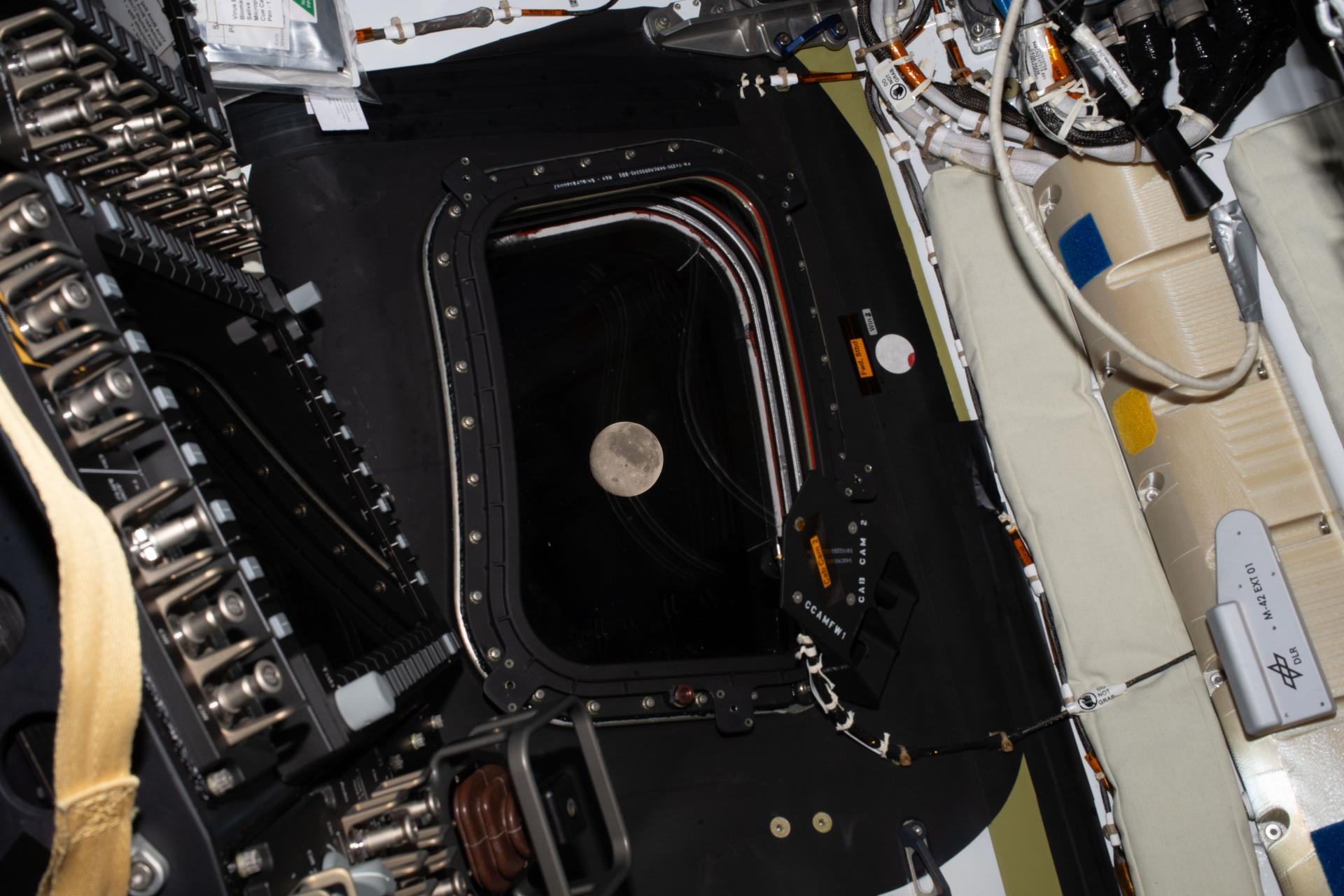
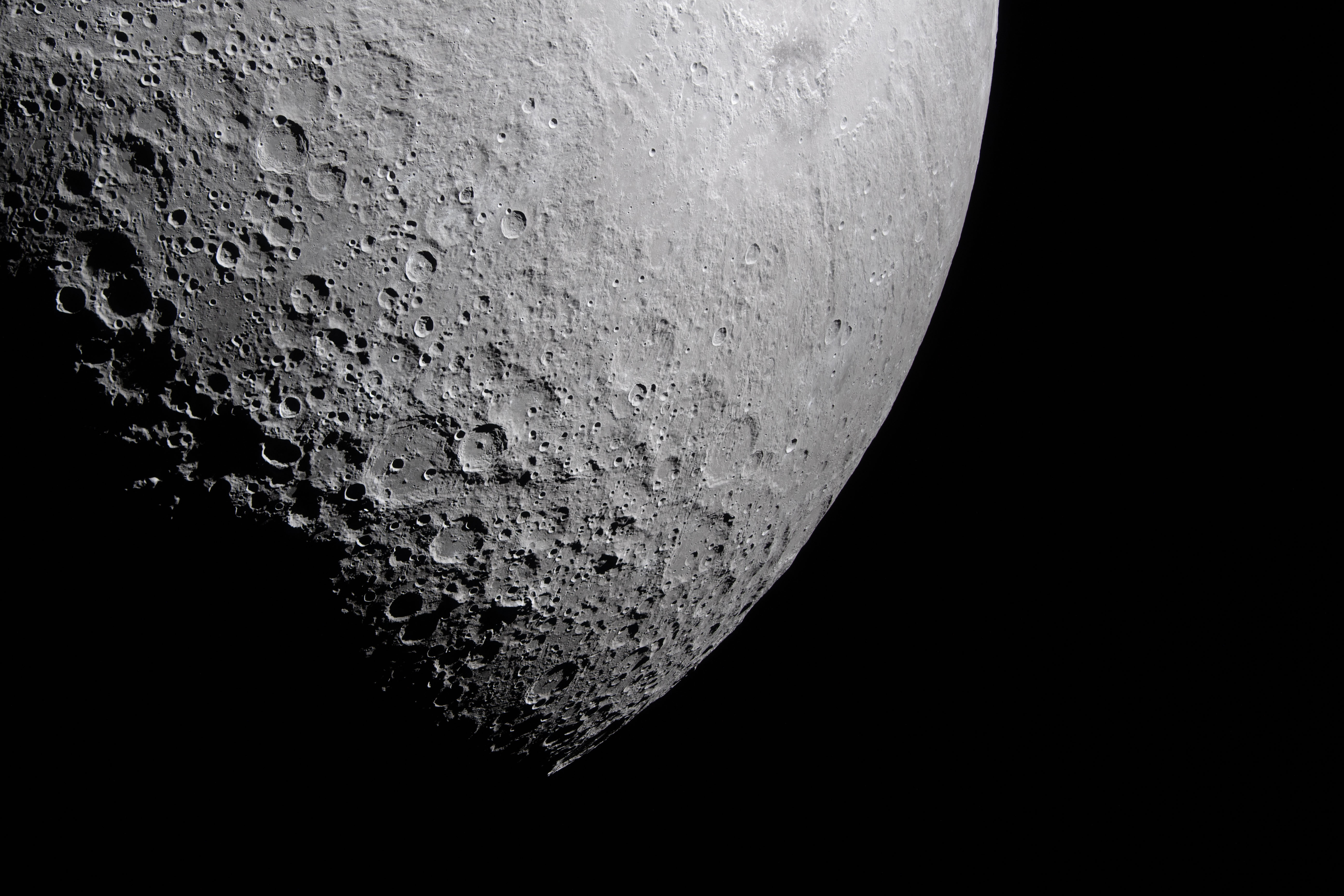
In this photo taken on April 6, 2026, a portion of the Moon’s far side is seen along the terminator—the boundary between lunar day and night—where low-angle sunlight casts long shadows across the surface. A section of Orientale Basin is visible along the upper right portion of the lunar disk, its structure subtly revealed under
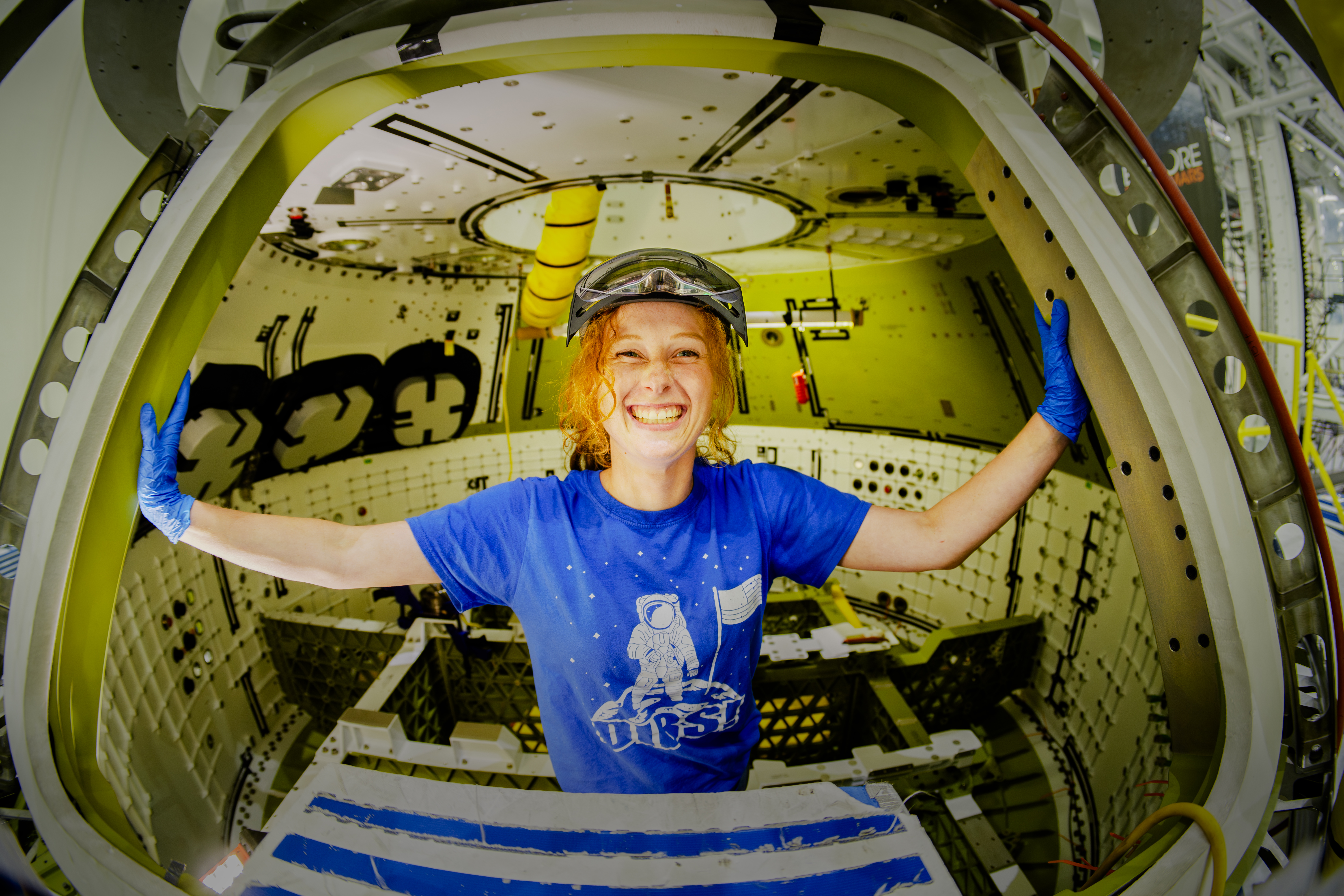
Listen to this audio excerpt from Rebekah Tolatovicz, a mechanical technician lead supporting the Orion spacecraft’s main contractor Lockheed Martin: At NASA’s Kennedy Space Center in Florida, there is a fleet of Orion spacecraft in work, and Rebekah Tolatovicz’s hands have helped build each one. Tolatovicz works to build, integrate, and test the spacecraft used