Featured update
So-called “soft skills” like good teamwork and communication can become just as valuable as technical skills to advance exploration.



So-called “soft skills” like good teamwork and communication can become just as valuable as technical skills to advance exploration.
NASA pilots play a critical role in launch and recovery operations. Shannon Gregory, chief of flight operations at Kennedy Space Center, shares how his team supports crewed launches from the air, capturing real-time imagery, and staying ready for the unexpected.
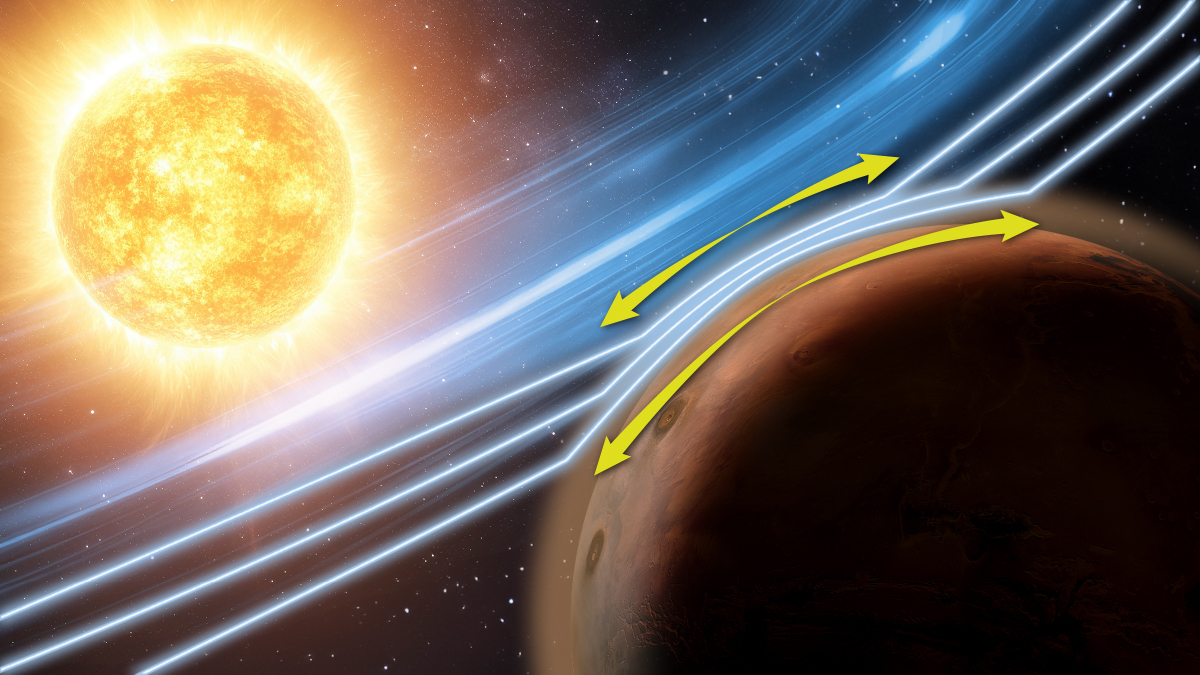
Studying planets in other solar systems isn’t easy, especially when their host stars keep stealing the spotlight. NASA’s Pandora mission will cut through the noise, revealing what the atmospheres of these distant worlds are really made of.
For any crew returning to Earth from space, the journey home includes a carefully choreographed recovery effort to bring them safely back on dry land after splashing down in the ocean. Christine St. Germain, NASA recovery director for the Commercial Crew Program, tells us about this critical phase of flight.
NASA's Dragonfly spacecraft, a rotorcraft the size of a small car, is set to explore Titan, Saturn's largest moon. Rich in organic compounds, Titan offers a rare window into the kinds of chemical conditions that may have existed on Earth long before life began.
Nujoud Merancy, NASA's deputy associate administrator for the Strategy and Architecture Office, talks about how NASA is developing the roadmap for Artemis missions to the Moon and beyond.

From her experience working with the Commercial Crew Program, which sends astronauts to the International Space Station aboard commercial spacecraft, to the Artemis missions to the Moon, aerospace engineer Jennifer Lu shares how working with a variety of teams — including circus performers before coming to NASA — has helped her see the bigger picture.
Currently, flying faster than the speed of sound over land is prohibited for commercial flights because it creates disruptive sonic booms. NASA's experimental X-59 plane will research how to turn those booms into "sonic thumps," about as loud as a slamming car door. Lead pilot Nils Larson explains how the X-59 could usher in the next era of commercial supersonic flight.
A solar sail uses light particles from the Sun to move through space without needing a single drop of fuel. NASA is demonstrating the lightweight technology that could open doors to low-cost missions to deep space.
Dr. Jennifer Edmunson explains what it takes to simulate Moon and Mars dust on Earth, and lessons learned from preparing to build habitats on other worlds.
There’s a program at NASA that taps into the power of the public to solve some of the toughest problems in space exploration. It’s called Centennial Challenges, a prize competition that has awarded more than $24 million to hundreds of people ranging from academics, startup founders, small business owners, and independent inventors from across the U.S. and 86 countries.
On September 17, 2025, NASA announced that the number of exoplanets, planets outside our solar system, tracked by NASA has reached 6,000. In the three decades since the groundbreaking detection of exoplanet 51 Pegasi b, the first confirmed planet orbiting a Sun-like star, astronomers have concluded that exotic worlds are everywhere.
A steel vacuum chamber 50 stories deep at NASA’s Glenn Research Center lets researchers simulate near-weightlessness by letting test hardware freefall for 5.18 seconds.
From black holes to star clusters, scientists are turning space data into sound with a process called sonification. Dr. Kimberly Arcand, visual scientist with the Harvard-Smithsonian Center for Astrophysics, joins us to explore how data sonification lets more people experience the cosmos and give researchers a new way to interpret science one note at a time.
The Hubble Space Telescope has changed humanity’s understanding of the universe. Now in orbit for 35 years, it remains a remarkable feat of engineering.
Fighting wildland fires by air at night is especially hazardous. NASA’s ACERO Project aims to make firefighting safer, day or night, with drones and smarter airspace management.
IXPE, or the Infrared X-ray Polarimetry Explorer, is NASA’s first space telescope dedicated to studying X-ray polarization from extreme objects like black holes and quasars.
Big or small, we all take risks nearly every day. But how does NASA manage it? Dr. Mary Skow, NASA’s first agency risk management officer, explains.
NASA’s Air Traffic Management-eXploration Project aims to accommodate the growing demand of traditional and emerging aircraft that share the friendly skies.
NASA's SPHEREx mission will map 450 million galaxies like we’ve never seen before.
 ×
×
×
×
×
×
×
×