
Active filters Source: Apod Type: Photo
Clear all
21 May 2026, 00:00 GMT

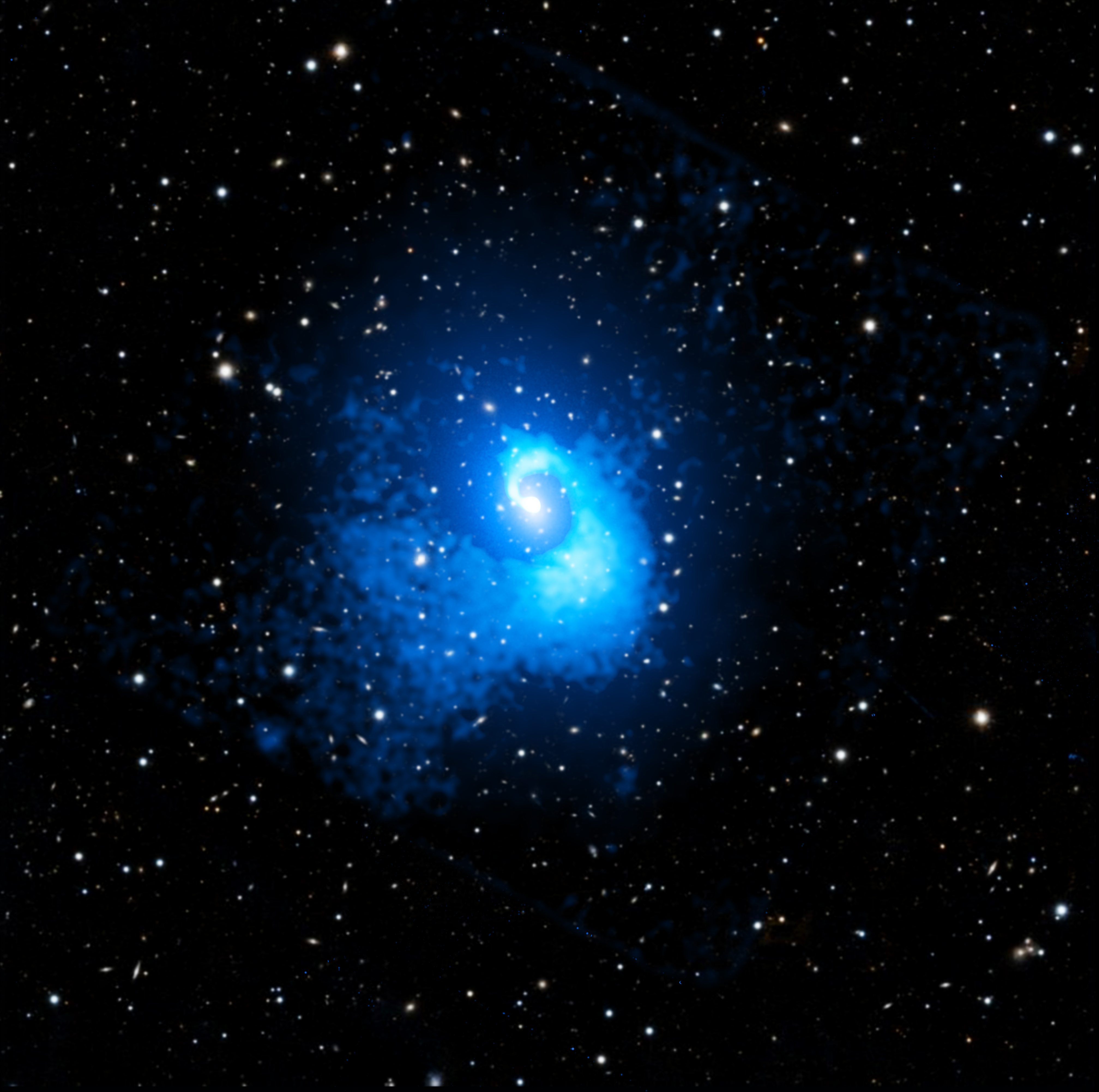
This big beautiful spiral shines in X-ray light. It is about 20 times larger than our Galaxy. It belongs to Abell 2029, a galaxy cluster one billion light-years away. (To see only the galaxies, hover your cursor over the image, or follow this link.) Galaxy clusters are the largest structures in the universe that are supported by gravity. Abell 2029 is formed by thousands of galaxies, surrounded by a huge cloud of hot gas and the equivalent of hundreds of trillions times the mass of the Sun in dark matter. The spiral is made of gas, mostly hydrogen and helium, heated to tens of millions of degrees. It was found in a recent study that used data from NASA's Chandra X-ray Observatory to show that Abell 2029 had a collision with a smaller cluster four billion years ago. The collision affected the gravitational field and caused the intracluster gas to slosh, like wine moving in a wine glass, shaping the spiral.

Download item bundle
A Collision of Galaxy Clusters
20 May 2026, 00:00 GMT By William Vrbasso Text: Keighley Rockcliffe (NASA GSFC, UMBC CSST, CRESST II)

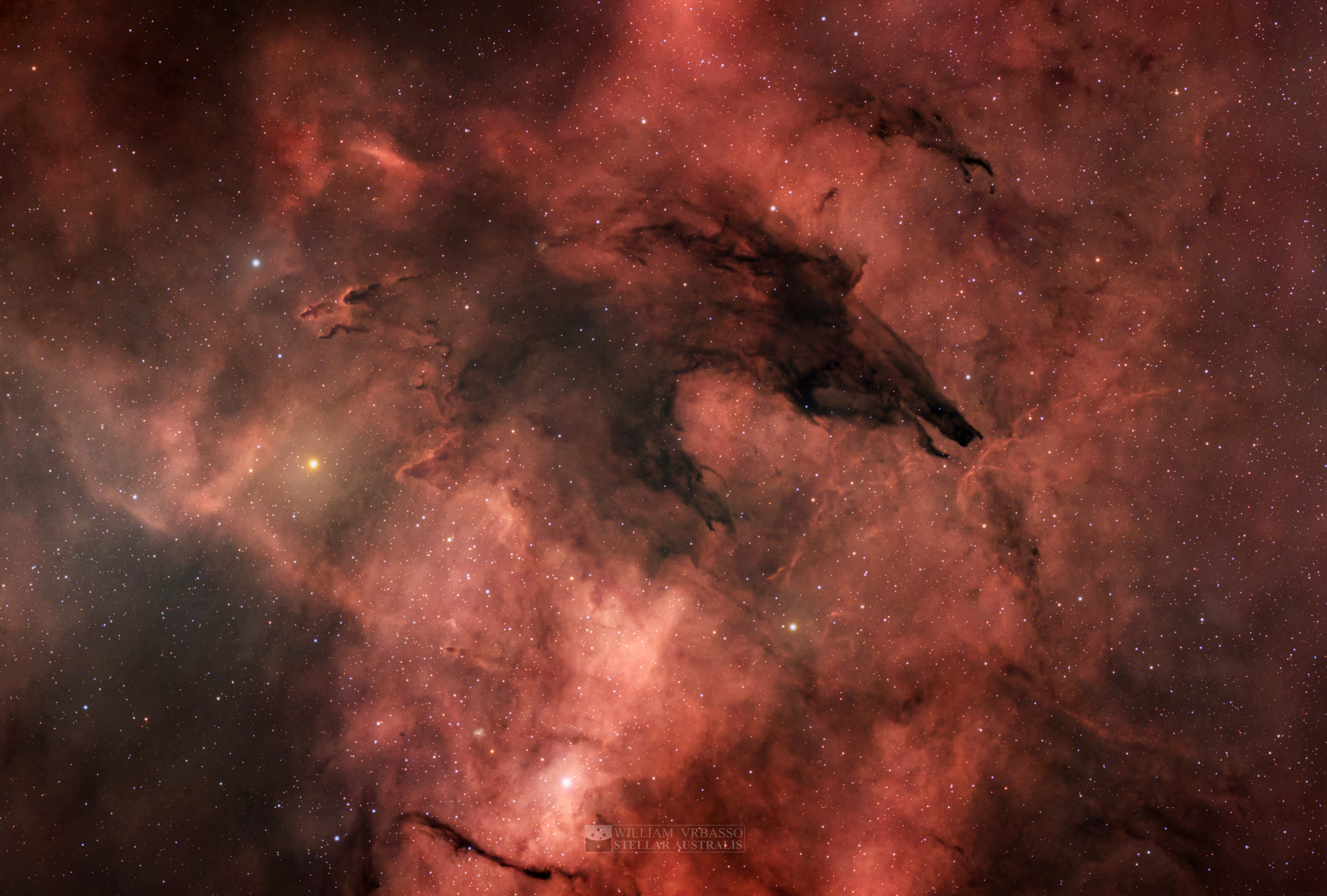
A dark wolf lies in gum. No, this isn’t a riddle! Today's image features the Dark Wolf Nebula (Sandqvist–Lindroos 17), a spooky dust cloud embedded within the Gum 55 (RCW 113) Nebula in the Scorpius constellation. While dust is a pest to us, it serves a vital role in creating the necessary conditions for stars to be born. The Dark Wolf absorbs the intense ultraviolet and visible light emitted by young stars in Gum 55 and re-emits it at longer, mainly infrared, wavelengths. This prevents the higher energy light from heating up the gas in the region. When a region of gas is cool enough, gravity takes over and causes the gas to collapse into a star. Not only does dust act as an interstellar thermostat, but it is also the meet-cute for single hydrogen atoms forming molecular hydrogen, the building block for stars. The seemingly sinister Dark Wolf is actually a harbinger of cosmic life.

Download item bundle
The Dark Wolf Nebula
Credit: William Vrbasso Text: Keighley Rockcliffe (NASA GSFC, UMBC CSST, CRESST II)
19 May 2026, 00:00 GMT By Jason Marriott

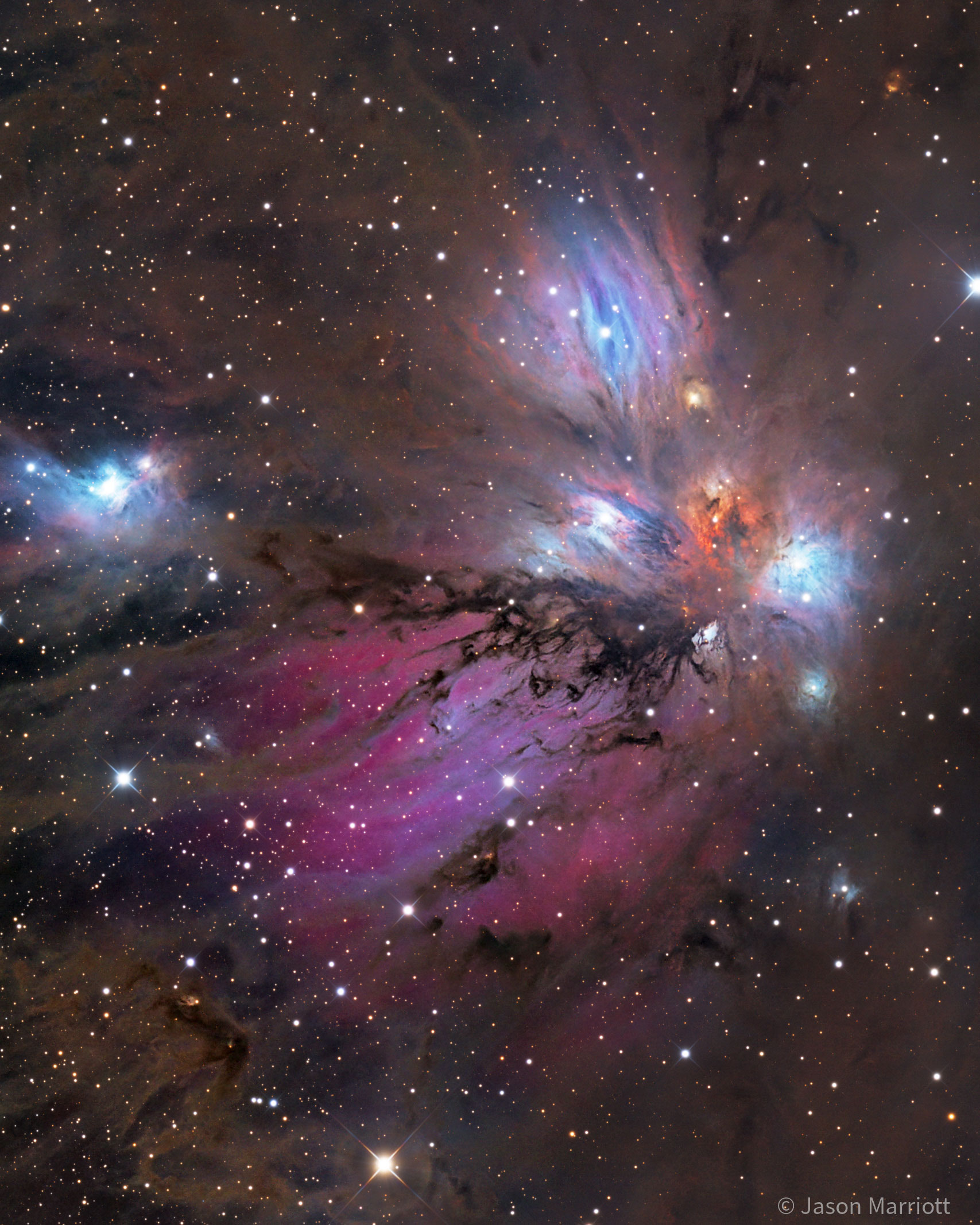
Is this a painting or a photograph? In this celestial abstract art composed with a cosmic brush, dusty nebula NGC 2170, also known as the Angel Nebula, shines just above the image center. Reflecting the light of nearby hot stars, NGC 2170 is joined by other bluish reflection nebulae, a red emission region, many dark absorption nebulae, and a backdrop of colorful stars. Like the common household items that abstract painters often choose for their subjects, the clouds of gas, dust, and hot stars featured here are also commonly found in a setting like this one -- a massive, star-forming molecular cloud in the constellation of the Unicorn (Monoceros). The giant molecular cloud Mon R2, is impressively close, estimated to be only 2,400 light-years or so away. At that distance, this canvas would be over 60 light-years across. Almost Hyperspace: Random APOD Generator

Download item bundle
NGC 2170: The Angel Nebula
Credit: Jason Marriott
18 May 2026, 00:00 GMT By Simone Curzi

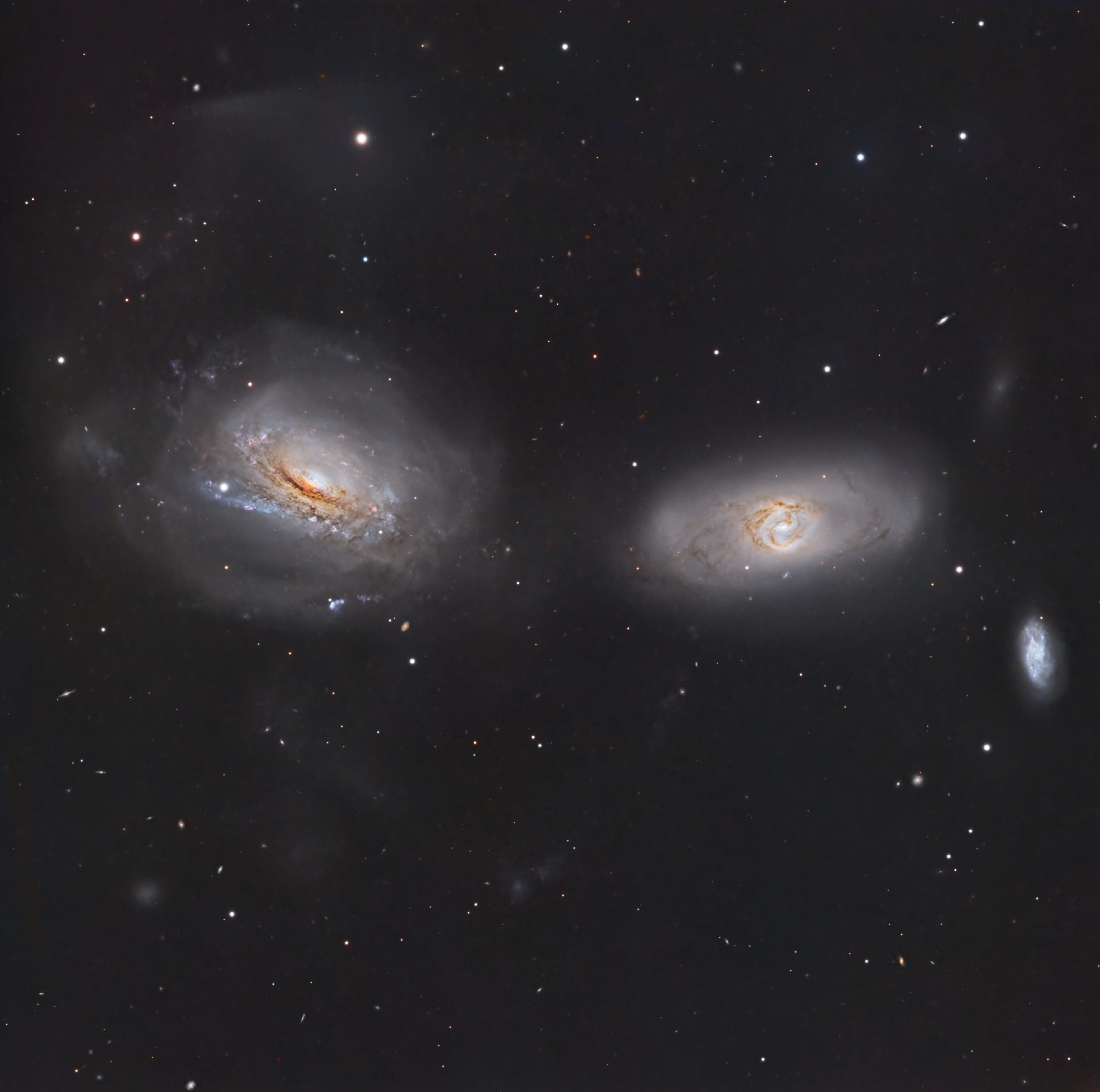
Spiral galaxy NGC 3169 looks to be unraveling like a ball of cosmic yarn. It lies some 70 million light-years away, south of bright star Regulus toward the faint constellation Sextans. Wound up spiral arms are pulled out into sweeping tidal tails as NGC 3169 (left) and neighboring NGC 3166 interact gravitationally. Eventually the galaxies will merge into one, a common fate even for bright galaxies in the local universe. Drawn out stellar arcs and plumes are clear indications of the ongoing gravitational interactions across the deep and colorful galaxy group photo. The telescopic frame spans about 20 arc minutes or about 400,000 light-years at the group's estimated distance, and includes smaller, bluish NGC 3165 to the right. NGC 3169 is also known to shine across the spectrum from radio to X-rays, harboring an active galactic nucleus that is the site of a supermassive black hole.

Download item bundle
Unraveling NGC 3169
Credit: Simone Curzi
17 May 2026, 00:00 GMT

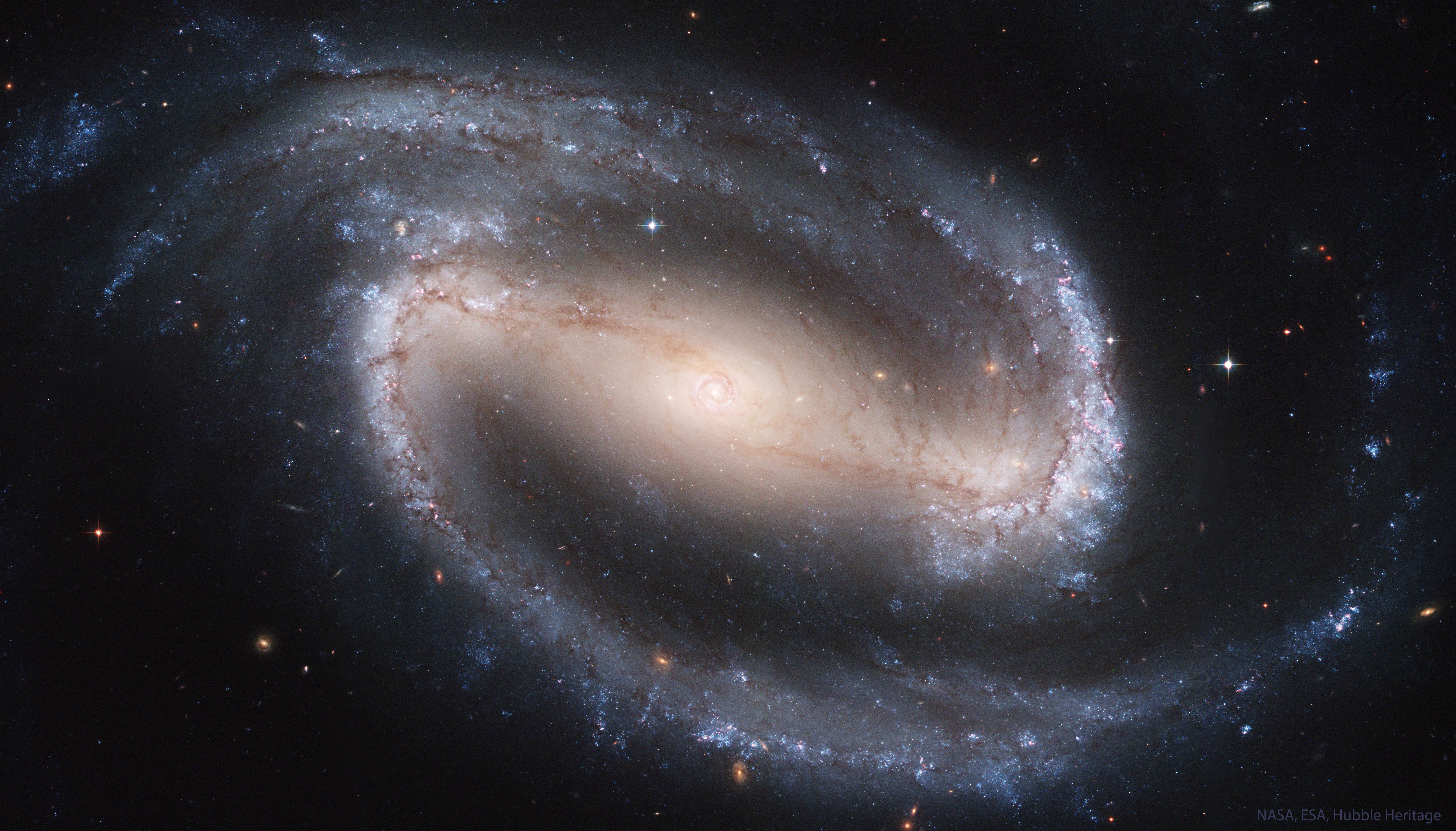
Across the center of this spiral galaxy is a bar. And at the center of this bar is smaller spiral. And at the center of that spiral is a supermassive black hole. This all happens in the big, beautiful, barred spiral galaxy cataloged as NGC 1300, a galaxy that lies some 70 million light-years away toward the constellation of the river Eridanus. This Hubble Space Telescope composite view of the gorgeous island universe is one of the most detailed Hubble images ever made of a complete galaxy. NGC 1300 spans over 100,000 light-years and the Hubble image reveals striking details of the galaxy's dominant central bar and majestic spiral arms. How the giant bar formed, how it remains, and how it affects star formation remains an active topic of research. Jigsaw Universe: Astronomy Puzzle of the Day

Download item bundle
NGC 1300: Barred Spiral Galaxy
16 May 2026, 00:00 GMT

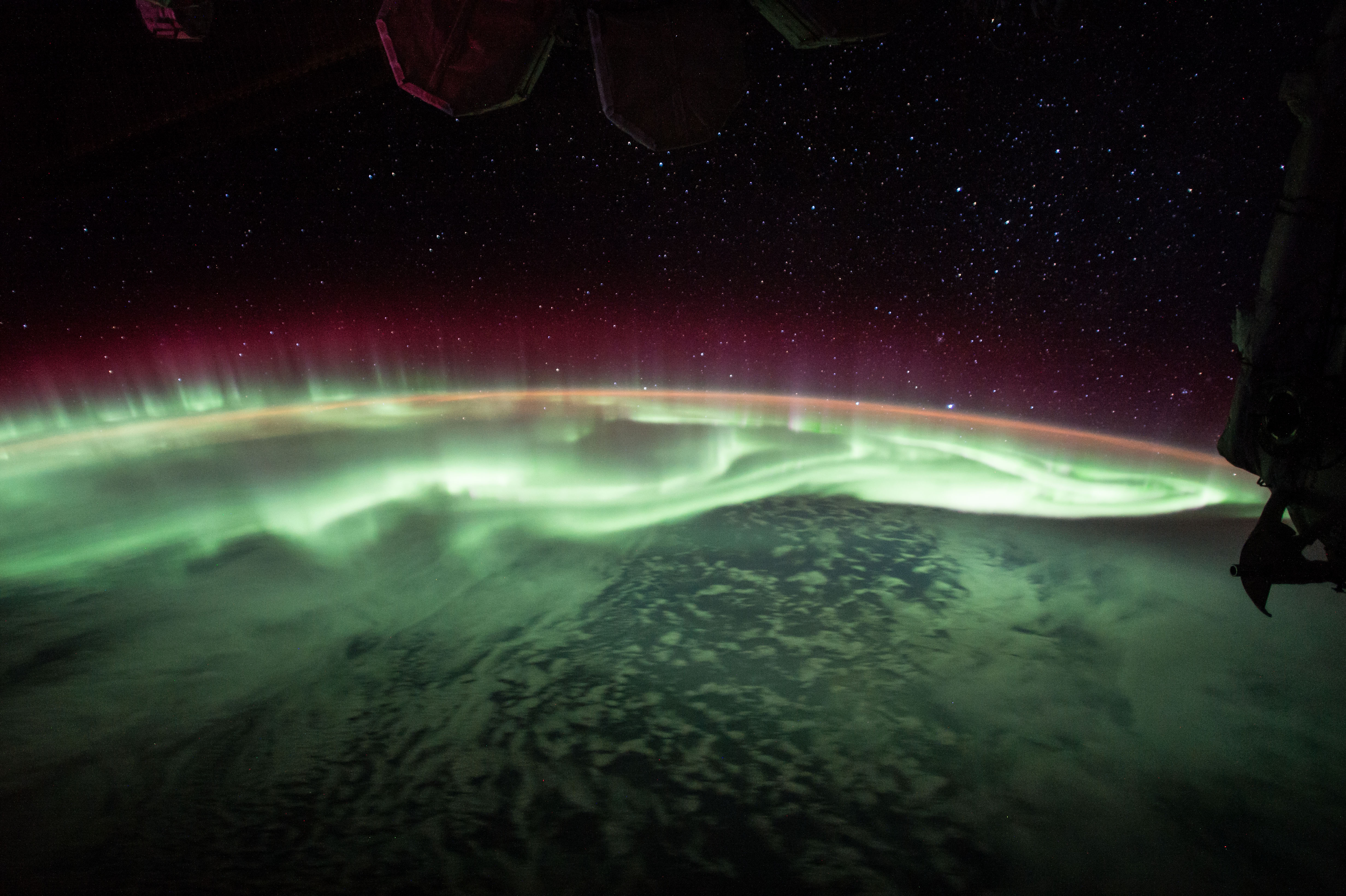
Like salsa verde on your favorite burrito, a green aurora slathers up the sky in this 2017 June 25 snapshot from the International Space Station. About 400 kilometers (250 miles) above Earth, the orbiting station is itself within the upper realm of the auroral displays. Aurorae have the signature colors of excited molecules and atoms at the low densities found at extreme altitudes. Emission from atomic oxygen dominates this view. The tantalizing glow is green at lower altitudes, but rarer reddish bands extend above the space station's horizon. The orbital scene was captured while passing over a point south and east of Australia, with stars above the horizon at the right belonging to the constellation Canis Major, Orion's big dog. Sirius, alpha star of Canis Major, is the brightest star near the Earth's limb.

Download item bundle
Aurora Slathers Up the Sky
15 May 2026, 00:00 GMT By Chester Hall-Fernandez

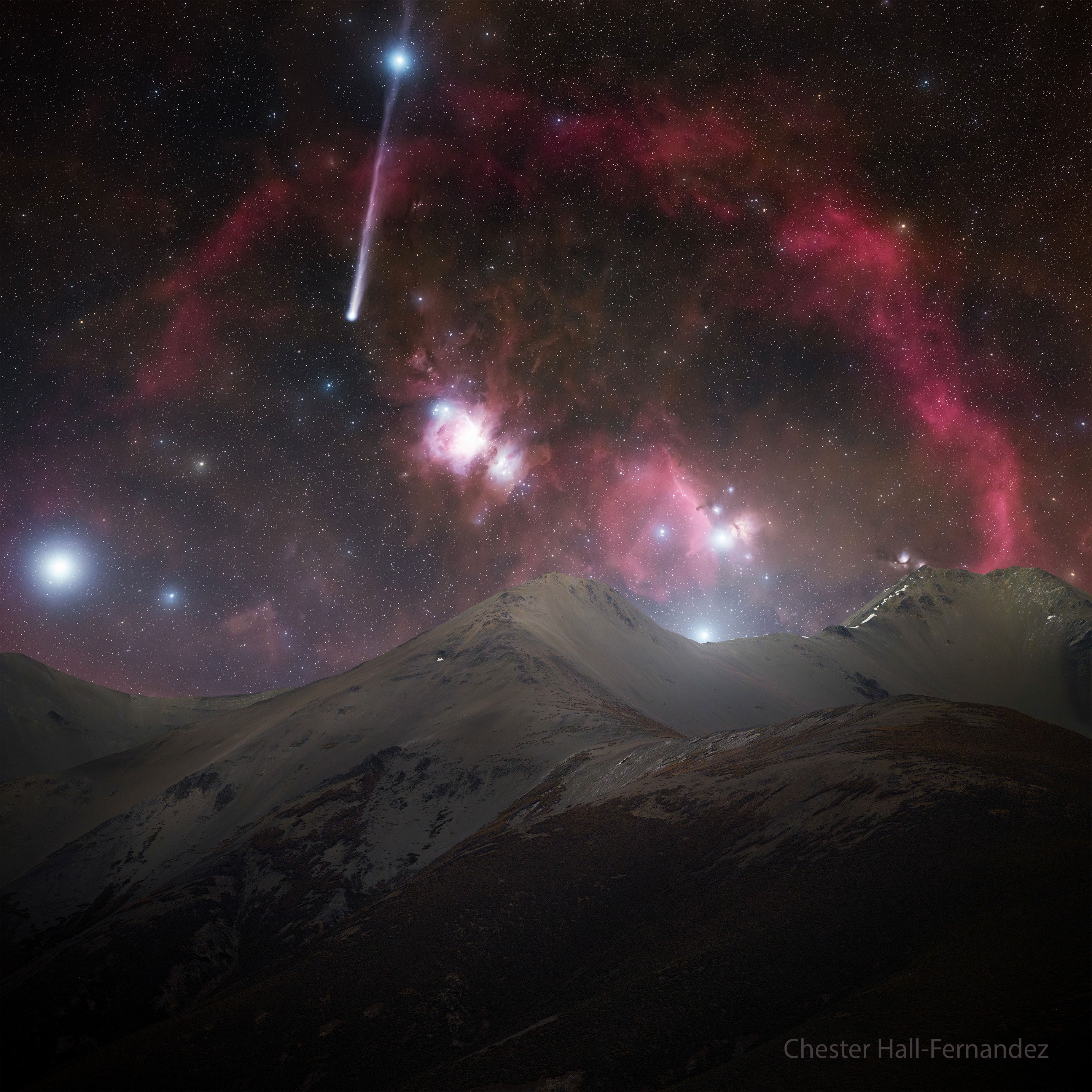
Comet R3 PanSTARRS might be best remembered as an Orion comet. A key reason is because Comet C/2025 R3 (PanSTARRS) was near its most spectacular -- in terms of tail visibility -- when passing in front of the iconic constellation. Although rare, other bright comets, too, have ventured across Orion, including Lovejoy in 2015, Hale-Bopp in 1997, and the Great Comet of 1264. Best visible in long duration exposures, the featured image was captured last week from the Craigieburn Mountain Range in New Zealand. Visible in the deep background image are the Orion Nebula, Barnard's Loop, and through R3's tail, the bright star Saiph, the sixth brightest star in the constellation of Orion. Comet R3 PanSTARRS continues to fade as it moves further south, passing into the constellation of the Unicorn (Monoceros) in the next few days. Sky Surprise: What picture did APOD feature on your birthday? (after 1995)

Download item bundle
R3 PanSTARRS: An Orion Comet
Credit: Chester Hall-Fernandez
14 May 2026, 00:00 GMT

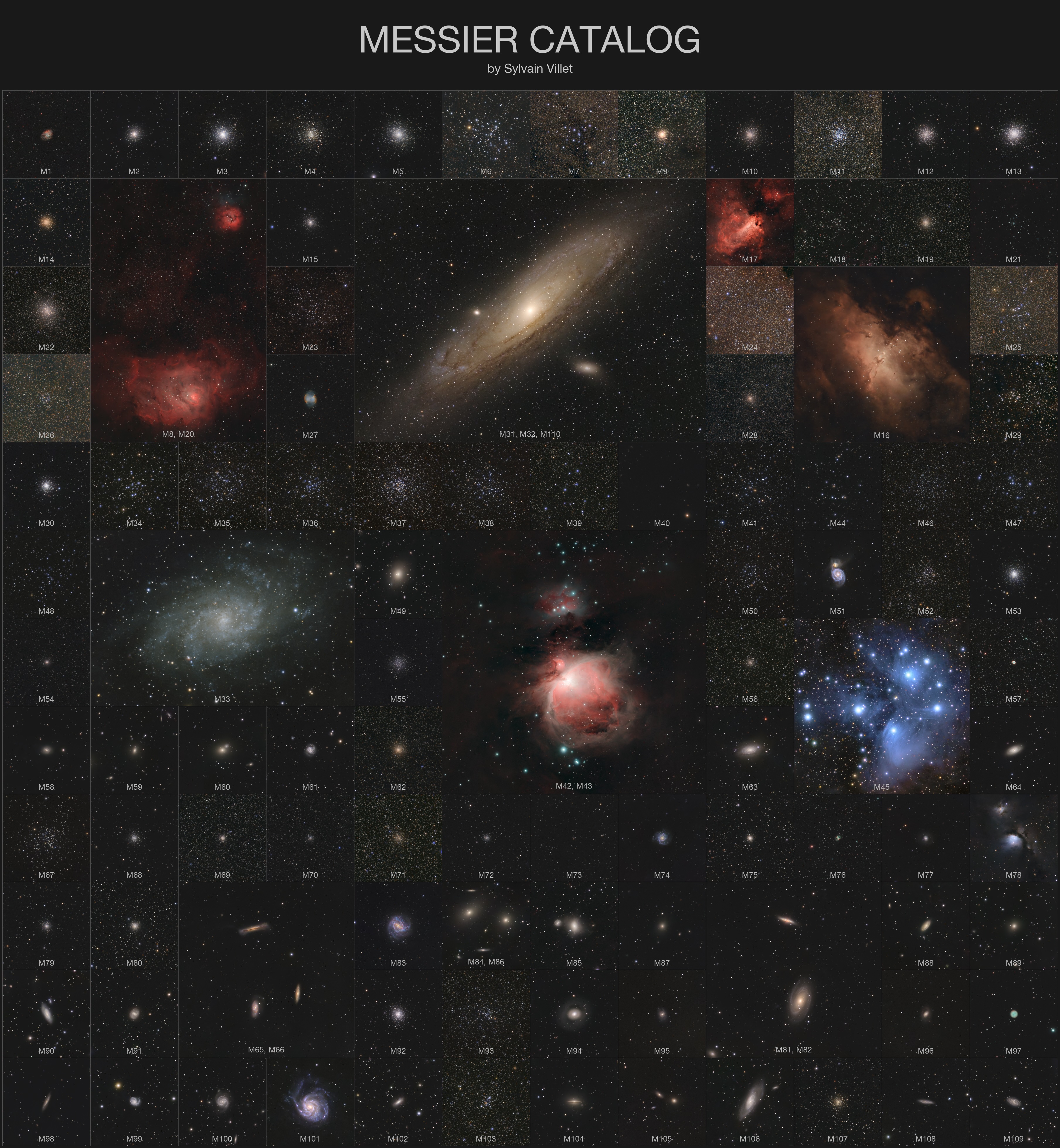
What are some of the most interesting astronomical objects you can see in the night sky? Armed with a good pair of binoculars or a small telescope, if you live in the Northern Hemisphere, you can look for the very popular objects in the Messier Catalog. Most of them, but not all, are also visible from the southern half of the Earth. The featured image shows all 110 objects in the catalog at uniform scale -- the same magnification. Charles Messier created the catalog in the 18th century. He was interested in comets, and his catalog was a list of known comet-like "objects to avoid" in the sky when observing or hunting for comets. The deep sky objects in the catalog include a supernova remnant (the Crab Nebula, M1), other galaxies (such as Andromeda, M31), nebulae (e.g. the Orion Nebula, M42, a star-forming region) and stellar clusters (such as the Pleiades, M45, a bright young open cluster).

Download item bundle
Messier Catalog at Uniform Scale
13 May 2026, 00:00 GMT By Neven Krcmarek

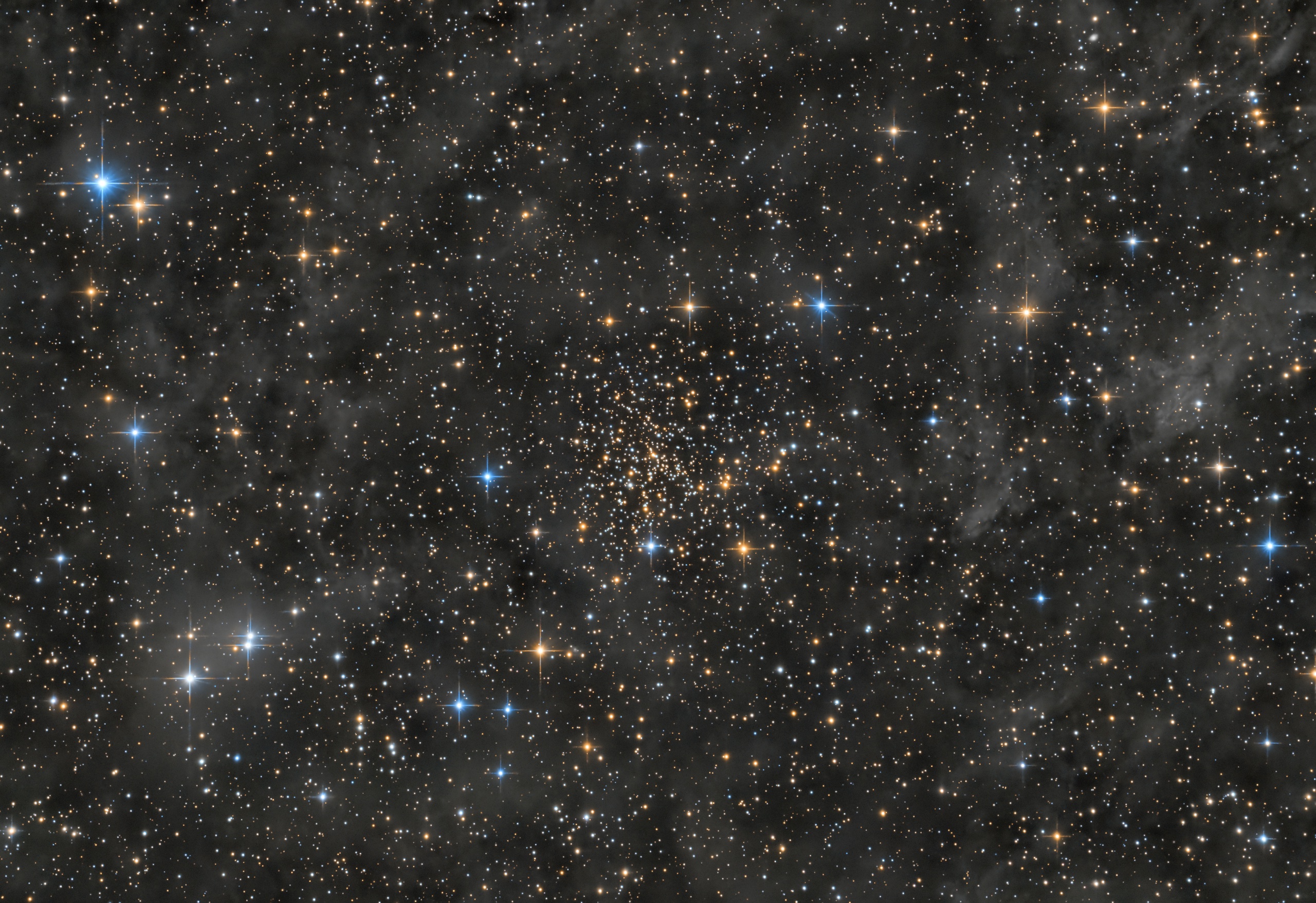
The New General Catalog of star clusters and nebulae really isn't so new. In fact, it was published in 1888 - an effort by J. L. E. Dreyer to consolidate the work of astronomers William, Caroline, and John Herschel along with others into a useful single, complete catalog of astronomical discoveries and measurements. Dreyer's work was largely successful and is still important today, as this famous catalog continues to lend its "NGC" to bright clusters, galaxies, and nebulae. Take for example the star cluster known as NGC 188 (item number 188 in the NGC compilation). It lies about 6,000 light-years distant in the northern constellation Cepheus and represents a galactic or open star cluster. With an age of about 7 billion years, NGC 188 is old for an open cluster. Its old, evolved red giant stars have yellowish hues in this colorful, deep sky view. NGC 188 also enjoys the designation Caldwell 1 in a modern compilation of deep sky objects. Located well above the plane of the Milky Way and seen in the direction of planet Earth's north celestial pole, the ancient stellar group is known to some as the Polarissima Cluster.

Download item bundle
NGC 188: Old Cluster in the New General Catalog
Credit: Neven Krcmarek
12 May 2026, 00:00 GMT By Julien De Winter, Sascha Ebeler Text: Keighley Rockcliffe (NASA GSFC, UMBC CSST, CRESST II)

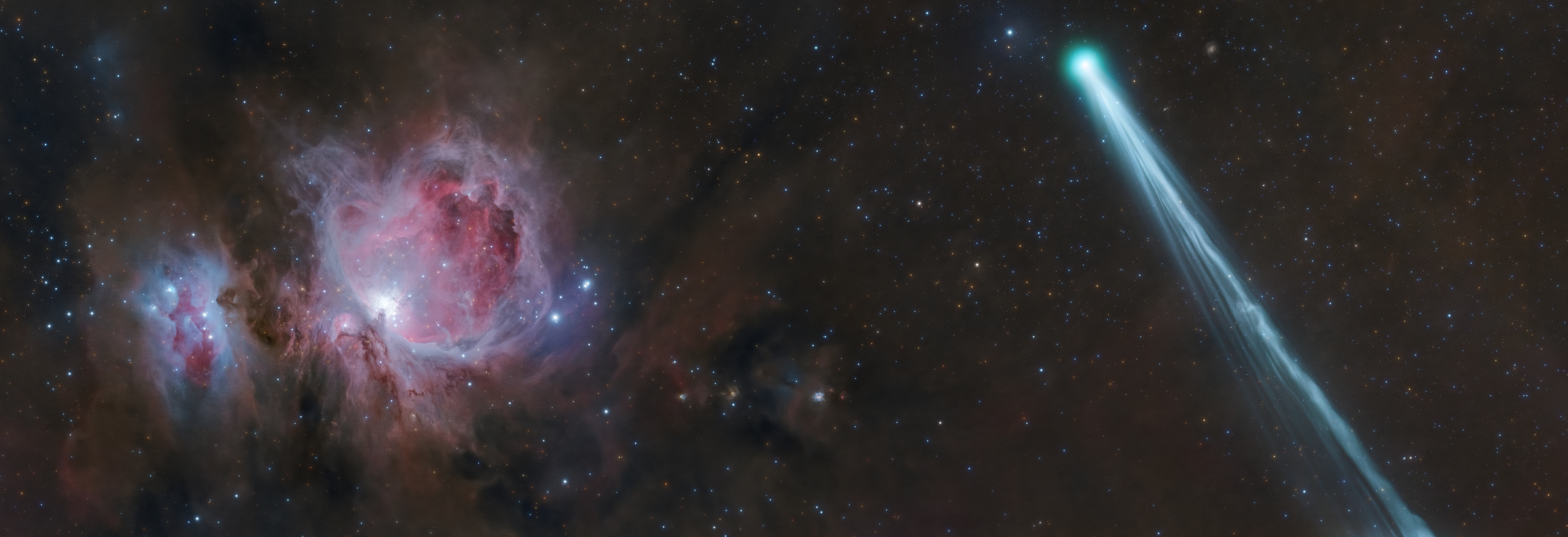
Today’s composite image features something old, something new, something borrowed, and something blue! Comet R3 PanSTARRS, streaking across the right of the image, likely originated from the Oort Cloud, meaning it is an old Solar System relic from billions of years ago. It’s bright extended ion tail glows blue as the gas escaping the comet’s core is ionized by sunlight. Astronomers are fascinated by comets for all sorts of reasons: comet compositions are untouched time capsules containing the building blocks of Solar System planets; comets may have delivered water to the young Earth; the behavior of cometary tails shed light on solar wind and radiation interactions. The background mosaic, featuring the Orion Nebula (M42), was taken over two nights of observation with the comet captured on the third night. The Orion Nebula is our nearest stellar nursery and, at about 2 million years old, is our something (relatively) new! Now at around 127.5 million kilometers from Earth, we wave goodbye to the borrowed Comet R3 PanSTARRS as it leaves the Solar System. Growing Gallery: Comet R3 in 2026

Download item bundle
The Conjunction of Comet R3 PanSTARRS and the Orion Nebula
Credit: Julien De Winter, Sascha Ebeler Text: Keighley Rockcliffe (NASA GSFC, UMBC CSST, CRESST II)
10 May 2026, 00:00 GMT By Luc Perrot (TWAN)

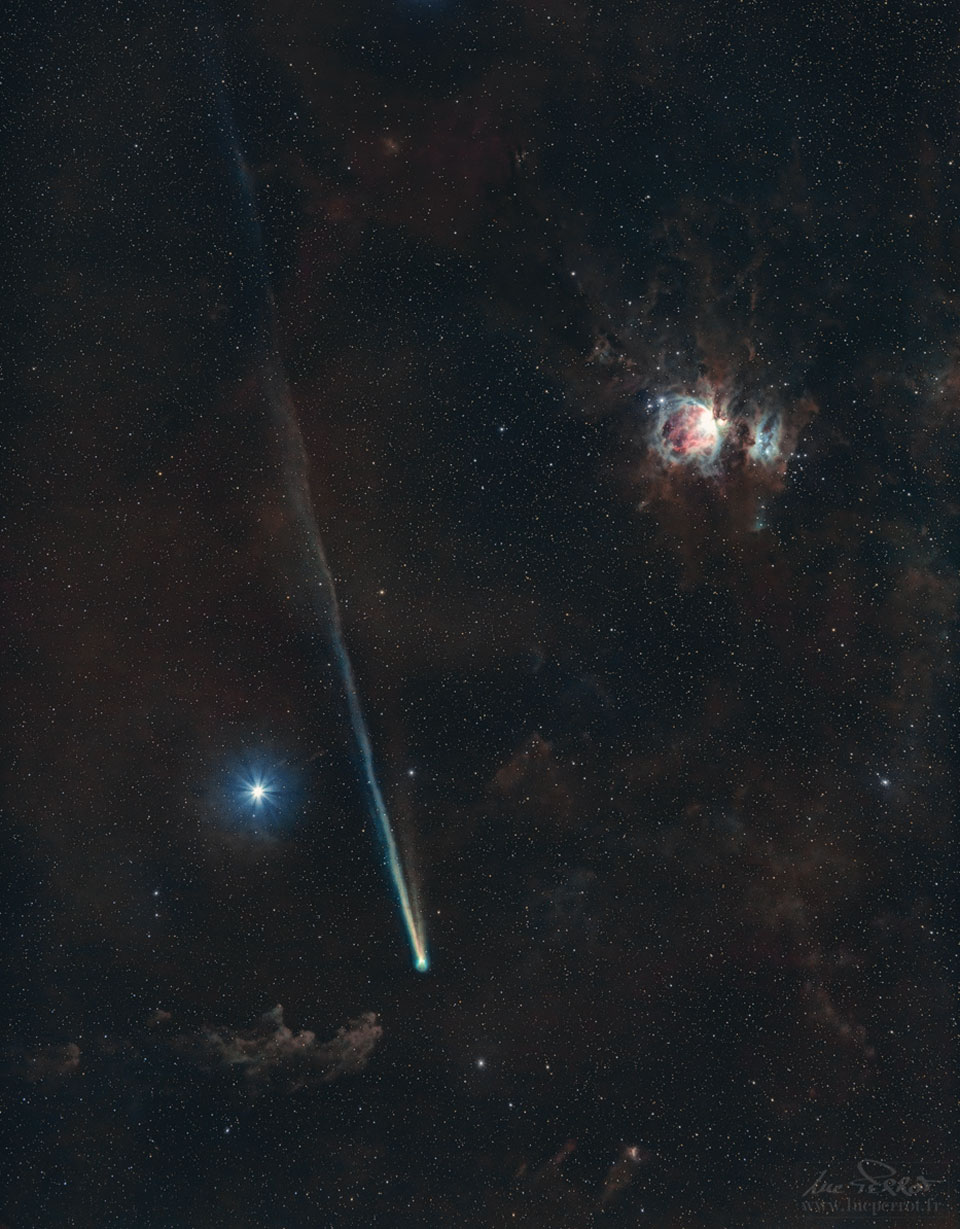
Orion never had a sword like this. As Comet C/2025 R3 (PanSTARRS) heads out of the inner Solar System, it is putting on quite a show for long exposure cameras. Currently seen toward the constellation of Orion the Hunter, the distant Orion Nebula is visible on the upper right. Comet R3 PanSTARRS is now showing two distinct tails: a short dust tail pointing toward the top of the image and a long and wavy ion tail trailing off toward the upper left. The ion tail points away from the Sun and glows blue from excited carbon monoxide. Large particles in the dust tail somewhat resist the radiation pressure that push them away from the Sun and so retain a bit of the comet's orbit. The dust tail shines by reflected sunlight. The featured image was taken a few days ago from France's Reunion Island in the southern Indian Ocean. Growing Gallery: Comet R3 PanSTARRS in 2026

Download item bundle
Comet R3 PanSTARRS and Orion
Credit: Luc Perrot (TWAN)
9 May 2026, 00:00 GMT

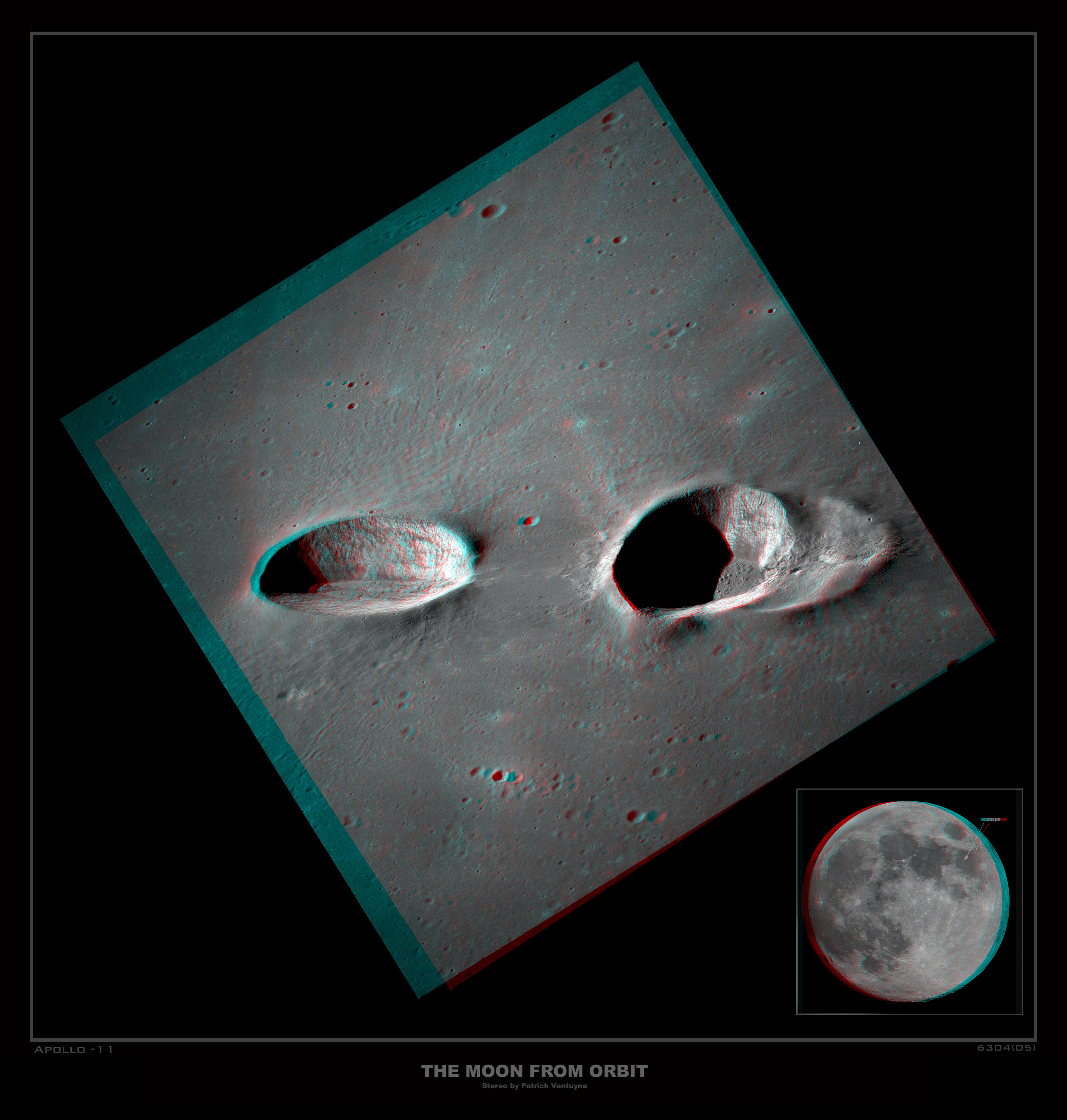
Many bright nebulae and star clusters in planet Earth's sky are associated with the name of astronomer Charles Messier from his famous 18th century catalog. His name is also given to these two large and remarkable craters on the Moon. Standouts in the dark, smooth lunar Sea of Fertility or Mare Fecunditatis, Messier (left) and Messier A have dimensions of 15 by 8 and 16 by 11 kilometers respectively. Their elongated shapes are explained by the extremely shallow-angle trajectory followed by an impactor, moving left to right, that gouged out the craters. The shallow impact also resulted in two bright rays of material extending along the surface to the right, beyond the picture. Intended to be viewed with red/blue glasses (red for the left eye), this striking stereo picture of the crater pair was recently created from high resolution scans of two images (AS11-42-6304, AS11-42-6305) taken during the Apollo 11 mission to the Moon.

Download item bundle
Messier Craters in Stereo
8 May 2026, 00:00 GMT By Jakub Kuřák & Martin Mašek (FZU of the Czech Academy of Sciences)

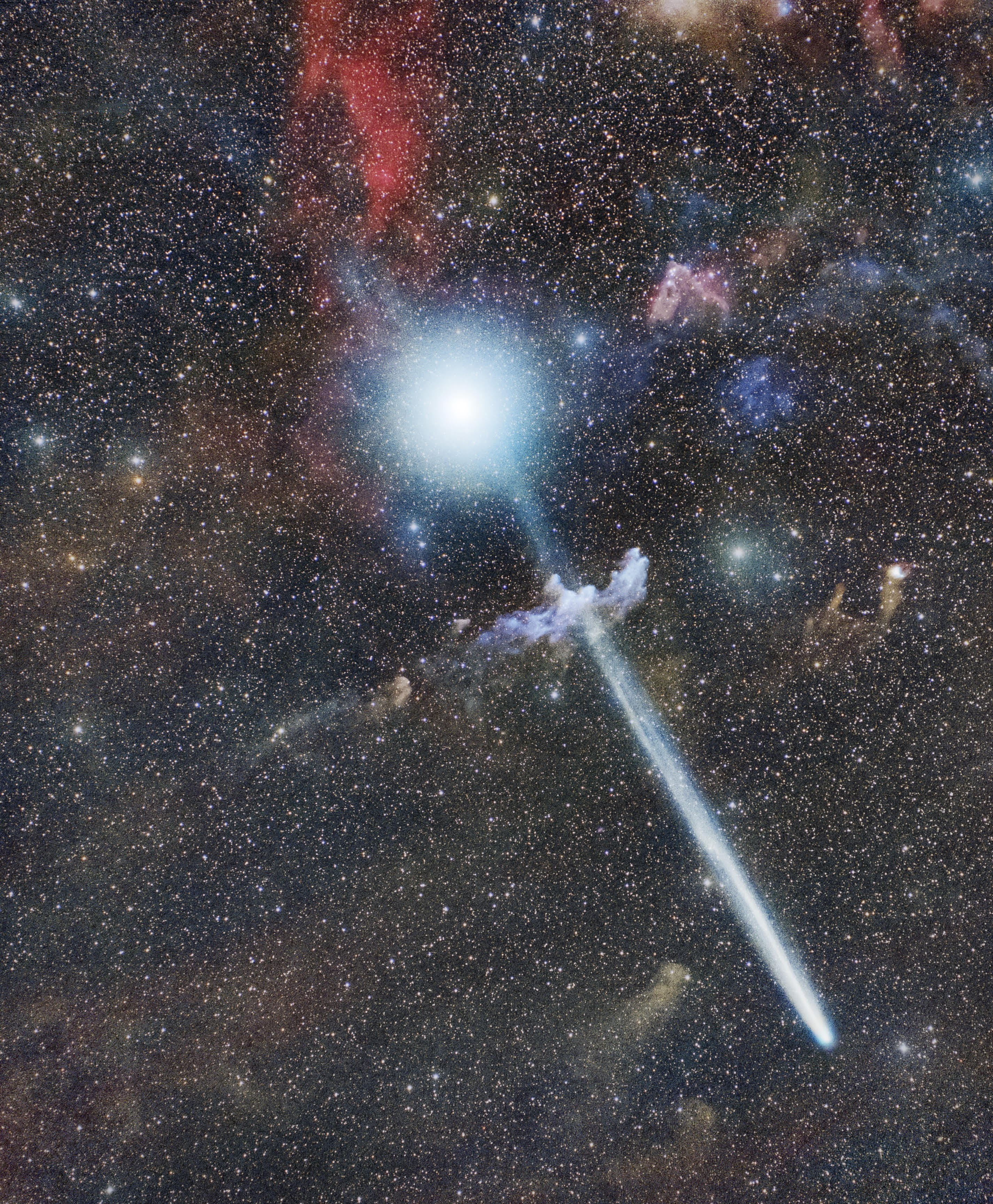
Which way is Comet R3 PanSTARRS going? Not towards the star at the top of the image, because that is Rigel, which, being far in the background, is unrelated to the comet. Not through the nebula in the image middle, because that is the Witch Head Nebula and it, too, is far in the distance -- but not far from Rigel. Not into northern skies because over the past week Comet C/2025 R3 (PanSTARRS) has moved into southern skies and is now best visible in Earth's Southern Hemisphere toward the west after sunset. Angularly, Comet R3 PanSTARRS is slowly moving toward the upper right, night by night, and will soon be in the constellation Orion. Spatially, the comet is now headed out of our Solar System but should remain visible to cameras in southern skies for about a week. The featured image was captured last week near Cerro Paranal in Chile. Growing Gallery: Comet R3 PanSTARRS in 2026

Download item bundle
Comet R3 PanSTARRS Before Rigel
Credit: Jakub Kuřák & Martin Mašek (FZU of the Czech Academy of Sciences)
6 May 2026, 00:00 GMT By Tunç Tezel (TWAN) Text: Keighley Rockcliffe (NASA GSFC, UMBC CSST, CRESST II)

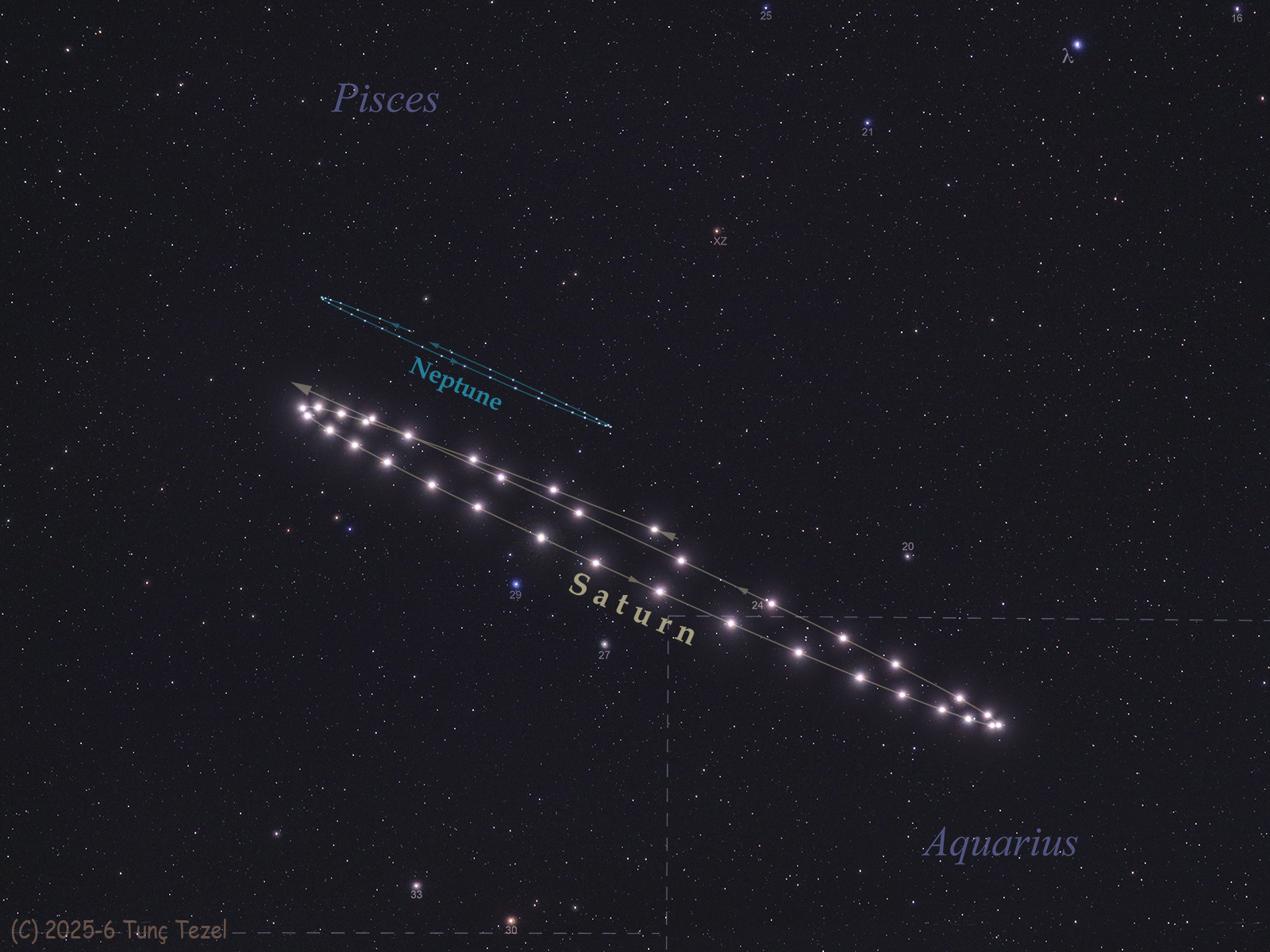
What does it mean for Saturn and Neptune to be in retrograde? Featured is a composite of images taken over 34 nights from May 2025 to February 2026 tracing Saturn (brighter, foreground) and Neptune (dimmer, background). Over that time, the two planets exhibited retrograde motion, meaning they appeared to move backward in the sky. This apparent backwards motion occurs when Earth overtakes the slower outer planets as they orbit the Sun. Imagine the Solar System is a running track. Earth "runs" faster along the inside of the track compared to the outer planets. As Earth approaches, aligns, and then "laps" the outer planets, they change position from ahead to behind from the Earth's perspective. This perspective shift is what causes the outer planets to change position in the night sky. An animation corresponding to today’s image shows Saturn and Neptune’s months-long dance across the northern night sky. Saturn stepped from the Pisces constellation into Aquarius and back again while Neptune remained in Pisces. This is the closest Saturn and Neptune have been in the sky since their last conjunction in 1989.

Download item bundle
The Retrograde Dance of Saturn and Neptune
Credit: Tunç Tezel (TWAN) Text: Keighley Rockcliffe (NASA GSFC, UMBC CSST, CRESST II)
5 May 2026, 00:00 GMT By Marcin Rosadziński

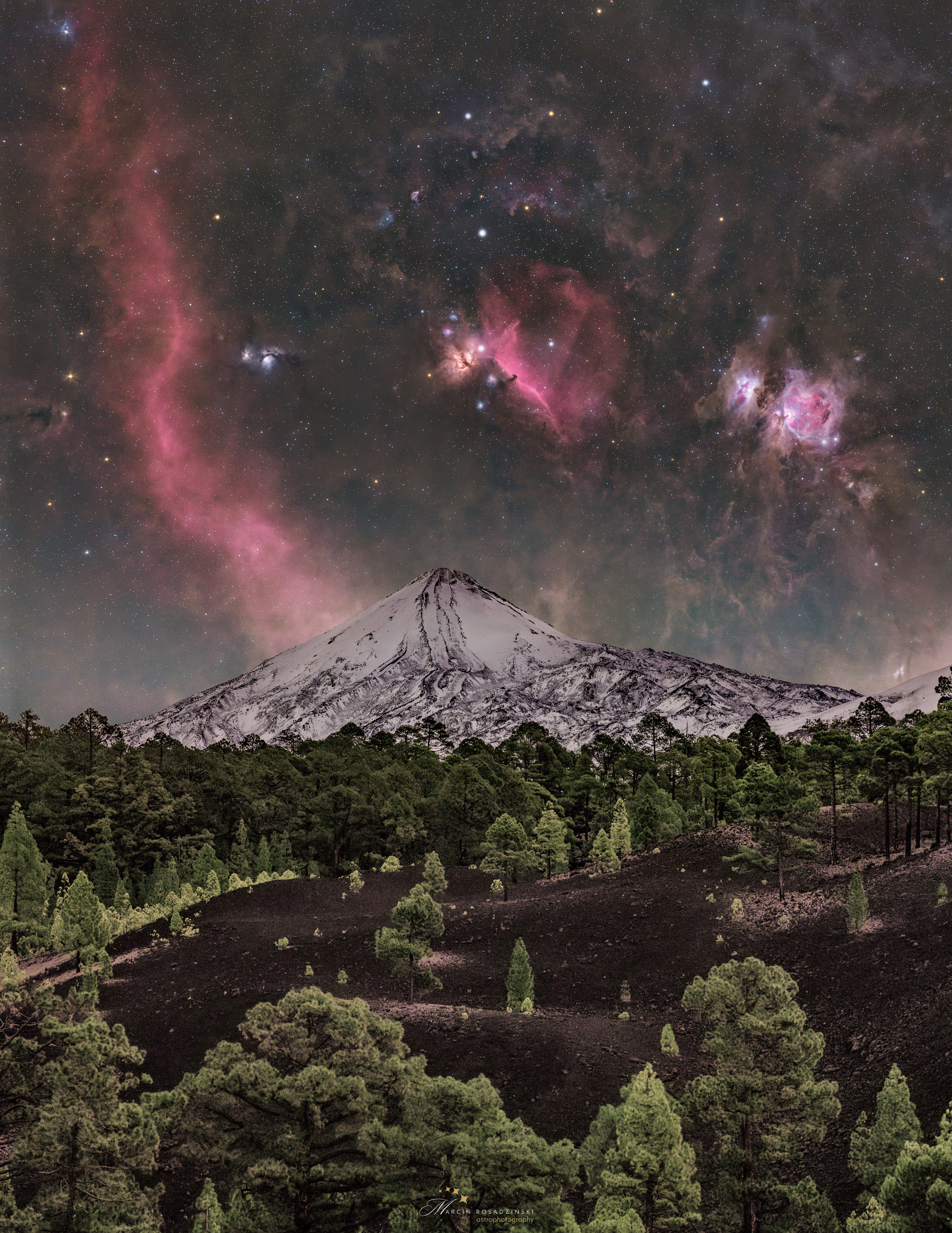
Orion is rarely seen like this. To achieve this majestic vista, you need a camera capable of taking such long duration exposures that faint features in the night sky become revealed. Iconic nebulas that appear include the Orion Nebula, the Flame Nebula, and Barnard's Loop. For contrast, it also helps to have a volcano on the foreground, in this case the Teide volcano on Tenerife on the Canary Islands of Spain. But if you want your Teide volcano snow-covered, you also need good timing -- because that only happens, typically, for a few days each year. Good timing also includes waiting for Orion to appear just behind Teide, which occurred late last year after sunset. The featured image is the result of a series of images taken consecutively with the same camera from the same location. Sky Surprise: What picture did APOD feature on your birthday? (after 1995)

Download item bundle
Orion over Mount Teide
Credit: Marcin Rosadziński
3 May 2026, 00:00 GMT

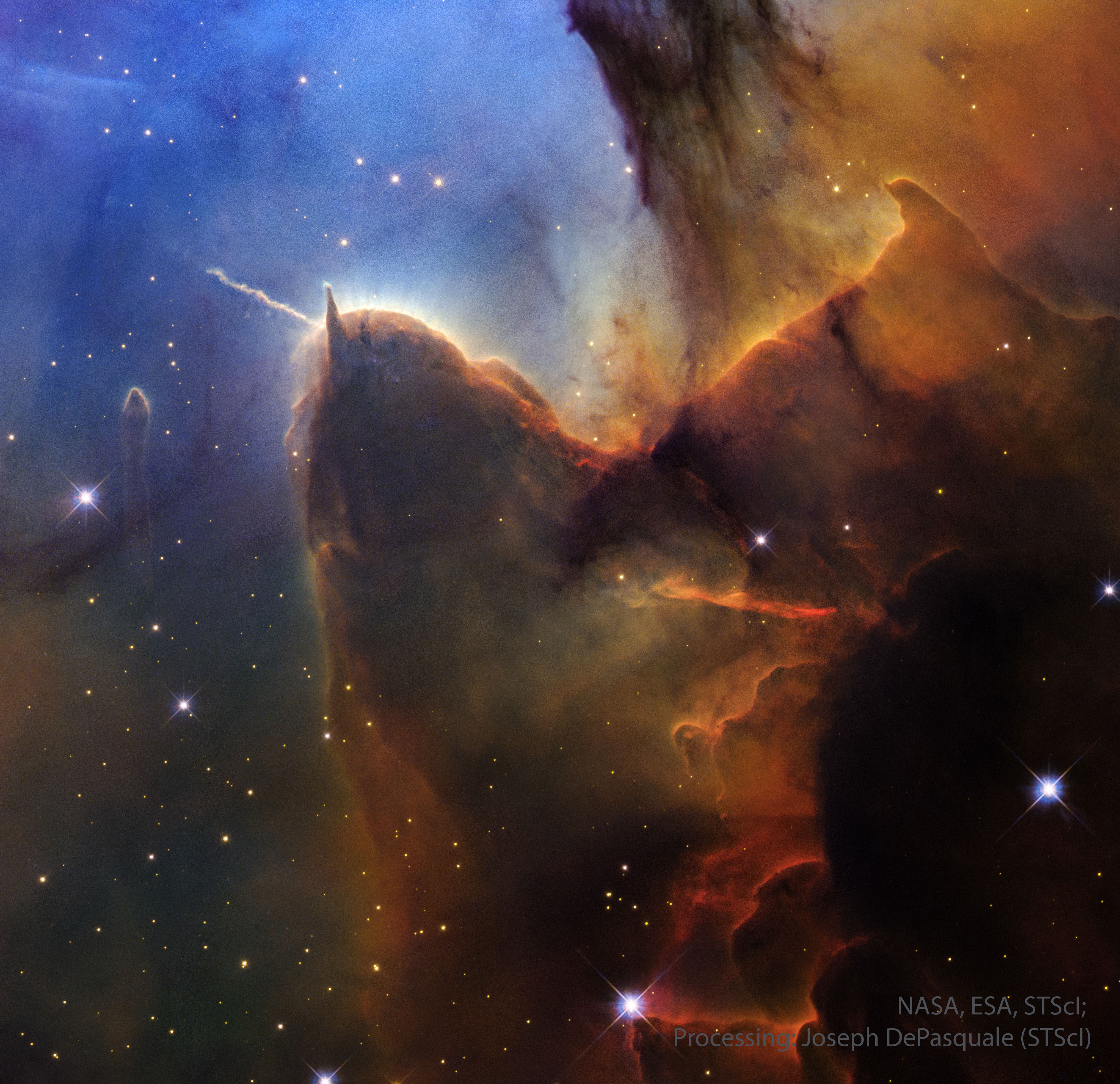
Dust pillars are like interstellar mountains. They survive because they are more dense than their surroundings, but they are slowly being eroded away by a hostile environment. Visible in the featured picture by the Hubble Space Telescope is the end of a huge gas and dust pillar in the Trifid Nebula (M20), punctuated by a smaller pillar pointing up and an unusual jet pointing to the upper left. Many of the bright dots are newly formed stars. A star near the small pillar's end is slowly being stripped of its accreting gas by radiation from a tremendously brighter star situated off the top of the image. The jet extends nearly a light-year and would not be visible without external illumination. As gas and dust evaporate from the pillars, the hidden stellar source of this jet will likely be uncovered, possibly over the next 20,000 years. Explore the Universe: Random APOD Generator

Download item bundle
Trifid Pillars and Jets
2 May 2026, 00:00 GMT

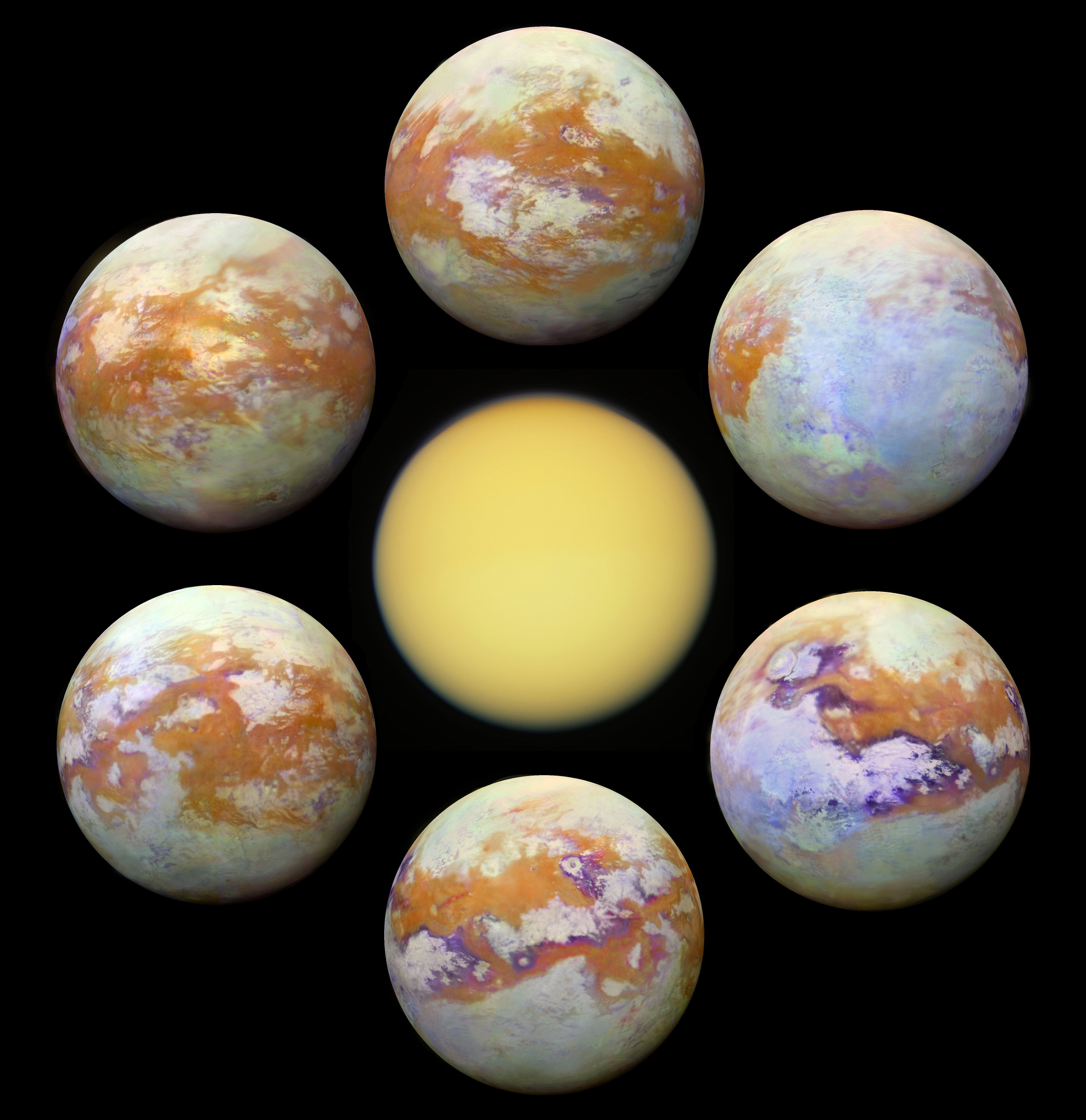
Shrouded in a thick atmosphere, the surface of Saturn's largest moon, Titan, is really hard to see. Small particles suspended in Titan's upper atmosphere cause an almost impenetrable haze, strongly scattering light at visible wavelengths and hiding surface features from prying eyes. Still, Titan's surface is better imaged at infrared wavelengths, where scattering is weaker and atmospheric absorption is reduced. Arrayed around this visible light image (center) of Titan are some of the clearest global infrared views of the tantalizing moon so far. In false color, the six panels present a consistent processing of 13 years of infrared image data from the Visual and Infrared Mapping Spectrometer (VIMS) on board the Cassini spacecraft orbiting Saturn from 2004 to 2017. They offer a stunning comparison with Cassini's visible light view. NASA's revolutionary rotorcraft mission to Titan's surface is due to launch no earlier than July, 2028.

Download item bundle
Seeing Titan
1 May 2026, 00:00 GMT By Chuck Ayoub

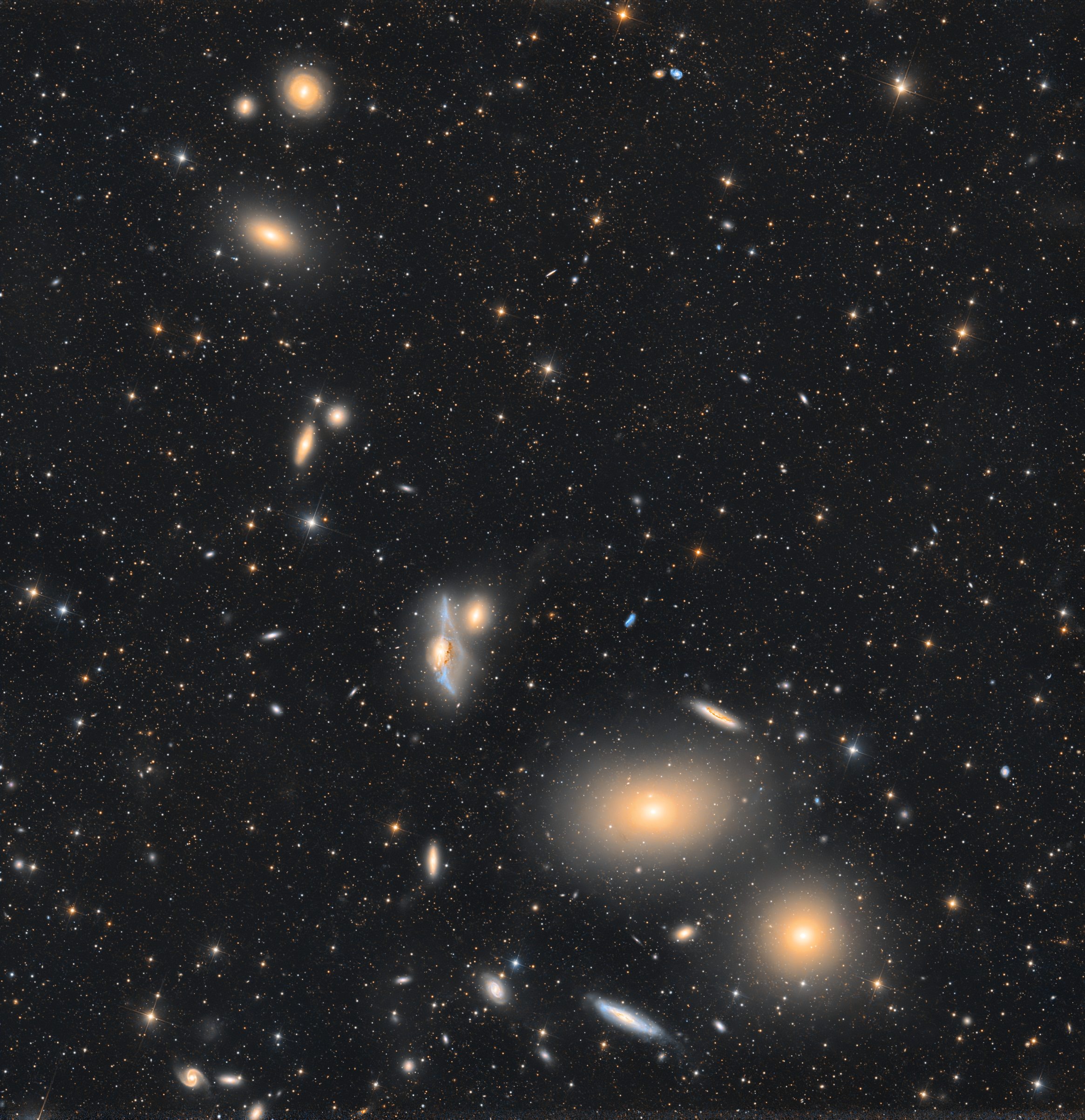
Near the heart of the Virgo Galaxy Cluster, a string of galaxies known as Markarian's Chain stretches across this telescopic field of view. Anchored in the frame at bottom right by prominent lenticular galaxies, M84 (bottom) and M86, you can follow the chain's gentle arc up and toward the left. Near center you'll spot the pair of interacting galaxies NGC 4438 and NGC 4435, known to some as Markarian's Eyes. An estimated 50 million light-years distant, the Virgo Cluster itself is the nearest galaxy cluster. With up to about 2,000 member galaxies, it has a noticeable gravitational influence on our own Local Group of Galaxies. Within the Virgo Cluster at least seven galaxies in Markarian's Chain appear to move coherently, while others may appear to be part of the chain by chance.

Download item bundle
Markarian's Chain
Credit: Chuck Ayoub
29 Apr 2026, 00:00 GMT By Gianni Tumino Text: Keighley Rockcliffe (NASA GSFC, UMBC CSST, CRESST II)

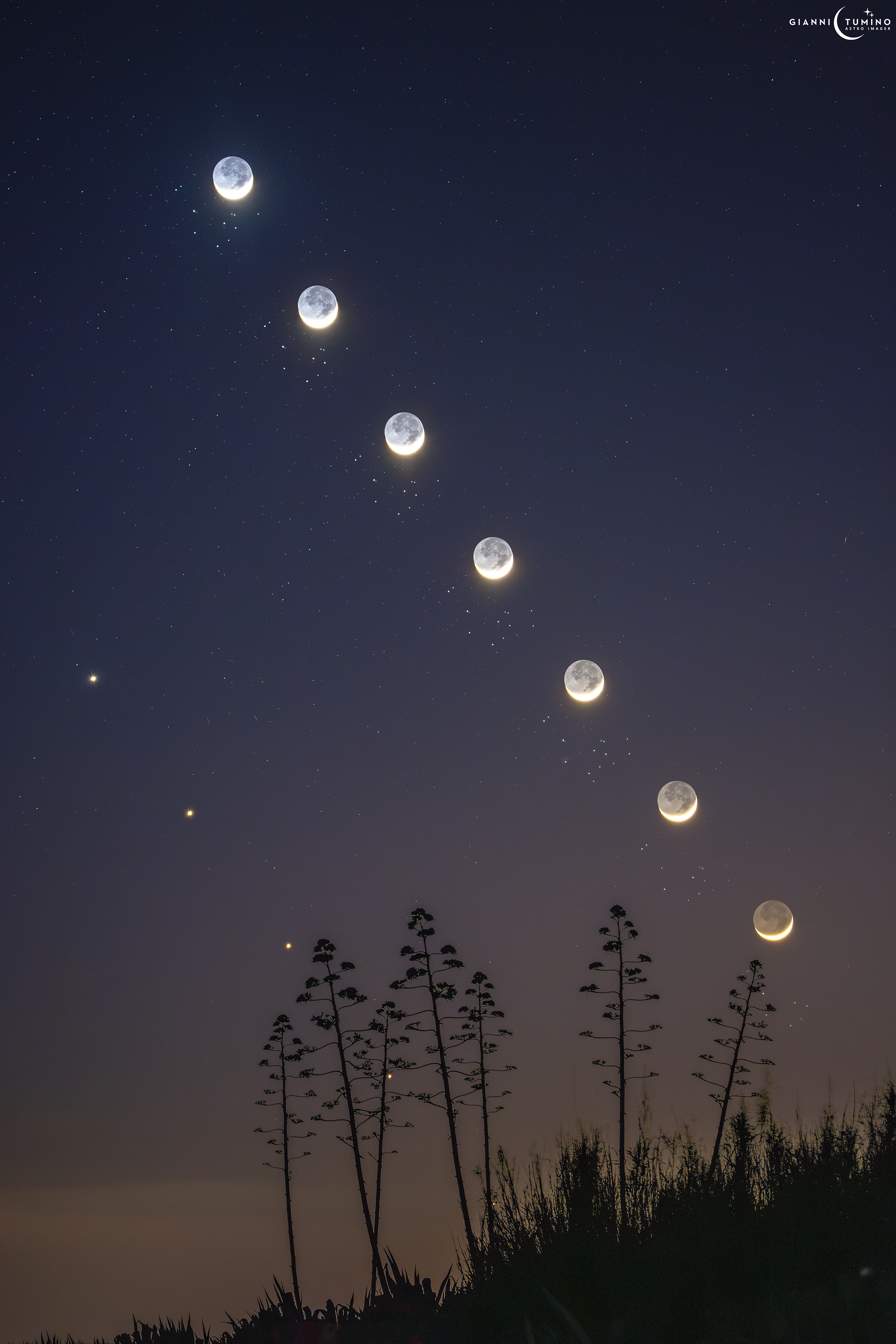
No, Earth did not recently acquire six more moons! Today’s APOD is a combination of images following the Moon, Venus, and the Pleiades across a southern Sicilian sky as twilight turned to evening on April 19. From 2023 to 2029, the Pleiades' and the Moon “visit" each other once per month due to the Pleiades' location in the ecliptic plane. April 2026 saw the celestial alignment of their visit with Venus. About six stars in the Pleiades cluster (Messier 45) are typically visible with the unaided eye. Due to the cluster’s visibility across the world, there are many myths and legends across cultures associated with the Pleiades. The Haudenosaunee people of North America, for example, say that seven boys danced so enthusiastically that they lifted off into the sky. Astronomers recently found thousands more Pleiades members, showing that after thousands of years of gazing upon this cluster, there is yet more to learn about the Pleiades.

Download item bundle
The Moon, Venus, and the Pleiades
Credit: Gianni Tumino Text: Keighley Rockcliffe (NASA GSFC, UMBC CSST, CRESST II)